Q&A with Empire Health Foundation's Zeke Smith
~
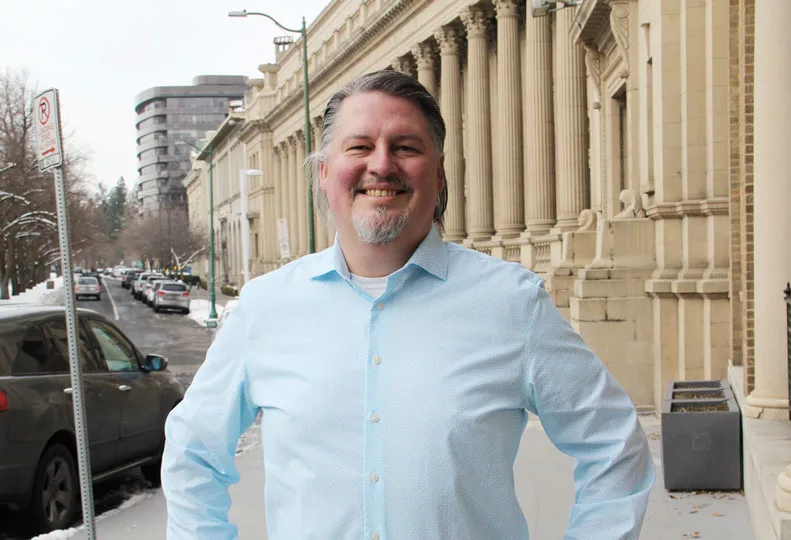
Zeke Smith, age 47, came to lead Empire Health Foundation in October. Smith says he grew up in poverty alongside several half-siblings in Northern California and began working in nonprofits while attending Lewis & Clark College, in Portland, Oregon.
In Portland, Smith worked at FoodCorps, a national nonprofit dedicated to connecting kids to healthy food in schools; United Way of the Columbia-Willamette; and Portland Public Schools, where he helped increase graduation rates among marginalized students. He served for seven years as a governor-appointed member of the Oregon Health Policy Board, and currently serves on the boards of the Native American Youth & Family Center and the Lowenstein Trust.
As president of Empire Health Foundation, Smith leads a staff of about 25, guides stewardship of the organization’s $80 million endowment, and heads Empire Health’s partner organization, the $20 million Empire Health Community Advocacy Fund.
Formed in 2008 as a result of the sale of Deaconess Medical Center and Valley Hospital and Medical Center to Tennessee-based for-profit Community Health Services Inc., Empire Health Foundation’s stated mission is to “boldly advance health equity in Eastern Washington and beyond” through collaboration, innovative solutions, and transformation of systems to improve health and quality of life.
The Journal sat down with Smith to discuss his plans for Empire Health Foundation, how he fits into the president role, and his professional role models.
How are your experiences at different kinds of organizations going to inform what you do in this role?
One of the things I felt really lucky about, in being offered and then accepting this job, is that the board went through a process over the course of the last year to figure out what they wanted and what they were looking for.
There were two things that came through: First, we’re investing in and doing a lot of different things, and it’s kind of hard to tell how they all move in the same direction. The other piece was recognition from the board that in the next phase of our work, if we’re really going to have the impact we want to have, we have to be working in deeper partnership in communities. That came through for me because I talked a lot about my experience and how that’s one thing that really is at the center of how I think about the kind of work that I want to do.
One of the things I’m really excited about is this program that’s focused on integrating cultural healing as a part of behavioral health with the tribes and with urban natives.
When staff were figuring out what the work was with some partners, the first thing they did was get a group of tribal elders together and ask them: What do you think the problems are? What do you think the solutions or opportunities for change are? Those staff members were the ones who really honed in on this idea of mental health and behavioral health work surrounded by and embedded in a cultural model. Their measure of progress is that they went back to that same set of elders and said, here’s what we’re doing and here’s where we’re at. Ultimately, it’s the voices of the elders who are saying, something has changed in our community.
It’s easy to say we’re going to center the work on community. It’s a lot harder to figure out what that really means. The places where I have seen the most success are where communities have been able to determine for themselves what is the right way to move forward in addressing an issue and in creating an opportunity, and where those communities have been given the space and the time to be able to do that. Then what you’re building in terms of knowledge and assets and all that is within that community.
For us as an organization, the first question is: How much is that notion of centering community is foundational to the way we think about our work? And then: What does that really mean about how we do our work and how we engage in a partnership? That’s something this organization needs to learn a good bit about, still.
What’s your top priority for the organization?
The simple answer is that health equity is a priority. One of my priorities is to ensure that we give ourselves and create the space to figure out what that means about what our work is over the next five and 10 years. With the staff, with the board, with our partners, this year is a lot about getting the right information.
It’s also about getting a sense of what we know about our region, and what the data tells us about what health equity and inequities look like across that region. And then it’s about creating the right space for us to have some conversations about how that aligns with or connects to what resources we have.
My hope is that coming out of this year, we’ll have a really strong sense of alignment together and clarity about not just that we’re going to affect health equity, but what that means about where we’re going to lean in and put our resources and time and energy.
What’s the greatest challenge that you think Empire Health Foundation currently faces?
This question of how you sustain change is easy to talk about, hard to do. I love that in the region and in Spokane there is this sense that we can get things done and we work together to do that.
There’s just so much noise around all of the things that aren’t working. I like to think that in this region there’s not as much chatter out there. There’s a little more of an opportunity to say, let’s focus on a few things. If we try to do 15 different things that all, in some way, connect to health equity, it’s going to be a lot harder for us to get to that progress and that sustained change, than if we tried to do three things and do them well.
Who are some of your professional role models?
The superintendent I worked for at Portland Public Schools is without a doubt a strong mentor and role model. (Carole Smith) is someone who often finds a third approach when you’re faced with a challenge or competing ideas or conflict.
She’s somebody who is an active listener. When you’re talking to her, you feel heard in a way that matters. In terms of direct interaction with people, I watched her and paid attention to how powerful that was, how much that authentic relationship … is important in how we do our work.
There’s a guy named Lolenzo Poe who worked in county government for a long time in Multnomah County and then in Portland Public Schools. He’s African-American and grew up in the community. I am Osage and Oneida, and Indonesian on my mom’s side, and I’ve been pretty active in the native urban community in the Portland area. I talked with him about how to navigate relationships in a community.
There are both expectations that are placed on you in that role and expectations you place on yourself.
What are you reading?
I’ve been listening to A Promised Land, the new Barack Obama book. He reads the audiobook himself, which is fun. I like the way that he understood and understands the importance of hope as a fundamental element of how we move change, regardless of political spectrum.
This interview has been edited for length and clarity.