Power moves: Commercial energy-saving strategies
Lighting, HVAC upgrades can be more cost-effective than noncompliance fees
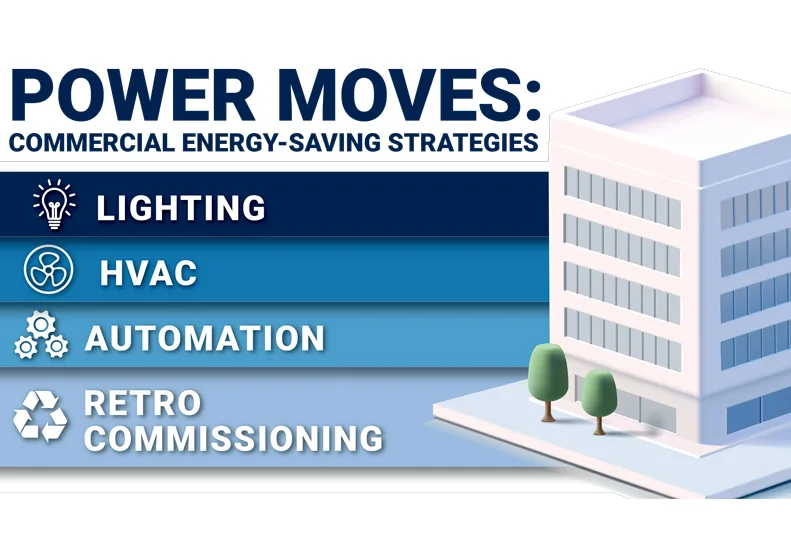
Complying with Washington state's Clean Buildings Act can prove costly, but multiple low-cost solutions exist for commercial building owners to take advantage of, according to some energy efficiency experts here.
Pursuing simple lighting; heating, ventilation, and air-conditioning; automation; and other retro-commissioning solutions that improve the energy efficiency of existing systems are often the most efficient ways to save money on utility costs and avoid Washington state fines, says Michael James, vice president and co-owner of Custom Energy, a Spokane Valley-based energy solutions company specializing in Clean Buildings Act compliance.
Custom Energy performs energy benchmarking to determine a building's energy consumption and whether it’s meeting the requirements of the Clean Buildings Performance Standards, working with building owners to bring their facilities into compliance.
The Washington Clean Buildings Act mandates that owners of commercial, multifamily, and certain other buildings track energy use, meet energy-use targets, and establish operations and maintenance programs. The act is meant to reduce pollution from fossil fuel consumption in Washington state, according to the Washington State Department of Commerce website. Compliance standards apply to Tier 1 buildings, which are commercial structures over 50,000 square feet in size, and Tier 2 buildings, which are smaller commercial buildings between 20,000 and 50,000 square feet in size, including multifamily buildings.
Noncompliance fines for a Tier 1 building are $5,000, plus up to $1.50 per square foot of the gross floor area every five years, James says.
After determining a building’s energy use intensity number — a two- or three-digit figure indicating the facility's average power usage — companies such as Custom Energy typically prioritize retro-commissioning to audit the facility. This process identifies which mechanical systems are either overtaxed or underperforming, allowing for targeted energy reduction.
“We like to start with retro-commissioning, so we want to take the infrastructure that people have and fine-tune it and make it work better,” James says. “That's typically a really low-cost way to save energy and extend the life of the equipment.”
A building owner, for example, might leave air conditioning on 24/7 throughout the summer at a much colder temperature than employees prefer, James says.
“Many of our buildings have the pedal to the metal and we're controlling temperature with the brake, so things are running 24/7, we're always cooling or always heating, and so we're just wasting energy all over the place,” he says. “Nobody's complaining, so nobody knows about it.”
A building owner who is able to reduce HVAC, lighting, or computer system usage when it’s not needed, or take simple actions such as keeping blinds closed throughout the day, can reduce the strain on those building systems, he contends.
Once a retro-commissioning project is complete, Custom Energy can install high-efficiency lighting and occupancy sensors, smart HVAC and lighting controls, smart blinds, and other devices designed to maximize energy-saving opportunities without a large capital project, which can sometimes cost over $1 million, he says.
A retro-commissioning project typically costs around $100,000 for a building larger than 100,000 square feet, he adds.
Owners that follow through on a retro-commissioning project could save up to 50% of their monthly electrical usage, depending on building type, James says.
In office buildings, HVAC, lighting, and plug loads from computers and chargers make up the largest energy users. James recommends installing smart systems and implementing behavioral changes before replacing an HVAC system, unless the system is inefficient or due for an upgrade anyway.
“For commercial buildings, the most expensive thing we will do, energy-wise, is move, heat, and cool outside air. If we can slow that equipment down, it's going to trickle back to the big energy users and extend the life of it,” he says. “There's no bad outcomes that come from a retro-commissioning project.”
The Clean Buildings Act was first signed into law in 2019, expanded in 2022, and augmented in 2023, explains Emily Salzberg, managing director of the Clean Buildings program at the Washington State Department of Commerce. The Clean Buildings Act requires building owners demonstrate their properties meet Clean Buildings Performance Standards, and bring them into compliance, usually with the help of a company such as Custom Energy or Seattle-based McKinstry Co., Salzberg says.
Other energy savings opportunities include establishing an operations and maintenance program that can save building owners 10% to 15% in average annual utility costs, says Salzberg. The Washington State Department of Commerce offers grants and incentives to pay for these necessary projects, she adds.
Pat Owen, business development manager at McKinstry, says organizations such as the Association of Washington Cities offer funding to help offset costs. Some building owners are missing out on available state funds and grants that can be used to pay for benchmarking, retro-commissioning projects, and larger upgrades, Owen adds.
The state makes funds available even for small projects, which can have an outsized impact on energy bills, he contends.
“Keep an eye out for funding opportunities,” he says. “That's part of the way we engage with clients, is helping them locate funding that might not be on their radar. To do small things that are low cost or no cost, that's a great place to start.”

Stay Informed. It’s Free.
Subscribe to our newsletters and get the latest news and insights delivered to your inbox.
We respect your privacy.
Unsubscribe anytime.
Thank you!
You’re subscribed. Keep an eye on your inbox for the latest updates.