Meet & Greet with Danny Scalise, Spokane Regional Health District administrative officer
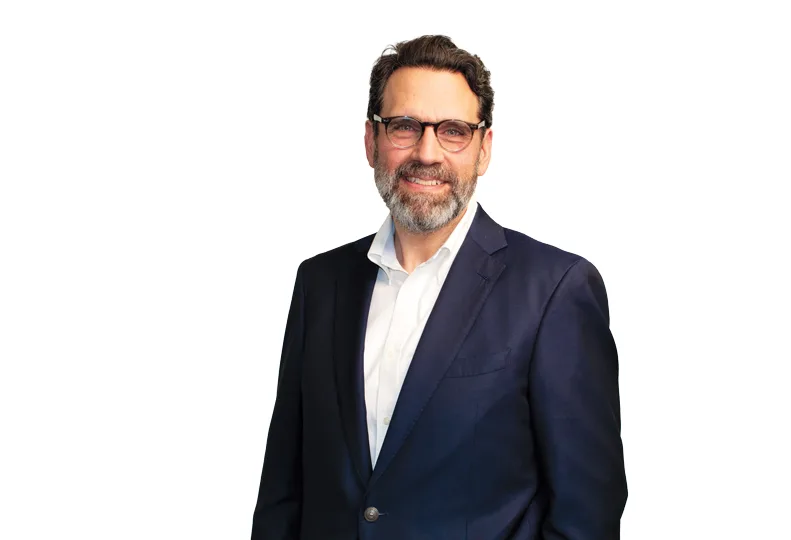
Prior to his role with Spokane Regional Health District, Danny Scalise served as public health director for Burke County, North Carolina.
| Dylan HarrisDanny Scalise is the newest administrative officer for the Spokane Regional Health District.
Prior to his career in public health, the West Virginia native worked for a large Wall Street bank until the onset of the Great Recession. Scalise then went on to work for former Sen. Joe Manchin, who was serving as governor of West Virginia at the time.
Following his work under Manchin, Scalise pivoted to the public health sector, working for a couple health departments before becoming the executive director of the West Virginia State Medical Association.
Most recently, he served as public health director for Burke County, North Carolina.
Did your finance background help prepare you for a role in public health?
We have times where we have a lot of money and times where we don't.
After Sept. 11, we saw a big jump in funding because of the public health preparedness that went along with the response to 9/11. If you look at COVID, obviously, the federal government just threw money at local health agencies. We're getting to a point now where we're not in COVID.
Our funding, it won't go away. We're needed. We're necessary.
I think the federal government, state government, local government all understand what public health can do. The pandemic taught people that we were necessary, but we're not going to be as flush with cash, maybe, as we were previously.
So, in a limited resource environment, how do we continue to operate? How do we continue to take care of the citizens?
I wanted to ask specifically about the opioid crisis, because that’s something that’s talked about often within the business community here. What are your expectations about the role the health district plays in addressing such a significant issue?
To me, the people portion of it is what’s most important.
But if we take your readers, the business standpoint of it, anybody who’s a leader of any organization that has employees has looked at insurance costs.
Part of our job is to do our best to make sure those people are in treatment, make sure certain diseases don't make their way around, because we know that that's the kind of thing that's going to get in the emergency department.
We know that as uncompensated or undercompensated care gets in the emergency department, it drives prices up within the hospital system, and then who pays for it? Those of us that have insurance.
It makes its way into the business community. That's why businesses like going into places where the public health system is robust — doesn't get in the way, doesn't overregulate — but is robust enough to help keep their insurance costs down.
I’ve seen a lot of news stories about how West Virginia is one of the states that has been affected the most by the opioid epidemic. Have your experiences with the opioid crisis in West Virginia helped you prepare to take that issue on in Spokane?
No question.
It's still an issue here. It's still an issue everywhere in this country. It's something that we're all dealing with. And when I say, “we're all,” it's everybody. It's me. It's you. When you go to church or you go to the grocery store and look around, someone in that facility has that disease.
Understanding that and understanding it is a disease, and there's a control factor that we can do — it feels like we don't put a dent in it sometimes, but the reality is, there are certain roles that we play within the control of substance use disorder.
Law enforcement has a great part to play. Hospitals, social workers, everybody has to play a part in this. In ours, it's the treatment program and the harm reduction program that we have here. That's our role to play in it.
(In West Virginia,) I had a lot of people that I was close with, people I knew very well, who died from an overdose. So that sticks with me.
When I started, I was a health official in Fayette County, West Virginia, I had a bulletin board in my office, and the first friend or family member that had passed away, I had their obituary hung up. In two years, I covered that bulletin board with obituaries of people that I knew that had died unnecessarily.
Those are people that I won't get back. Once they go that route, we don't get them back. So every life that we can save is great.
Is there much collaboration between the health district and the business community? Or is that something you hope to build up?
We're a regulator of a lot of businesses. There are thousands of restaurants that we are the regulator for.
We see our role as ensuring that everything is done properly here. We don't want to be heavy handed. We don't want to create regulations that are cumbersome or unfair at any point.
I think the business community also can give us input on what they're seeing. Everywhere that I've worked, I've had a good relationship with the local chamber of commerce and other parts of the business community.
I've always had good people that mentored me from the business community that I could count on. I don't know who I'm going to find here, but it's always nice to have those people that are good advisers to you and can tell you what they're seeing, because the view from my seat can be very different than the view from their seat.
The business community can do a lot. The more people who have good health insurance in a community, the healthier our community is going to be.
What are some of your primary hopes or goals for Spokane Regional Health District under your leadership?
The two things that I'm going to work on right now are the environment, and I mean the environment here in the facility, and the culture that's here.
I think they've had this change in leadership that's happened so much that we have these teams of people here that are kind of out, and they don't feel joined together on the team.
This is the challenge for me as the person who's the connector to all those different teams: bringing them together, giving them some stability.
I bought a house here. I'm here in Spokane. I want to be here. It's going to take me, I think, at least five years to get there.
We have some exceptional people here. If they're used right, if they are in the place where they can be successful, all of Spokane County gets to benefit from it.
A lot of people told me about the building here, the architecture, that it's been called a lot of names, that people say they don't like it. I love it. I think it's a great facility.
It's also 50 years old, and part of my responsibility is to be a good steward of not just the money but also the assets the taxpayers have given us. And this facility is one of those things. I'd like to see it last well past me, and in doing so, it will continue to benefit people.
This interview has been edited for length and clarity.