College enrollment shortfall threatens future jobs
Increasing four-year baccalaureate entry rates essential to meet workforce demand
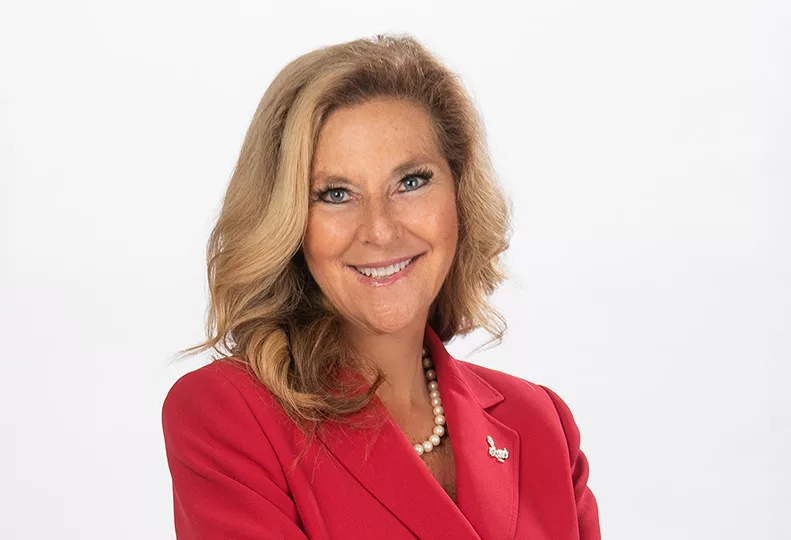
Shari McMahan is the president of Eastern Washington University, in Cheney, and the chair of the Council of Presidents, an association of six public, four-year colleges and universities in Washington state.
| Eastern Washington UniversityWashington state is falling short in producing enough four-year college graduates. The data has been consistent, and the implications are serious.
Nationally, 45% of high school graduates enroll in a four-year institution. In Washington, only 33% do. At the same time, the state’s projected job growth from 2023–2032 is 12.85%, far outpacing the national average of 2.8%. Over the next decade, Washington state will see 1.5 million job openings, with almost half requiring a bachelor’s or advanced degree. Our colleges and universities cannot meet that demand; we are facing a shortfall of more than 300,000 workers with the required credentials.
Washington has increased its efforts through the Council of Presidents and the Washington Student Achievement Council, but the question remains: Can we move fast enough? With enrollments plateauing, resources tightening, and college-going rates among the lowest in the nation, a more coordinated, statewide approach is essential.
Current initiatives are a good start
The state has invested heavily in Free Application for Federal Student Aid completion and dual enrollment — two of the strongest predictors of college attendance. Yet, while nationwide FAFSA completion now hovers around 50%, Washington state sat at only 19% as of Nov. 10. According to the National College Attainment Network, students who complete the FAFSA are 84% more likely to immediately enroll in postsecondary education. Given that many states now require FAFSA completion for high school graduation, Washington state should consider following suit.
Dual enrollment also plays a major role. Participation has increased statewide, and the results are clear: Students who complete dual credit courses enroll in postsecondary education at a rate of 67%, compared to 39% for those who do not. These are promising steps, yet by the time many students reach their junior or senior year, they have already formed their opinions about the value of college. True progress requires a holistic approach that begins long before high school — integrating personal, financial, mental, and academic support throughout a student’s entire K-12 experience. When these elements work together, college-going rates rise, and states build a stronger, more resilient workforce.
Early conversations, demystifying the college experience
Family influence remains one of the most powerful factors in a student’s decision to attend college. Since COVID, that influence has grown stronger, reflecting both economic pressures and students’ preference to stay closer to home. Parental engagement is tied closely to academic success, and students from higher-income households — especially those whose parents attended college — are far more likely to pursue a degree. But affordability concerns continue to dominate family conversations. Too often, national media coverage highlights only the most elite institutions and their price tags, fueling skepticism about the value of a degree. Families need a clearer understanding that college can be both accessible and worthwhile.
This narrative frequently overlooks the essential role of regional public universities. Nationwide, these institutions educate nearly 20% of college students — more than 3 million people. In Washington state, our regional public universities are engines of social mobility and community vitality. They prepare graduates to be informed, engaged citizens who strengthen our democracy. At Eastern Washington University, for example, about half of our students graduate with no debt.
Early exposure to college can also shape aspirations. Research shows that when students visit campuses as early as grade school, their confidence, academic grit, and likelihood of taking advanced coursework all increase. A randomized control trial demonstrated that holistic support beginning in elementary school is the most effective way to raise college-going rates. Programs such as Rutgers Future Scholars — which provides Saturday academies, summer institutes, and year-round programming for first-generation students — have produced an 81% college-going rate among participants. More than 3,500 students have completed the program since the first graduating class in 2017, and similar programs, including Purdue Promise, are showing strong results.
High school and beyond
If early experiences matter, sustained support through high school is equally critical. High school counselors are among the most influential resources in this work. Research consistently shows their impact, particularly for low-income students, and students benefit even more when their counselor shares their racial or cultural background. Yet when schools prioritize graduation rates alone, conversations about college may be limited or absent.
Strategic investments can change that. Across the country, incentive-based models have encouraged districts to elevate college readiness. In Texas, House Bill 3 provides bonus funding for every student who meets college, career, or military readiness benchmarks. Arizona and Michigan offer incentives tied to FAFSA completion. In Washington state, the College in the High School program expands opportunity by giving students no-cost access to college courses, funded by the state and delivered through university partnerships. These models show what is possible if the state chooses to scale similar approaches.
Washington must also simplify admissions and enrollment. Digital transcripts, guaranteed or direct admissions, and modernized systems reduce barriers, especially for first-generation students. Other states have made faster progress; we have work to do to ensure our processes are clear, consistent, and accessible.
Beyond high school, the state must strengthen transfer pathways. Many students begin at two-year colleges because they are more affordable and resonate with their academic comfort level. Clear articulation agreements and guaranteed transfer pathways can support these students in completing four-year bachelor’s degrees. But shrinking enrollments and the expansion of applied baccalaureate degrees at community colleges have intensified competition between two- and four-year institutions — undermining collaboration at a moment when the state cannot afford fragmentation.
Washington has taken important steps, particularly in expanding dual credit opportunities and emphasizing FAFSA completion. But leadership requires acknowledging that these steps, while meaningful, are not enough to overcome the challenges we will face in the next decade. We must commit to a statewide, coordinated effort around a shared goal: building a genuine college-going culture. That means acting with urgency to invest in programs that work, remove barriers that persist, and embrace innovative approaches. If we choose to act boldly and collaboratively, we can ensure every student — and every community — has the opportunity to thrive.
Shari McMahan is the president of Eastern Washington University, in Cheney, and the chair of the Council of Presidents, an association of six public, four-year colleges and universities in Washington state.

Stay Informed. It’s Free.
Subscribe to our newsletters and get the latest news and insights delivered to your inbox.
We respect your privacy.
Unsubscribe anytime.
Thank you!
You’re subscribed. Keep an eye on your inbox for the latest updates.