Five Takeaways: The Health of Health Care
with Aaron Wilson, CHAS Health CEO
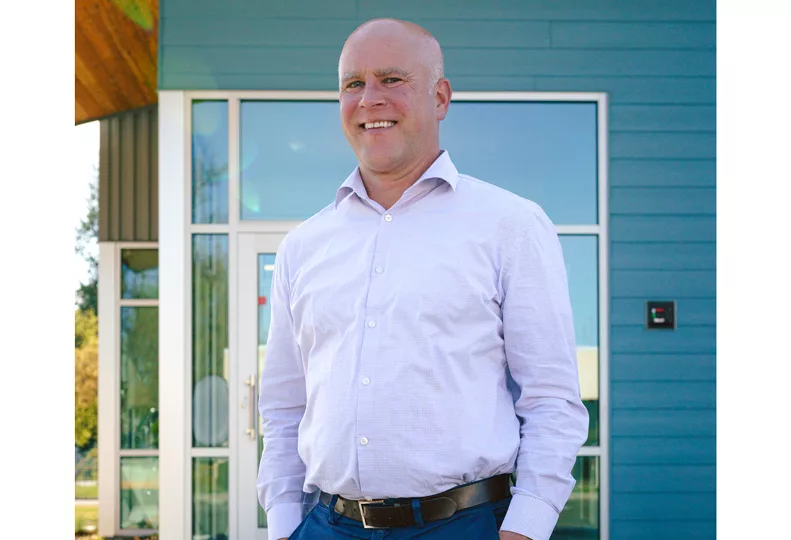
For its latest episode of Elevating The Conversation, the Journal sat down with Aaron Wilson, the CEO of CHAS Health, to discuss the health of health care.
The Elevating The Conversation podcast is available on Apple Podcasts, Amazon Music, Spotify, and elsewhere. Search for it on any of those platforms or the Journal's website to hear the entire conversation, but for now, here are five takeaways — edited for space and clarity — from the episode.
1. The health care sector is exhausted.
In the Inland Northwest, I think we do a good job of taking care of each other. We work very well with MultiCare, with Providence, our other core community health care centers, Frontier Behavioral Health. There are many others.
But I would say in general, (the health care sector is) probably exhausted. It's been a very challenging last couple of years, and the pace and volume of change really is unprecedented.
So, how do we process that as large operational institutions and remain in a posture that allows us to continue to take advantage of opportunities when they present, but also be very thoughtful about how we allocate resources, just given the sheer amount of uncertainty in the health sector at this time?
And it's not selective to just federal issues, but state budgets present their own unique challenges and the ripple effects to the health care provider system can be significant.
We're really trying to lean into our fitness and trying to be thoughtful about how much additional pressure we create for our staff as we identify opportunities and new things to pursue.
2. Uncertainty in the job market has helped improve retention rates.
We're definitely performing at a much higher level than we were during the pandemic and even just the few years we came out of it.
What we're seeing is staff are really sticking right now, just given the level of uncertainty. Our retention rates are the highest they've ever been.
We’re really trying to focus on our culture and our value proposition to the community, and how we take care of patients has really been an area of focus.
But I don't think we're the only sector that is seeing employees stick around because of the uncertainty in the job market and all the other unknowns going on.
3. Expanded services and enhanced operational efficiencies have allowed CHAS Health to grow and meet more demand.
One of the drivers is just growing our behavioral health footprint. We became a licensed behavioral health provider a few years back. We were able to apply for a (Substance Abuse and Mental Health Services Administration) grant to get a new clinic here in Spokane, specifically providing behavioral health services.
So, if you look at our service lines, behavioral health year over year has grown 20%. Just that alone has been a big driver.
Access for dental services has been another big driver. We talk about medical a lot, but we have a significant number of folks here that rely on CHAS Health as their primary access point for dental care. We see a huge percentage of the Apple Health adult population come to CHAS for dental services.
We have a smaller pediatric footprint, but we're really trying to grow that.
Coming out of the pandemic, we took a couple years to sort of right-size our staffing ratio. We really have held steady the last two years at about 1,800-plus employees between all of our sites, including our three Idaho locations.
And then we've been able to focus on efficiency. And again, that's where we're seeing growth in our medical access.
We're seeing I think 10,000 more medical patients year over year from ‘24 to ‘25. Most of that growth is really driven by enhanced operational efficiencies.
4. Strategic health care partnerships are benefiting the community.
One of the great advantages of doing this work here in the Spokane community is people are really willing to collaborate.
Our Parkside Clinic is on sort of the front doorstep of (Volunteers of America Eastern Washington & Northern Idaho’s) location, and that really originated out of a conversation that happened way back probably in 2017. And it was like, “Hey, if we were able to create this collaboration and we had the ability to get a clinic on site, would you guys be interested?”
And you think about the benefit of those (Crosswalk Youth Shelter) kids having the ability to get access to CHAS Health services; it makes all the sense in the world.
With Frontier Behavioral Health, we've been working on the project to get a clinic on their campus downtown for a number of years.
We share 5,000 patients. Wouldn't it be great if we could provide the physical health that they need and literally walk folks across the parking lot to the services that Frontier Behavioral Health provides?
I think collaboration is what sets us apart as a community. I'm trying to think of an opportunity I've turned down when a collaboration has presented itself. There are very few.
5. CHAS Health has a significant impact on the region's business community.
Especially when you talk about our small business community, folks that are doing startups that may not have the ability to provide an employer-based health plan, with us being in the community, even if your employee is uninsured, they still have an access point for primary care services.
If they choose to engage via an urgent care model that's available, we have a couple urgent cares. But really, we try to route folks even from urgent care back into a primary care model, because we know that prevention and engagement also ensures that we have a healthy workforce.
I understand the challenges of being a small employer and trying to figure out how you're gonna provide good, affordable health care. And it's tough.
We're a resource. If your employees haven't considered it, please do consider it. Because it is something we absolutely want to make available for our small business community and others.
This interview has been edited for length and clarity.