Catching up with: Patrick Donovan, president of Dry Fly Distilling Inc.
Spirit maker turns to wine for some canned cocktails
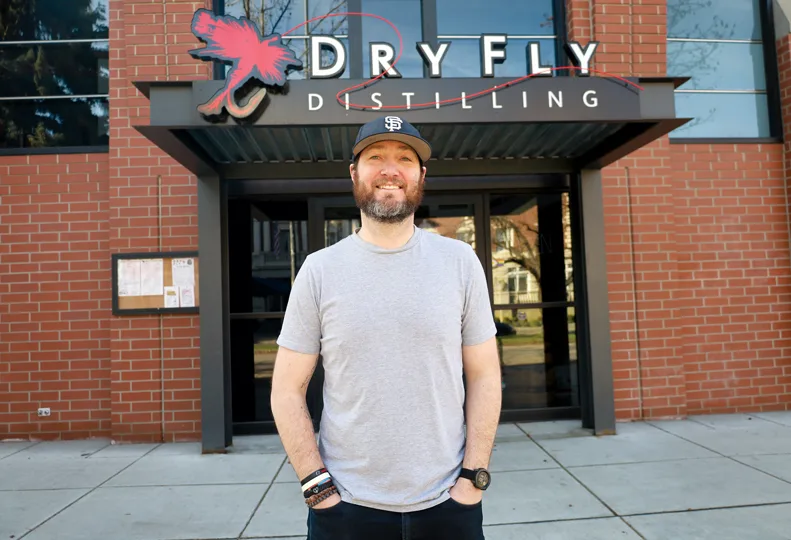
Patrick Donovan, president of Dry Fly Distilling, says the company has benefited from the recent appearance of its Bloody Mary canned cocktail on a new HBO series.
| Karina EliasPatrick Donovan, president of Spokane-based Dry Fly Distilling Inc., says the company received no advance notice that the spirit maker’s canned Bloody Mary would be featured on HBO’s new television series DTF St. Louis, much less that the canned cocktail would play such a prominent role in the show’s storyline.
Regardless, the unexpected brand exposure has had positive feedback from customers, with the company’s canned Bloody Mary supply nearly selling out. Looking ahead, Donovan says Dry Fly might create a drink inspired by the show and its characters.
“As a small business, truthfully, that’s typically stuff you’d have to pay for,” Donovan says. “Especially in the way they did it, there was some really aggressive brand exposure. … We’re almost sold out of Bloody Mary right now. There’s a definite interest in people reaching out and I think when we follow up and do something, that’ll be cool.”
When the Journal last caught up with Donovan in the summer of 2024, Caymus Vineyards, a winemaker based in California's Napa Valley, had acquired a majority stake in Dry Fly. The partnership was expected to help the Spokane-based spirits maker “move to another level that would have been very hard to get to independently,” Donovan told the Journal after the acquisition.
Donovan declines to disclose the company’s financial details, but says after a flatter year of growth following postmerger distribution restructuring, the company is starting to gain traction and is optimistic for growth in 2026. Dry Fly’s workforce has remained unchanged with 24 employees, and the overall look and operations at the company’s 19,000-square-foot distillery have remained largely the same.
Crafting and selling canned cocktails has been an important part of Dry Fly’s growth in recent years, yet, it has been made difficult by dramatically higher excise taxes imposed on spirit-based, ready-to-drink beverages in certain states, including Washington.
According to the Washington State Liquor and Cannabis Board, Washington has the highest taxes on spirits in the country, significantly exceeding beer taxes. Finding a way around those taxes while still delivering a quality product was one of the benefits that came with the company’s partnership with Caymus Vineyards.
In 2025, Dry Fly began canning a new cocktail series made with Caymus Vineyards wine as the base spirit. The black-can series dubbed “On the Fly Canned Cocktails” features four blends, including Watermelon Squeeze, Huckleberry Twist, Margarita Remix, and Jalapeño Margarita — all with wine as the base alcohol. Production was recently moved to Dry Fly’s headquarters at 1021 W. Riverside in downtown Spokane, with 2026 marking the canned series' first full distribution cycle, Donovan says.
The series has a strong California market and growing demand in Oregon, he says. The rollout in Spokane is still in the early stages, with some canned blends available at Rosauers Supermarkets and Yoke’s Fresh Market stores, he says.
“It tastes like a cocktail,” Donovan says of the wine-based series. “We curated the wine in a way that it’s almost odorless, flavorless. It’s just a conduit; it’s just a different avenue for the alcohol. And it circumvents some tax structure and gets Dry Fly into more people’s hands in some areas that we typically couldn’t do.”
Rather than chase volume across dozens of states, the company is concentrating on markets where tax structures and retail access make the most sense, he says.
For example, Dry Fly Distilling is sponsoring the Zootown Festival in Missoula, Montana, this summer, selling primarily the On the Fly series, Donovan says. The music festival sponsorship provides an opportunity to introduce the black cans to the Montana market, creating regional awareness beyond Spokane.
Additionally, using wine as the base for the company’s crafted cocktails has opened up new market avenues. Dry Fly is able to create kegs of its signature blends to sell in bars and restaurants — something that is not federally allowed with spirits, he explains.
Dry Fly’s recent momentum is also showing up in a growing number of branded collaborations and limited-run releases.
Over the winter holiday season, the distillery partnered with Washington State University on Cougar Reserve 1890, a whiskey release made with WSU-developed Sockeye grain and finished with Washington wine barrels. The launch sold strongly, Donovan says, and has opened the door to additional university-branded products planned this year using other Washington agricultural ties, including apples, cherries, and grains.
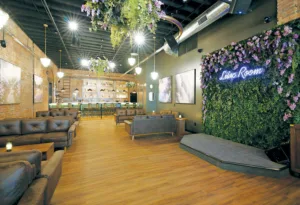
The company has also expanded its custom projects by creating specialty-made spirits for The Davenport Hotel, a nonalcoholic canned beverage planned for the 50th anniversary of Bloomsday, and hospitality experiences tied to its downtown tasting room and event space.
Donovan says the appeal of those projects is the same advantage that helped turn an unexpected HBO cameo into fresh customer demand: Dry Fly remains nimble enough to move quickly, but large enough to execute scale.
“We’re hitting this little niche there,” he says. “Somewhat unexpected, but fun. … It’s why you go into distilling; you can do some cool projects and collaborations.”