Parting Thoughts with Jim DeWalt, Associated Industries president and CEO
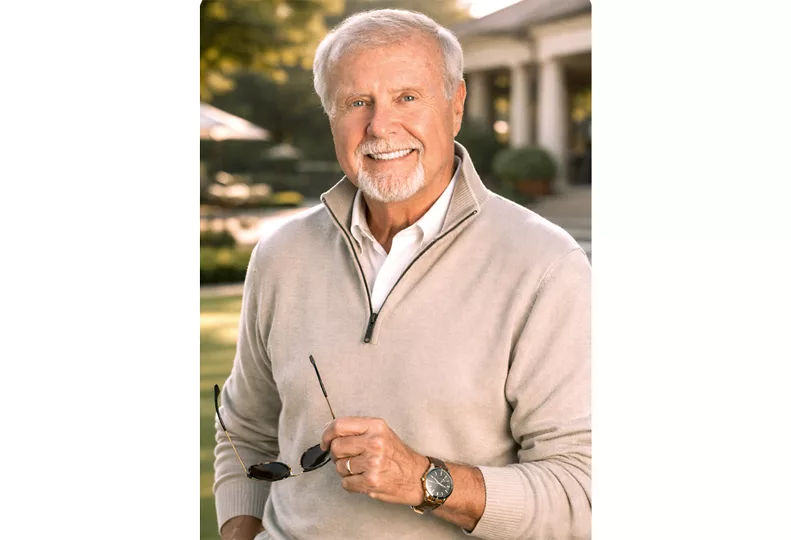
After leading the Spokane chapter of Associated Builders & Contractors, Jim DeWalt began his career at Associated Industries in 2003.
| Associated IndustriesJim DeWalt retired in May, concluding a 23-year run as president and CEO of Spokane-based Associated Industries.
Originally from Monroe, Washington, DeWalt began his career at the 116-year-old employment law, human resource, and benefit support services company in 2003.
Prior to that, he served in leadership positions at Northwest Capital Inc.; MetWest Financial Services, a unit of Metropolitan Mortgage & Securities Co.; and the Spokane chapter of Associated Builders & Contractors.
DeWalt attended Eastern Washington University, where he studied prelaw and English, before attending the University of Washington, where he earned his master’s degree studying administration and management.
Nicole Tedrow, previously the chief operating officer at Associated Industries, has succeeded DeWalt as president and CEO.
What were some of the most notable changes at Associated Industries under your leadership?
I believe I was the sixth president. I’m not positive, but I am pretty secure in saying that I was the first business guy. Prior to that, they’d all been attorneys.
I redirected the legal department more into employment law, and that’s really their focus today. We’ve expanded it from one attorney; we have three attorneys on staff full-time.
Part of the membership is access to those attorneys, and then Nicole (Tedrow) is an attorney. They’re all first-rate and came from the private sector.
Then, I looked at the menu of things that we had at the time. When I first came in, they had one HR person. We expanded that and now they have five.
Associated Industries was primarily Spokane-centric, and I expanded that. The other service that it provided, starting in 1954, was medical benefits, and I was able to expand that.
Currently, they have significant business in the state of Washington, state of Oregon, state of Alaska, and they’ve been approved to do business in Texas.
What were some of the keys to Associated Industries’ success and your success during your time as president and CEO?
First of all, I think Associated Industries has a niche.
I think the legal side, it’s huge. The HR — we’re speaking to the needs of the employer.
This relationship that they just developed with STCU has the potential to be great.
One of the biggest concerns that I hear from employers, and I think is applicable across the country, is if you’re a small business employer, how do you deal with taxes and your estate planning and your employees? The financial planning piece is really important, and it can be expensive.
It can be intimidating, so if you have someone such as an STCU, someone who can sit down with you as a small employer and help you plan your business and help you understand your business, I think that’s a critical service. That’s one that’s being developed.
The HR part, it’s all about people. There’s probably nothing more important in today’s world right now than medical benefits.
Part of the success is that we reflected the needs of our membership. I think the financial need was one that was important to me. That's why I worked extra hard on it, and when STCU came along, we took advantage of the opportunity.
I worked with a great board. None of this would have been possible were it not for the board.
I think the most important quality among people is trust. In a business relationship, you want to trust the people you work with. I trusted that the board was there to support me if necessary.
When I first came in, we had about 150 members. Today, they’re approaching 1,000. That’s pretty significant.
Were there any major challenges that you had to overcome throughout your career?
As a business, you get caught up in the snare of agendas.
Washington state government has for a long time aspired to have an income tax and aspired to be a single-payer medical benefit provider. That’s not anything new.
In 2007, our insurance commissioner in the state of Washington determined that associations offering medical benefits to their members were engaged in discriminatory practices through pricing and were therefore not going to be permitted to continue in that business.
I felt that was wrong. It was complicated. It is complicated. The medical system is complicated.
I discussed it with my board, and we approached the Association of Washington Business. I physically went over there, met with them, and we decided that we were going to oppose it, and we did successfully, but we had to do it through the court system. It was not fun, and it was not cheap, but we as a group prevailed, and that is without question the reason that we have association health care in the state of Washington.
A few years later, we were audited by the federal government. Do I think it was an outgrowth of the prior? Yes, I do.
It was a seven-year process of an audit, and there were a lot of things that ought to be innuendo, insinuation. Some of that was personally directed; it didn’t make me happy then, doesn’t make me happy now. But we prevailed, and that’s what’s important.
It was small business standing up to state government, standing up to the federal government. Both of them have two things that small employers will never have: they have time, they have money.
What accomplishments throughout your career are you most proud of?
One thing that we were able to do that made a difference was starting a scholarship program. I find that to be one of the most satisfying things that I was able to do.
You want your company to stand out. How do you do that? Do you sponsor a baseball team? Do you contribute to the many not-for-profit organizations and participants? Those are all important. I don't diminish those, but an organization like Associated Industries — our name doesn't really help — how do I distinguish my organization?
As I reflected on my life, the thing that made a difference was I got an education. It opened up worlds to me that I didn't know existed. It allowed me to meet people that I may not have.
I thought about scholarships, and I thought, well, those are usually to your 4.0 student or to your very poor student. Well, I didn't fit either category. So, what about those students? They have needs.
When I went to college, I was able to work, and I worked the entire time, both here and in the internship program in Seattle, but those opportunities keep getting narrower and narrower and narrower, and a lot of companies are not interested in an internship.
Why not develop a scholarship program? So I did.
I met with a number of people, and we sat down and began to put together a criteria, and we put together four major categories. I wanted it to be inclusive. So one of those areas was business, one of those was health care, one of those was technology, and one of those was the industrial arts.
The initial idea was to make this scholarship available, which it was to our membership. I think originally, we said that you had to have a 3.0 or better. I think we reduced that to 2.75. You had to submit a personal statement. Why are you going to school?
Through the Bright Promise Program, the scholarships were half tuition, so Eastern Washington University, when their tuition was $8,000, that scholarship was $4,000. If it went to $9,000, it went to $4,500. So, we grew with that. I believe over the life of that, we've distributed funds for very close to 300 students.
This article has been edited for length and clarity.