Five Takeaways: Manufacturing & Innovation
with Mike Marzetta, Altek Inc.
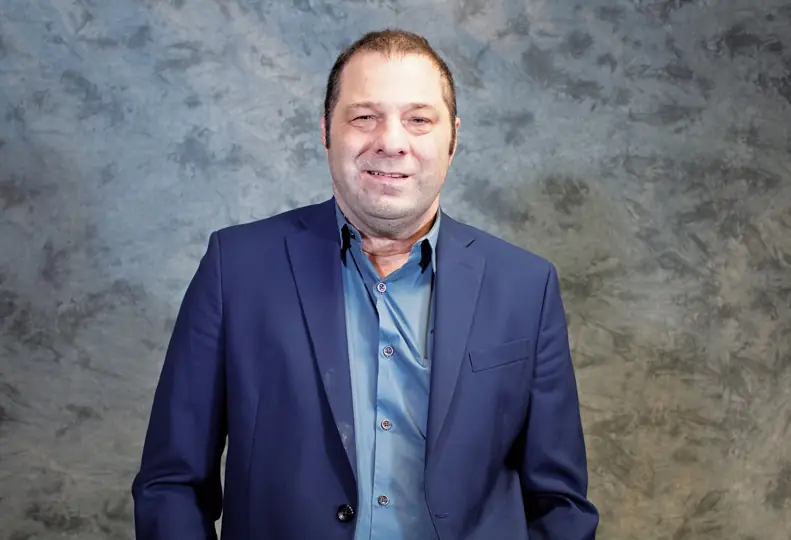
Mike Marzetta, president of Altek Inc. and co-founder of Minds-i Inc., says finding skilled labor is still challenging for manufacturers in the Inland Northwest.
| Dylan HarrisFor its latest episode of Elevating The Conversation, the Journal sat down with Mike Marzetta, president of Liberty Lake-based Altek Inc. and co-founder of Minds-i Inc., to discuss manufacturing and innovation.
The Elevating The Conversation podcast is available on Apple Podcasts, Amazon Music, Spotify, and elsewhere. Search for it on any of those platforms or the Journal's website to hear the entire conversation, but for now, here are five takeaways — edited for space and clarity — from the episode.
1. Finding skilled labor is key for manufacturers in the Inland Northwest.
It continues to be a challenge.
This is our third ramp up in the aerospace industry. Most of it is tied to the Boeing 737. Everybody knows the bad history on the 737 with the crashes, and they had to ramp down, and then they thought they had it working, and the door fell off, and so they had to ramp down.
We feel confident that they've got all the bugs out of it, and this ramp up is gonna stick. And yeah, there is a shortage of skilled labor out there to pick from. I'm proud to say that Altek is doing really well with our recruiting.
The baby boomers are one factor (affecting the workforce). I think a second factor was there were a lot of early retirements from COVID. And I think a third factor is they're not teaching STEM education as much as they used to — and much as they should be in — the school systems.
2. Despite a higher cost of doing business in Washington, one state program is helping companies here survive economic downturns.
Washington has this program called SharedWork, and that's where your people can work 20 hours a week and they get paid unemployment for the other 20 hours a week.
That really saved our skin when we were ramping down and ramping up and ramping down, because you lose those people. When you're ramping down, you can't just keep these guys on for 40 hours a week. And if you lose those folks, you're never getting them back.
So kudos to Washington on that program. I know companies in Idaho that literally had to let all their people go, try to rehire them, let them go again.
3. Aerospace and advanced manufacturing are part of Spokane’s identity.
I was part of what's now called (the Northwest I-90 Manufacturing Alliance), but originally, we called it the Inland Northwest Aerospace Consortium. And just a few years ago, we branded as (Northwest I-90 Manufacturing Alliance) to kind of broaden it so we're not just locked into aerospace, because if you can do business in aerospace, you can do business in medical, you can do business in lasers, you can do business in all high-tech arenas.
This is from the outside looking in: If you're talking to somebody from Seattle or somewhere else, (they used to) describe Spokane as a rural farm community and stuff like that. Now, they throw aerospace and advanced manufacturing in there when they describe Spokane.
If we've done nothing else over the last 20 years, we've helped to change our brand from rural farming community to an aerospace and manufacturing community in the eyes of outsiders.
4. Artificial intelligence tools can improve efficiency for some manufacturers.
Writing CAD/CAM programs for machining is pretty laborious. So (Altek) bought AI that can generate a CAD/CAM program.
Now, is it as good as the one that the person generated? No. But we don't know if we're gonna get that business long-term or not. This is just the prototype run. So maybe it's 75% as efficient, but it can crank it out in a few minutes. So, we run our prototypes using that program, and then if it turns into high-volume production, we go back and write it with a person.
They've got some (AI technology) out there where we're quoting on a new product and we’re going through all the features of the product and the material and the tolerances and the angles and the weight and everything like that. And they've got some AI tools that will look at all the similar products that you make and make a guesstimate as to how much you should charge for this product by comparing it to other similar products.
And again, it's probably not quite as accurate as a person doing it, but you only get a small percentage of the things you quote. And the first time you quote it, you're going through prototyping and preproduction, which is very low volume. So if you miss it, you're not really getting hurt that much. By the time it goes into full-blown production, you've had a set of eyes on it, you've fine-tuned everything.
Those are just a couple examples.
5. AI may help address the skilled labor shortage for certain types of manufacturing, but not all.
Manufacturing's been using AI for a long time. We started 15, maybe 20 years ago with object recognition, where you present a part to a camera or cameras, and it basically looks at the part and tells you if there's anything wrong with it.
AI didn't happen overnight in the manufacturing industry.
There's a good possibility that there's a cross-section that might be able to address some of the skilled labor issues.
With the type of manufacturing we do, especially with machining, and molding to some degree, there's just no shortcuts. Even if the AI achieves self-awareness, there's still gonna be some portion that needs the expertise of a human and the hands and the eyes and the decision-making of a human. It might become less though, as a smaller percentage.