Fairwood Retirement's evacuation plan put to test
North Spokane senior living community's nearly 300 residents safely exited area
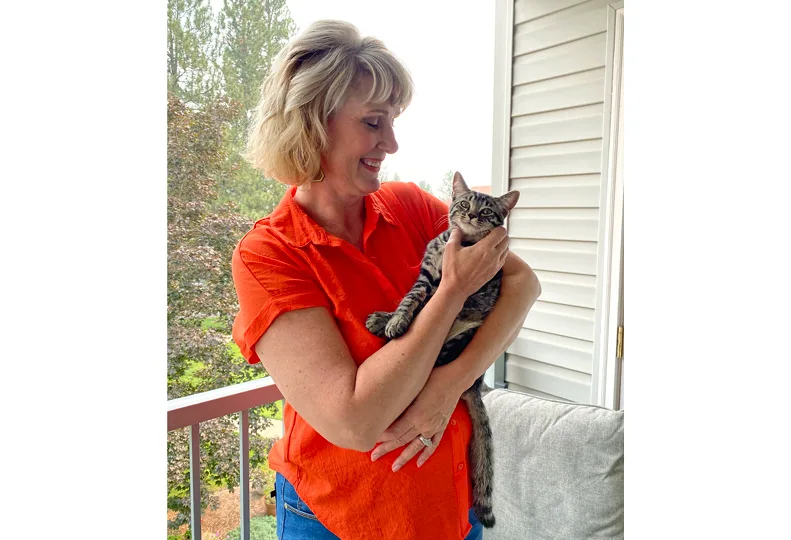
Sheila Fritts and other Fairwood Retirement Village employees took turns taking care of some residents' pets during the fire evacuations.
| Virginia ThomasIn the nearly 40 years since opening its doors, Fairwood Retirement Village & Assisted Living had never experienced a mass evacuation. That changed with the Spokane Complex Fires.
When the fires in northwest Spokane grew into a blaze that forced nearby neighborhoods to evacuate on Aug. 1, the roughly 18-acre Fairwood community was included in the evacuation order.
Sheila Fritts, marketing director at Fairwood, says the senior living community's staff was suddenly tasked with evacuating all 71 assisted living and memory care residents. An additional 211 independent residents evacuated on their own.
Fritts says she had been reviewing Fairwood’s emergency fire evacuation plan, with the help of Spokane County Fire District 9, for the preceding three years. Over the past year, Fairwood staff reviewed the community's evacuation plan with each independent living resident.
“We were not practiced at this,” Fritts says. “But we had mentally practiced, we had discussed it, we had imagined it.”
Of the assisted living and memory care residents, 56 were evacuated to Fairview Assisted Living, while the rest were taken in by family members. Two other facilities sent beds to Fairview for the influx of evacuated residents.
Most of the roughly 100 independent living residents who have a car drove themselves out of the evacuation zone, Fritts says. Many were picked up by family or friends, while others took the emergency transportation options Spokane Transit Authority offered.
There were some misunderstandings and miscommunications when it came to evacuating through STA, Fritts says. STA buses could only shuttle residents directly to an evacuation shelter, nowhere else. Those who had been evacuated or were en route to the emergency evacuation site at Spokane Falls Community College were relocated or redirected to the Spokane Convention Center downtown after the power went out at SFCC.
“They ended up down at the convention center, which is not somewhere we would have recommended for our residents, so we had to problem-solve that and seek emergency contacts who could come and get them,” Fritts says. “In the end, there were only four that ended up at the shelter, and it … was very hard to talk them into going to a hotel room, because they felt like they had everything they needed there.”
The average age of a Fairwood resident is 86. Fritts notes that seniors face challenges in an emergency evacuation that others might not experience. They may struggle to use a smartphone to get information about evacuations or to scan a QR code for parking downtown while staying at a hotel.
Five days after the fires began, Fairwood and the surrounding neighborhoods were downgraded from a level 3 evacuation zone — the highest level of evacuation order, in which people are ordered to leave immediately — to a level 2. Within 24 hours of the reduction in evacuation level, about 90 independent living residents had returned to Fairwood.
“We delivered their meals to them ... and used that as an opportunity to talk to them about their emergency plan,” Fritts says. “We asked them to please be aware if your neighbor is here and if we go to level 3 evacuation (again), use the buddy system. They have their bags packed and they have their plan now.”
One independent living resident, Mogie Sabine, is legally blind and can’t drive. She stayed with a friend when Fairwood was evacuated, but as soon as the evacuation level was reduced, she arranged to spend days at Fairwood and nights at her friend’s house.
“Because I don't drive, I couldn't get out of here if we were to go to level 3 tonight,” Sabine says. “So, I can't stay the night. They want you to be able to get out by yourself — I can't do that. And I can't even get level 3 (notifications) on a phone because I don't have a smartphone.”
The evacuation was a destabilizing experience, she says.
“For days, I've been saying I need to be here,” Sabine says. “I need to be in a place designed for seniors.”
Sabine says she was impressed by the thoughtfulness of Fairwood’s executive management team.
“They realized we've got a garden out there, and they started watering that while we were gone,” Sabine says. “This kind of a thing is a lesson for other organizations.”
Fritts says Facebook became a vital tool for communicating with residents after they evacuated.
“We've seen a 4,000% increase in our Facebook viewership, and a 2,000% increase in our engagement,” Fritts says of Fairwood’s Facebook page. “We've worked hard to do daily updates or more (frequent updates), and we've found that it's a comfort to them.”
Despite the disruptions to their lives and the stress that the fires caused, Fairwood’s residents and staff found silver linings.
Fritts says a handful of evacuating residents, upon realizing that hotel rooms in Spokane would be in high demand, chose to travel to Chewelah for a mini vacation at the Mistequa Casino Hotel.
“They had a great time,” Fritts says. “They said that the rooms were very reasonable, and they were really enjoying themselves. That was a bright spot.”
For staff, looking after pets that a few residents were unable to evacuate with was another bright spot. One pet became a particular favorite among the staff.
“Tinkerbell is a rambunctious teenage kitten that we've taken turns caring for,” Fritts says. “There’s some debate over who gets to go see Tinkerbell.”
Fritts says the longevity of Fairwood’s executive management team was vital to successfully navigating the evacuation and the days afterward — most of them have known every resident that has lived at Fairwood since it opened in 1988.
“The key is leadership — leadership that feels responsible, leadership that feels connected to their residents,” Fritts says. “We really see any failure to act on behalf of our residents as something that we would take personally and feel like it's an insult to the relationship to not do our best to care for them.”
Fairwood has already been working to adjust emergency plans for future evacuations.
For example, Fritts says, Fairwood’s executive management team is working with Spokane County Fire District 9 to determine the best option for transporting seniors to a safe place during an evacuation.
“We are so thankful (to STA), but we did learn that they could not take our residents to where we were asking them to; they could only take them to specific locations,” Fritts says.
Fritts says Fairwood and the fire district will work together to identify a transportation option that would be best for Fairwood independent living residents.Stay Informed. It’s Free.
Subscribe to our newsletters and get the latest news and insights delivered to your inbox.
We respect your privacy.
Unsubscribe anytime.
Thank you!
You’re subscribed. Keep an eye on your inbox for the latest updates.