She may never sing solo
Spokane Area Youth Choirs leader builds more than music
“I’m sure you’ll figure it out.”
With those words, a former executive director opened the office door, introduced Sarah Hopkins to her new job, and walked away.
That was in the fall of 2000.
Hopkins had been hired through a temp agency to provide office support for Spokane Area Youth Choirs. As a young mother, she was simply looking for work that would fit around her family’s schedule.
The woman who had managed the office before her had been there for a decade. She left before Hopkins was hired. There was no warm hand-off, no instructions, plenty of unanswered questions, and, as Hopkins remembers, “a very large gray area” around what needed to be done.
She had no background in music administration. In fact, she had no music training at all.
So she had to figure it out.
Twenty-six years later, she’s still there.
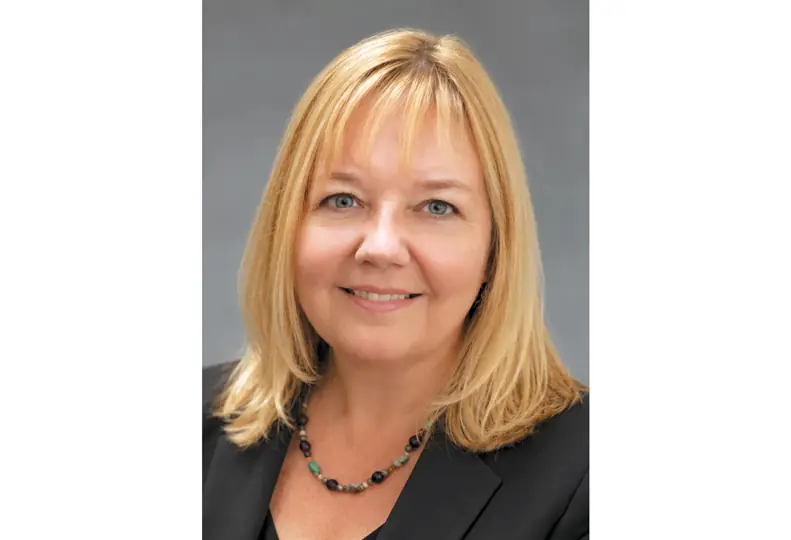
Today, Hopkins is the executive director of Spokane Area Youth Choirs. The organization is in its 40th season, serving more than 200 singers through its youth and adult programs.
But Hopkins' story isn’t about music. It’s about leadership.
More specifically, it’s about a form of leadership that rarely attracts attention. Textbooks might call it servant leadership. Knowing Hopkins, quiet leadership is more accurate. She’s the person behind the scenes who makes sure the doors open, staff are supported, bills are paid, parents are informed, children are safe, and directors have what they need to succeed.
Hopkins is always quick to redirect attention away from herself.
“I think one of the ways that I’ve had longevity,” she says, “is that I’ve always felt that my role was to support whatever the artistic staff felt was important, as opposed to putting my agenda or ego in front.”
There’s an important leadership lesson in that.
We tend to associate leaders with visibility. They stand behind podiums, run meetings, and occupy the big office. Hopkins describes herself as an introvert. She doesn't dictate, demand, or need to be the loudest voice in the room. Her presence is calm. She quietly conducts operations and encourages those around her to do what they do best.
“You have good people, you let them do what they’re good at,” she says.
That philosophy seems particularly fitting for an organization built around choral music. A choir isn't about producing a prominent single voice. Singers listen to each other, blend their voices, and create something none of them could do alone.
Hopkins sees that lesson playing out among the young people who participate.
“You’re making music with people who you hear next to you that shapes the sound,” she says. “You know that you’re a part of something greater.”
That sense of belonging may be one of the Spokane Area Youth Choirs' greatest gifts.
Young people arrive after long school days, sometimes exhausted, a bit distracted, or a little discouraged. Then they sing.
“They leave here, and they’re smiling,” she says.
During rehearsals, the directors may weave lessons about kindness, care, and responsibility into the experience.
Some singers remain with the organization for years. Hopkins has literally watched children grow up. She talks about youngsters who first came to rehearsals, tagging along with older siblings, then became singers themselves, progressed through the program, and, in some cases, returned years later as directors.
For one family, choir wasn't simply another extracurricular activity.
“It was their daughter’s sport,” Hopkins explains.
That distinction matters. Travel volleyball, swim team, or track and field are not for every child. Some discover their "team" elsewhere, and for many young people, music is that place.
And as it turns out, adults may need that sense of belonging just as much.
About a decade ago, Susan Windham approached Spokane Area Youth Choirs with an idea for a women's choir. It was outside the organization's traditional youth mission, but Windham strongly believed that adults wanted a place to come together and sing.
Hopkins and the organization's board found room for the idea. Le Donne began with about 20 singers. Today, it has more than 100. The program’s success demonstrates the value of lifelong singing, an idea the organization eventually incorporated into its mission.
That idea became even more meaningful during the pandemic.
For choirs, the pandemic created an especially cruel contradiction. The very act that brought people together was suddenly considered dangerous.
Rehearsals stopped.
Video conferencing could connect faces, but it couldn't reproduce the sound of people singing together in the same room.
Hopkins wondered whether the organization would survive.
"There were some dark days when I thought we would have to shut the doors," she remembers.
But they didn’t.
For the better part of a year, the emphasis shifted from making music to maintaining connections. Financial reserves, government support, and a steadfast board helped keep the organization alive.
Eventually, singers returned.
If anything good came out of that period, perhaps it was a renewed appreciation for something most of us had taken for granted: People need people. They need social interaction. They need to belong.
Hopkins believes the desire to sing together grew even stronger after the pandemic. And today, in an increasingly disconnected world, the need for genuine community may matter more than ever.
Hopkins has watched technology transform both her job and the children she serves. When she started, the organization didn't have a website, email was rarely used, and files were stored on floppy disks.
Today, technology makes communication instantaneous, yet somehow makes in-person interaction more awkward. Children, particularly those who went through junior high or high school during the pandemic, often struggle to disconnect from their devices and engage face-to-face.
That makes what happens during rehearsal even more valuable.
Phones disappear for a little while. Choir becomes “a space out of time,” Hopkins says. There is no algorithm deciding what they sing next. No scrolling to find the latest trend. No checking for texts or searching social media. There’s simply one person standing beside another, whose voice matters just as much as their own, making music together.
Hopkins believes people today carry more anxiety than they did before the pandemic. Her response is grace, an old-fashioned virtue that deserves renewed attention. Parents sometimes arrive late. Someone misinterprets an email. A person shows up carrying the frustrations of a bad day. Hopkins says she has learned not to define people by those uncomfortable moments.
“You just have to keep coming back,” she says.
Perhaps that’s another reason she has lasted 26 years in nonprofit leadership. She doesn't work from a prescribed management theory.
“I’ve never had much training,” she admits. “I just do my best.”
Treat others with courtesy, provide accurate information, hire good people — let them do their jobs — and extend grace when life gets difficult.
There are entire bookshelves on leadership that say considerably more, but accomplish considerably less.
Hopkins measures success not merely by growth. Not by becoming the biggest arts organization in town. Not by attendance figures or notoriety. To her, success means fulfilling the mission and continuing to provide worthwhile programs.
“I’d like to be of service,” she says, “and I like to keep trying to make things better.”
Someday, Hopkins will leave Spokane Area Youth Choirs. When I asked what she hopes to leave behind, she laughed and returned to where her story started.
“The bar is low,” she said. “I hope to leave the next person with better instructions than I got when I started.”
After 26 years, I suspect the instructions will be considerably better.
But her legacy won't be found in a manual. It will be found in generations of singers who learned to listen to the person standing beside them, contribute their own voice without drowning out someone else's, and acknowledge that some of the finest things we create are those things we create in harmony.
Sarah Hopkins may never sing solo. Perhaps that’s the point.
Kevin Spafford, CFP, is a partner adviser with Allworth Financial in Spokane. He is available at the office: (509) 624-5929; by cell: (530) 966-5560; or by email: [email protected].
Stay Informed. It’s Free.
Subscribe to our newsletters and get the latest news and insights delivered to your inbox.
We respect your privacy.
Unsubscribe anytime.
Thank you!
You’re subscribed. Keep an eye on your inbox for the latest updates.