
WSU pursues sustainability in nursing school curriculum
Two professors helping to push for sustainability
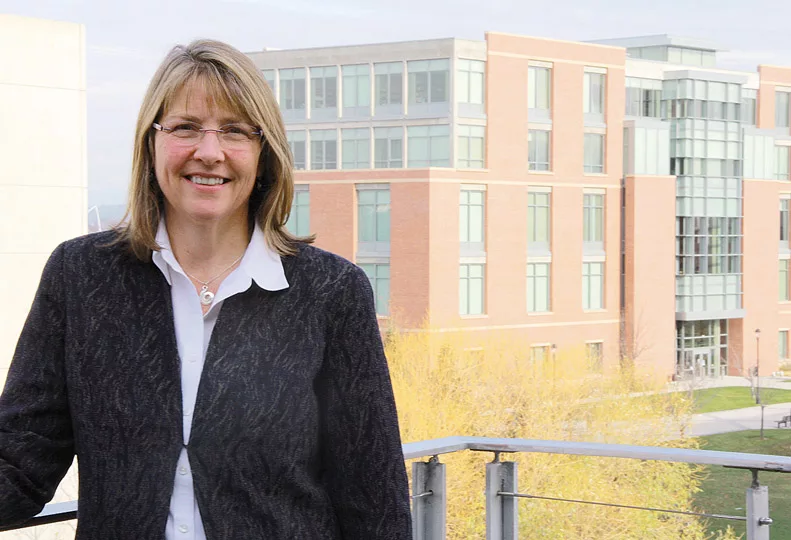
Washington State University’s College of Nursing, now based in Spokane, is working to educate future medical professionals on the importance of reducing the extraordinarily high volume of waste generated by the health care industry.
A key facilitator for the nursing college in that effort is Beth Schenk, an assistant research professor who also created the Nurses Environmental Awareness Tool (NEAT) and founded the Green 4 Good program at Providence St. Patrick Hospital, in Missoula, Mont. Schenk is on a shared appointment between that hospital and WSU’s nursing college.
“We’re in the business of health. That’s incompatible if we’re a polluting entity,” says Schenk, who earned her doctorate in nursing from WSU in 2013. In addition to large waste volume, health care waste is complex and not easy to dispose of.
“Pharmaceutical, biohazardous, nuclear ... those are just a few of the eight or nine different waste streams health care facilities have to handle,” Schenk says. “Just the insertion of an IV and the use of alcohol wipes can fill half a bag of trash. We need to be asking, ‘Do we need to run more water than is absolutely necessary; do we need all this packaging?’ ’’
Practice Greenhealth, a national nonprofit organization based in Reston, Va., reports that hospitals in the U.S. produce at least 6 million tons of waste per year. That figure is based on the amount of waste generated by each hospital patient per day, which averages 33 pounds.
However, that figure only represents those hospitals that are members of Practice Greenhealth and that report their findings annually to the organization, so the volume of waste could be substantially higher.
According to the American Hospital Association, about 5,700 hospitals currently operate in the U.S. Practice Greenhealth says its membership includes roughly 1,600 medical facilities, which would be just over a quarter of all hospitals. The only Spokane medical facility listed on Practice Greenhealth’s membership roster on the organization’s website is the Mann-Grandstaff VA Medical Center, at 4815 N. Assembly.
Waste related to the health care industry often ends up in landfills, which tend to produce significant amounts of methane, a potent greenhouse gas that researchers believe has the potential to generate six times the global warming potential of carbon dioxide, says Practice Greenhealth’s website.
Greenhealth began in June 1998, when the nation’s hospital association and the U.S. Environmental Protection Agency signed an agreement to promote antipollution efforts in the nation’s health care.
At WSU’s nursing college, Schenk is working with the nursing department to incorporate environmental impact into course materials. Founded in 1968, WSU’s College of Nursing educates about 1,000 students each year.
“Nursing curricula is already packed, so the goal is to incorporate environmental health as a thread into the existing course work,” Schenk says.
Next year, however, the nursing college will offer to students a stand-alone course called environmental stewardship for clinicians.
Schenk says the issue of green health care is gaining unprecedented momentum across the country.
In June, WSU nursing college professor Patricia Butterfield told the White House Summit on Climate Change and Health that agencies such as the federal Health Resources and Services Administration should not only continue supporting current green-related research and projects but that they need to expand such efforts.
Butterfield was one of three university professors participating in a panel discussion at the summit who shared their thoughts on why climate change is relevant and important in their fields, the role of climate change training in curriculum, and the role of health care leadership in addressing climate change.
WSU describes Butterfield as a nationally recognized public health nurse with expertise in environmental health interventions and sustainable nursing and health care practices. She stepped down as the nursing college’s dean last year to return to a faculty role. In 2013, Butterfield received the top national nursing award presented by CleanMed, an organization focused on health care sustainability.
As for Schenk, she helped Providence St. Patrick get inducted into the Practice Greenhealth Environmental Leadership Circle in 2010. In 2014, the Missoula hospital was recognized by the leadership circle for its leadership in energy conservation.
Schenk believes medical facilities across the country are more receptive about reducing waste than they were 20 years ago.
“I think it was an easier sell for the clinicians, but for the operators of the facilities, it was a harder sell,” she says. However, that sell became much easier when hospital operators saw the kinds of savings their facilities could achieve.
“Here at St. Patrick, we’re saving close to $1 million annually in operating cost after years of looking at other ways to find alternatives to doing business,” Schenk says.
Cutting energy and water usage, reducing waste, using alternative cleaning chemicals and solutions and a comprehensive organizational effort over time helped Missoula’s St. Patrick reach savings of $935,000 in operational costs last year compared to roughly a decade ago, she says.
Like Spokane, Missoula sits above an aquifer. The Missoula Aquifer is the lone source of water for residents in the Missoula Valley. St. Patrick hospital officials realized they could tap into the natural water source and use it as a coolant during the hotter summer months to save on energy costs. Most U.S. hospitals rely on natural gas and coal to power their facilities, Schenk says.
“It doesn’t happen overnight, but when sustainability and alternative means become embedded into the organizational structure, within years there is a savings,” Schenk says.

Stay Informed. It’s Free.
Subscribe to our newsletters and get the latest news and insights delivered to your inbox.
We respect your privacy.
Unsubscribe anytime.
Thank you!
You’re subscribed. Keep an eye on your inbox for the latest updates.