
Heart disease prevention program might delay memory loss
Practitioner says system could help deter dementia
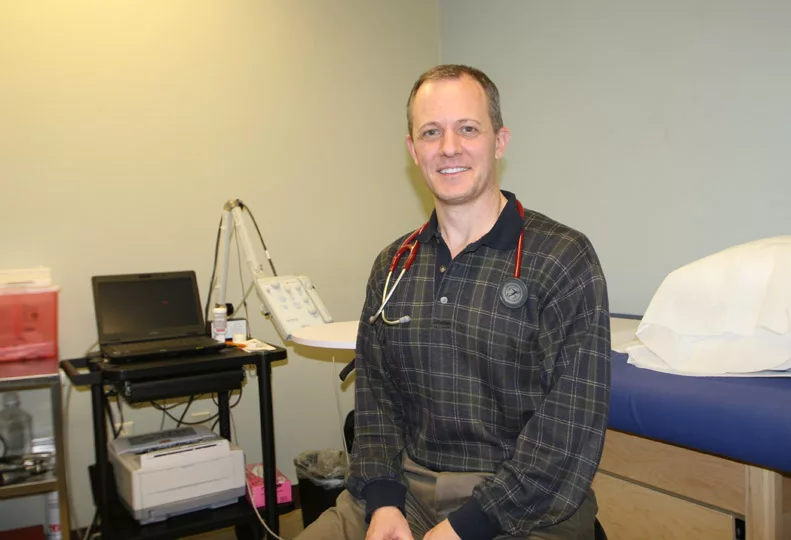
A heart-attack prevention method developed in Spokane and now used throughout the U.S. might be useful in staving off dementia as well, says one Spokane physician who is using the system.
Dr. Jeff Emery, a prevention specialist with Spokane-based Northwest Neurological PLLC, says the Bale/Doneen Method has proven effective in reducing the risk of heart attacks, stroke, and diabetes since former Spokane physician Dr. Bradley Bale and nurse practitioner Amy Doneen developed it more than 10 years ago. Trained by Doneen and in practice with her at the Heart Attack & Stroke Prevention Center before leaving seven months ago, Emery says he’s exploring ways the same system can be used to curb dementia.
“I see more patients over here with memory concerns. If you’re doing it right, you’re preventing all of those things,” he says, referring to heart disease, stroke, diabetes, and memory loss.
He says the practice hasn’t started to research formally the prevention program’s effectiveness in staving off dementia yet, but he says they believe the Bale/Doneen Method can reduce dementia risk by between one-half and two-thirds.
Northwest Neurological is considering tracking the program’s success more formally, but given the slow progression of dementia, it would be a long-term project.
“Memory loss is such a long process that it may take literally years,” Emery says.
The Bale/Doneen Method consists of a series of blood tests, imaging tests, insulin-resistance screening, and genetic testing aimed at diagnosing in a detailed manner a patient’s risk of disease, with family history playing a significant role in diagnosis. Ultimately, Emery says, the series of tests is aimed at detecting an individual patient’s root cause of disease, if disease is present, and treating those root causes. In some cases, he says, the detailed testing can find disease risks that conventional stress tests and blood pressure and cholesterol monitoring don’t detect.
One of the main tests is a carotid intima-media thickness test, known more commonly as a carotid IMT. The test, performed via ultrasound, measures the amount of plaque in a patient’s carotid artery, and the score of that test is expressed by assigning an age to the artery. Emery says a 50-year-old man’s carotid artery can be free of plaque and look like that of a 20 year old, or it can be heavy with buildup and be assigned an age of 80-plus.
The common school of thought, Emery says, is that if there’s plaque in a patient’s carotid artery, there’s likely to be plaque in other arteries as well.
In addition to looking for the presence of plaque, such tests consider the density of the material in the artery—whether it’s close to blocking an artery completely or if it’s softer. Soft plaque can signal a greater risk of stroke, because chunks of such material can break free and block smaller vessels elsewhere.
With the blood work, one of the major factors considered is a lipid panel, which is used to analyze a patient’s cholesterol in greater detail. A typical cholesterol test looks at low-density lipoproteins, generally referred to as bad cholesterol, and high-density lipoproteins, or good cholesterol. A total cholesterol score of 200 or less usually is considered normal.
However, Emery says a patient can have a normal score and still test high on the lipid panel in a particular subcategory of cholesterol that is more prevalent in heart disease. He says a recent patient had a total cholesterol score around 180—well within the normal range—but scored exceptionally high in one of the subcategories and is now seeking treatment to lower that score.
“Just because you are the picture of health doesn’t mean you’re healthy,” Emery says.
He emphasizes, however, that treating cholesterol is one just one part of the equation.
“If lowering cholesterol were the answer, we would have solved cardiovascular disease 35 years ago when the first statin was developed,” he says.
Testing also looks at inflammation within the cardiovascular system, and treatment involves easing any such inflammation that’s detected.
“Identification and monitoring of vascular inflammation allows us to arrest the disease,” Emery says.
While Emery is a prevention specialist and his former colleagues at the Heart Attack & Stroke Prevention Center are focused on proactively curbing disease before it progresses, many of the patients who seek testing already have developed cardiovascular disease, diabetes, or symptoms of disease, such as high blood pressure or high cholesterol.
Ideally, he says, patients would start preventive testing in their late 30s or early 40s—earlier if there’s a family history of disease. Most of the patients, however, aren’t in optimal health.
“Most of the people have had the ‘come to Jesus’ talk with their physician before they come to see us,” Emery says.
Northwest Neurological and the Heart Attack & Stroke Prevention Center are located in separate suites in the same medical-office building at 507 S. Washington, on the lower South Hill.
At Northwest Neurological, the prevention work is a relatively new offering that the practice started upon hiring Emery. Headed by Dr. David Greeley, the practice’s primary services involve treatments for memory loss, movement disorders, headaches, and multiple sclerosis, among other conditions. Such treatments include deep-brain stimulation and neurophysiology.





_web.webp?t=1790233399)