
LakeWolf Creamery builds following with Mexican-style cheeses
Deer Park couple's small batch cheeses gain following across Inland Northwest
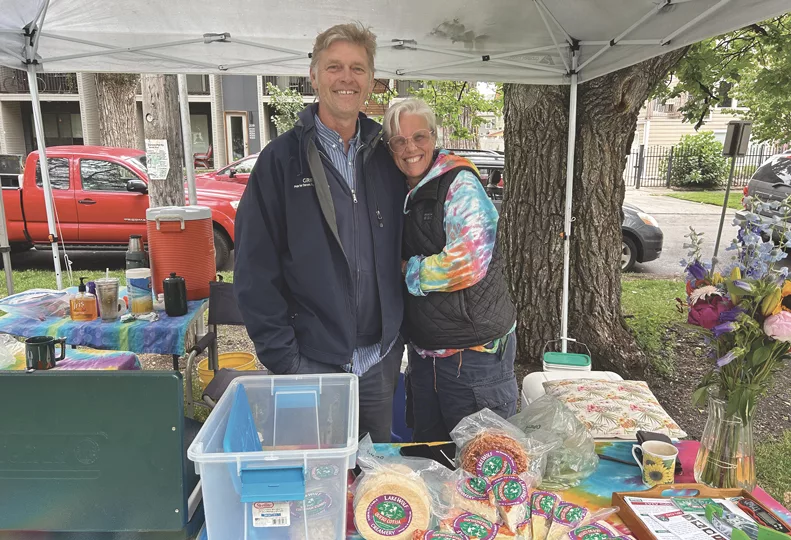
Leana Wolf and Steve Lake sell their Mexican-style cheeses at farmers markets, but they've also secured more agreements with stores and restaurants.
| Karina EliasOn a sunny Saturday morning at the Browne’s Addition farmers market, small groups of people crowded around a small tent clad in glossy pictures of brown cows and signs with phonetic pronunciations of the stall’s cheese offerings.
Behind the table, Leana Wolf and Steve Lake offer samples of silky hand-pulled Oaxaca cheese, fried cotija enchilado, and garlic and herb cheddar curds. What began as a small pivot from dairy farming a decade ago has grown into a word-of-mouth success with farmers market regulars, grocers, and chefs increasingly seeking out LakeWolf Creamery LLC’s Mexican-style cheeses.
“It’s starting to climb, especially in the last two or three years,” says Wolf. “The people are reaching out to us now, and we’re not having to pound the pavement quite as much.”
In addition to selling their homemade cheeses at Inland Northwest farmers markets, LakeWolf has secured agreements with regional stores and restaurants that carry the Deer Park-based company's products or incorporate them into their dishes.
Clients include the newly opened Scale House Market, in Spokane Valley; Bear Creek Mercantile, in Chattaroy; the Wildland Cooperative, in Colbert; Columbia Community Creamery, in Chewelah, Washington; the Bad Seed, a Tex-Mex restaurant in Spokane's Hillyard neighborhood; and the Brew Peddler, on Spokane’s South Hill. Wolf says the creamery also has shipped its products across the country. Even so, she says that as a small creamery, it wants to stay local. In addition to Mexican cheeses, LakeWolf creamery also offers cheddar curds and Greek-style yogurt.
LakeWolf Creamery is located at 42307 N. Short on the north end of Deer Park. The 40-acre farm is home to 18 Jersey cows. Adjacent to the farm, Lake and Wolf also lease 75 acres of pasture. Lake is the head cheesemaker, while Wolf runs the creamery and co-develops recipes. The couple doesn't have formal employees, but instead receives part-time help from five family members who assist with light farm duties, cow milking, and sales efforts at the regional farmers market.
Wolf declines to disclose annual revenue. She says, however, the creamery is profitable.
Jersey cows, Wolf says, are known for their personality. They’re curious and playful and enjoy human interaction. They are also smaller in size than other cows, making them easier to handle. Their milk has a high butterfat content, which creates a high-quality, rich, and creamy milk, she says.
“They’re really cute and have adorable eyes,” she says. “It’s their curiosity more than anything that stands out … they just really involve themselves.”
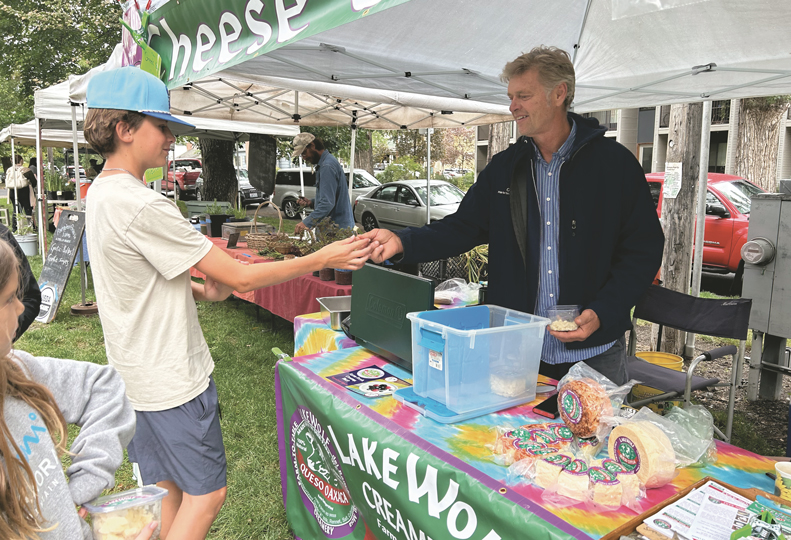 Steve Lake passes out samples of cheese curds to customers at a farmers market in the Browne's Addition neighborhood.
 Wolf, 60, and her husband, Lake, who is also 60, didn't intend to become cheesemakers. In 1999, the couple took over Wolf’s family dairy farm with plans to continue the family business that had been established in 1957. A couple of years later, they purchased a 20-acre property next to Wolf’s parents’ farm.
Not too long after the couple took over, however, grain and hay prices tripled, but the price of milk stayed relatively consistent. To keep the farm afloat, they purchased two motels, one in Libby, Montana, and another in Wilbur, Washington, borrowing heavily from the lodges to continue with the family farm.
As dairy farmers, Wolf and Lake sold their product to large corporations, which often meant they had little control over how much they were paid for their product. The price is set regionally by the U.S. Department of Agriculture, which can, at times, fall below what a farmer needs to break even. Bottling and selling their own milk offered a chance at more profitability.
As they searched the state for a pasteurizer, they met a man who was selling his cheesemaking equipment. He had recently shuttered his family business, but one of his workers, Armando Gonzalez, a Mexican cheesemaker, was intrigued by the couple’s herd of purebred Jersey cows, which are known for their rich, high-fat milk, and convinced them to try making Mexican-style cheese instead.
Wolf and Lake purchased some of the cheesemaking equipment and turned their shop into a creamery. Gonzalez worked with the couple for nearly a year, and although he didn’t share his full recipe process, he helped the couple transform their shop and taught them just enough to get started.
When Gonzalez left, Wolf and Lake still didn’t fully understand how to make Mexican-style cheeses, but they had established a good rapport with the Mexican community in Tacoma, Washington, where the couple sold their products at a local swap meet. The community there didn’t know how to make cheeses, but they knew what it was supposed to taste like and were happy to help the couple learn through trial and error, says Wolf.
“It took a while for us to really finesse things and correct things,” Wolf says. “We threw a lot of milk away, a lot of cheese away.”
The couple eventually stopped relying on outside help and began to develop their own recipes. They chose to keep the process simple, just milk, cultures, and rennet, an enzyme that separates curds from whey.
Wolf and Lake, who are white, initially had some reservations about making and selling Mexican-style cheeses in an area with a low population of Mexican people. In the beginning, they would travel the state and sell their cheese to Latino markets, but after a few months, they grew tired of the long drives with little reward and decided to focus their efforts on educating the local community around them on Mexican-style cheeses instead.
“We made the decision that we needed to educate the people around us … that we needed to educate the gringos,” Wolf says with a laugh. “A lot of people are familiar, but we knew it was going to be an uphill battle … but we did believe in the products we were making.”
LakeWolf Creamery began including pronunciation guides on signage and comparing tasting notes to more well-known European cheeses. Cotija cheese, a piquant dry cheese, is compared to Italian Parmesan, for example.
When Wolf and Lake started making cheese, they put the idea of bottling and selling their own milk to the side and continued to sell the dairy's milk to large companies. In 2020, however, the couple decided to downsize their operations and only focus on making cheese. A few days before the COVID-19 pandemic shut down the world, they sold most of their herd, keeping only a few Jersey cows, most of which had been tested for the A2/A2 protein, which is believed by some to be easier to digest.
“I hated selling,” Wolf says. “They were our babies. We would sell replacements every year, but having sold the main herd was very difficult.”
Today, the farm has downsized considerably from about 350 Jersey cows at its peak to just 18 milking cows now. Wolf says she hopes to cap the number of cows at 28.
Now, instead of milking cows every day and selling it to large distributors, the couple makes cheese once a week. They are also training one of their part-time milkers in the craft of making cheese, pulling curds, and helping with long cheese days that stretch well past midnight, especially when making the labor-intensive Oaxaca cheese, known as quesillo.
As Wolf and Lake approach retirement age, they are not seeking to stop operations but are searching for ways to take more time to rest. Instead of year-round milking, the couple last year started doing seasonal refreshing, in which they stop milking the cows before Christmas and start milking again in the spring, creating a window of rest for Wolf and Lake, and their small herd.
“We’re trying to have a little bit of downtime,” she says. “She’s a cow. She’s not a number that’s being pushed to the nth degree.”