Converting church: Faith orgs look to fill underutilized spaces
Declining attendance could lead to increased repurposing opportunities
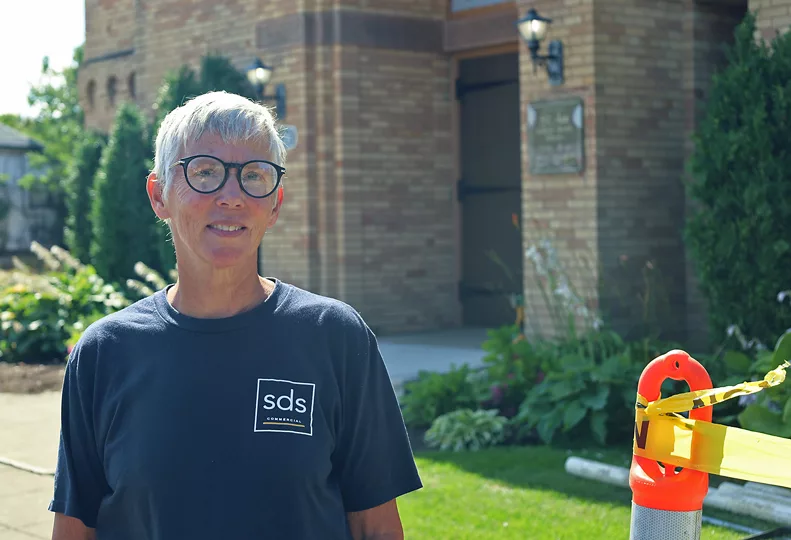
Tresa Schmautz, of St. Ann Catholic Parish-Spokane, says the congregation was driven to repurpose a former convent building to save costs and meet a demand for care services in the community.
| Erica BullockAffordable housing, childcare, and other community needs could be addressed, in part, if even a fraction of underutilized church-owned properties are repurposed in Spokane County, according to some faith-based leaders.
A combination of factors is driving an emerging trend to redevelop unused church land here, including a desire of many religious institutions to reestablish community ties, boost declining attendance, re-energize aging congregations, and leverage the current high value and scarcity of vacant land.
Anthony Carollo, CEO at Spokane-based Vista Title & Escrow and the former executive director of the Greater Spokane Association of Evangelicals, says there's a lot of unused properties that can benefit the community.
"I've realized over the years that there are opportunities for churches to use their facilities and their land for more than just church," he says. "There's lots of churches with land that can do really good things."
Unused religious properties can offer housing solutions, such as senior, affordable, and refugee housing; community services, including gardens, daycares, early learning centers, temporary shelters, and operation space for nonprofits, he says.
The benefits of redevelopment include financial sustainability for the church, community impact, mission fulfillment, and increased engagement and attendance, adds Carollo.
Drew Peterson, pastor at Knox Presbyterian Church, concurs, and adds that churches are generally among the top three largest landowners in any community behind cities and counties. In Spokane County, there are about 500 properties that are designated as houses of worship.
Peterson is working to compile property information to better understand the opportunities available in the Spokane area for church redevelopment. In addition to his role as a pastor, he also serves as land stewardship guide for the Presbytery of the Inland Northwest, which includes a network of 37 churches in Washington state and North Idaho. Peterson's role involves helping congregations determine the best use of their properties.
"I help churches to discern and then take tangible steps toward doing just that, to steward its land, property, and buildings," he says.
As more churches face declines in attendance and engagement, while also holding on to significant underused assets, Peterson wants religious leaders to recognize the opportunities present to live out their core mission by repurposing their properties for the good of their communities, he says.
Peterson was the key speaker at a recent conference held by the Presbytery of the Inland Northwest April 30 at Bethel African Methodist Episcopal Church in Spokane, where about 100 people gathered representing 31 different churches and nine different denominations, he says. At the conference, Peterson says he shared a wake-up call that there's an estimated 100,000 churches expected to close over the next decade nationwide, and if the religious institutions fail, drastic consequences will impact their communities.
The primary goal of the conference, dubbed Stewarding Faith Property for Community Good, was to "spark imagination" among religious institutions and avoid closure.
"The church is this unique economic player in our communities, where some studies have shown that on average, a church brings in like $1 million annually in economic impact to its community, because we're providing space," Peterson says. "A lot are trying to figure out how to reinvent themselves."
Assisted living
In Spokane, some of these property conversions are already underway.
As previously reported by the Journal, a recent development by St. Ann Catholic Parish-Spokane is an example of a partnership between a nonprofit assisted-living provider and the church. They have converted a 7,000-square-foot former convent building into an assisted-living facility, located west of the church property at 2116 W. First, in Spokane's East Central neighborhood.
Tresa Schmautz, a member of the facilities management committee at St. Ann Catholic Parish-Spokane, says the congregation was driven to repurpose its vacant building due to expensive maintenance costs attributed to the age and condition of the structure, plus a demand for care services in the community.
"The church feels very positive about being able to use their space effectively and not just have things empty all the time," Schmautz says. "It's tough to pay for buildings when nobody is ever in them."
Now that the costs to maintain the assisted-living facility building are covered, the congregation can focus on boosting its other programs, such as a work program, free laundry services, and meals, plus the repair and maintenance of its house of worship, she says.
Schmautz acknowledges there are challenges some churches will face with redevelopment plans and suggests that cities could offer support for some of these projects through grant options to offset expensive fire safety systems, which are needed to redevelop older church properties to multifamily use.
Another option is to have churches seek out a historic preservation designation of their property to avoid upcoming costs to comply with Washington state's ambitious energy code requirements, she says.
"If something could alleviate those expenses, there's a lot of buildings that could be utilized more effectively," says Schmautz.
In northwest Spokane, Country Homes Christian Church is in the process of selling 2.5 acres of vacant land it owns south of its church building, at 8415 N. Wall, to Spokane Housing Authority for the development of Chalice Place, a $35 million, 100-unit affordable senior housing building.
Affordable housing
Jason Jones, pastor at Country Homes Christian Church, says the church's decision to sell land was motivated by profitability and community need.
"It seemed like a real win-win situation," Jones says. "We could get some income and then also create some space for people to have a home."
The decision to sell church land for a housing development also happens to align with a growing "YIGBY" movement in the faith community, which stands for Yes in God's Backyard, and is a counterpoint to the NIMBY, or Not in My Backyard movement representing resistance to new developments, Jones explains.
"There's lots of churches doing this," Jones says. "We may not have as much as we used to have, but we also have something that could be a blessing to the community, and usually that's properties and buildings."
Jones also admits there are hurdles that come with a changing church community, including a "radical" new approach that can take time to adjust to after decades of established norms. Jones advises that interested faith-based communities seek out available resources to help start the process.
Complications related to inexperience with development, regulation complexities, and internal church processes have created a space for a collaborative ecosystem of consultants and mission-aligned developers, whose work is gaining traction guiding institutions through the process.
In addition to Peterson, of Knox Presbyterian, some faith-based institutions have turned to Shannon Meagher, director of housing development and special projects at Coeur d'Alene-based Widmyer Corp., a property management company; and Brian Grow, board president of Spokane-based nonprofit Proclaim Liberty.
Both Meagher and Grow are partnering to work with Spokane-based Bethany Presbyterian Church on the development of the Bethany Project on Spokane's South Hill, where an affordable housing complex, a community center, and a house of worship are under development at the site of the church's fire-damaged building.
Meagher says the possibilities are an "open book" for the community. She's currently working with a Presbyterian church on a housing project and helping another organization, Spokane Urban Ministries, find a way to create more housing in the future.
"We're looking at building both affordable housing for seniors and teen parents, as well as an early learning center all within one building," Meagher says.
The shift toward redevelopment could help redefine the role of churches and boost their relevance at a time of great transition, Grow says, adding that he expects the trend to be long term. He suggests organizations should start considering their options sooner than later to take advantage of the current momentum for such projects and create community impact.
"A lot of churches are at the exploratory stage of the process, and usually these churches don't move real fast," says Grow. "They only have to look around at what's needed and churches have the opportunity to fulfill a void."