
Domestic violence often follows women to the workplace
Experts say companies can, must show support to employees experiencing abuse
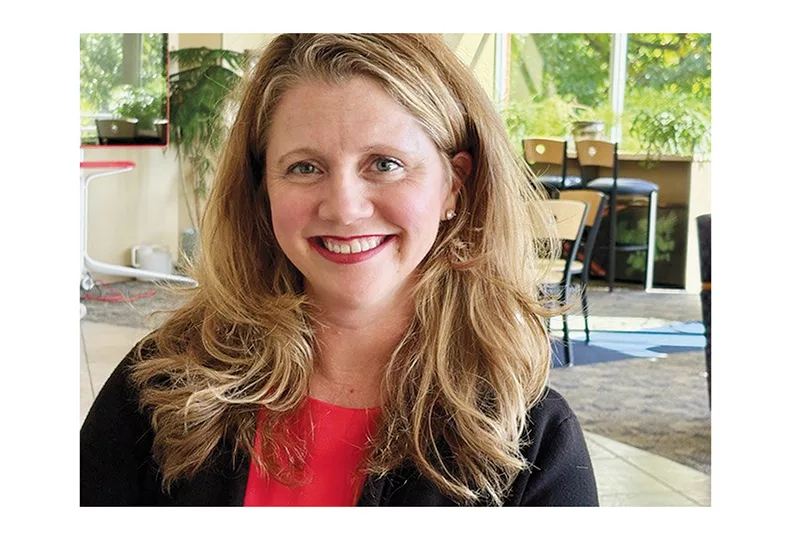
Gonzaga University professor Becky Bull Schaefer says many managers aren't trained in what to look for regarding the domestic abuse of an employee, but learning to recognize the signs is critical.
| Judith SpitzerSome people perceive domestic abuse as a private matter that typically occurs in the home, but domestic violence doesn’t stop when a survivor arrives at work, it substantially impacts business and organizations. Domestic violence directly affects employees, co-workers, and managers. Employers also can incur significant indirect costs through employee turnover, lost productivity, and increased health care costs for employees facing such violence.
Workplace violence is the leading cause of death on the job for women, according to the U.S. Occupational Safety and Health Administration. The Society for Human Resource Management estimates that domestic violence costs U.S. businesses more than $8 billion per year.
Jemma Riedel-Johnson, YWCA Spokane engagement lead, says YWCA Spokane supports victims of domestic violence through a 24-hour helpline, Safe Shelter, an Advocacy Support Center, mental health services, child and family therapy, civil legal assistance, legal advocacy, and economic empowerment.
There are several warning signs that may show up for an employee experiencing ongoing domestic abuse, Riedel-Johnson says.
“There may be a high rate of absenteeism because a partner is controlling and preventing them from going to work,” she says. “They may be isolating and not socializing with co-workers, or they could be speaking negatively about themselves because they’ve heard the same things from their partner. An employee could be getting too many personal phone calls because a partner is checking up on them, or they may be calling in sick or showing up late.”
At a Spokane conference in early September, Gonzaga University professor Becky Bull Schaefer addressed human resources professionals about domestic violence in the workplace. She says it’s important to remember that any indicators may also be due to other factors.
“Rather than assuming that the problems are this or that, employers can talk with employees to determine what is happening,” says Bull Schaefer. “A manager’s job is a delicate balance. And many managers are not trained in what to look for in the case of domestic abuse.”
By asking questions, as well as asking what or how the company can support employees, is important in the process. She reiterates that an employee needs to ask for help to gain access to help.
Learning how to recognize what’s going on when it’s happening is critical, she says. After a manager knows the issue is domestic abuse, then the law can support both the managers, co-workers, and employees.
“We can provide accommodations for specific situations or provide time off; or there may be laws that employees don’t know about, such as the federal Family (and) Medical Leave Act or victims may qualify for Washington state unemployment services,” she says.
Under the Domestic Violence Leave act, an employee has the right to take reasonable leave from work to obtain assistance with respect to domestic violence, sexual assault, or stalking. A family member of a victim may also take reasonable leave. Leave can be taken to address legal or law enforcement needs, treatment for physical or mental injuries, to obtain mental health counseling, to make use of social services programs, participate in safety planning, or relocate.
U.S. hospitals spend billions preventing workplace violence
A recent report from the American Hospital Association highlights the profound psychological and emotional toll on health care workers. Exposure to violence is linked to severe mental health effects, reduced job satisfaction, absenteeism, and lost productivity.
In 2014, a murder-suicide at MultiCare Deaconess Hospital exemplified the fact that domestic violence doesn’t stop when a survivor arrives at work. Sheena Henderson, 30, was shot to death by her husband Christopher Henderson, 37, at Deaconess Hospital in Spokane, where she worked as a lab assistant. He then turned the gun on himself.
Today, things have changed markedly at MultiCare facilities to prevent and address violence in the workplace.
Chey Edwards, director of security, says a critical change has been access control.
“It used to be that visitors and people who work in the area could just roam freely in the facility. We now have secure areas from badging, doors are locked to prevent entry, and visitors are asked who they’re visiting and where. That information goes on their badges so staff can see briefly where those people are supposed to be,” Edwards says.
Visitors are asked whether they have some type of weapon at all entry points. And a flagging system tells staff whether patients are high risk or have a history of violence, he adds.
“Every staff member and new hires are trained in our violence prevention plan, which empowers staff to identify and deal with emotional trauma and escalating behaviors," he says. "When someone moves into management, they are trained to recognize signs of potentially violent situations and given tools to deal with those situations."
Additionally, Edwards says hundreds of thousands of dollars have been spent to place hundreds of cameras around the campus which are monitored 24/7.
“Cameras allow one person to monitor a number of places,” he says. “We have also installed silent alarms at desks so that staff can call security if need be.”
Edwards emphasizes that security staff do not carry any weapons.
“We do not believe in threatening anyone with further harm,” he says. “We are nonviolent and nonaggressive. Hospitals are emotional places with people who are ill, family and friends who may have lost loved ones … they’re high stress places and we make sure staff can handle emotional triggers.”
Domestic violence escalates in the region
In Spokane, about 25% of all violent crime is related to domestic violence, according to data from the Spokane Police Department. In Spokane County, rates of domestic violence remain among the highest in the state. It's estimated that 1 in 3 women, and 1 in 10 men in the Spokane area have experienced some form of domestic violence, according to information from Spokane Regional Health District.
YWCA Spokane is on track to receive 6,000 calls to its domestic violence helpline, nearly 2,000 more than last year, according to its website.
"This surge in demand comes at a critical time when federal funding has already been reduced, and survivors of domestic violence still need immediate access to life-saving resources,” says YWCA Spokane’s Riedel-Johnson.
Several organizations, including YWCA Spokane, provide training services to help prevent workplace violence. YWCA also can assist businesses, health care facilities, schools, and other organizations to develop and implement policies dealing with violence in the workplace.
"Immediate crisis response is essential to saving lives and helping survivors of domestic violence," says Jeanette Hauck, CEO at YWCA Spokane. "More survivors are finding the courage to reach out for help, which is encouraging, but it also means we need additional resources to ensure we can provide the critical support they deserve."
EDITOR'S NOTE: If you or someone you know needs help, please call YWCA Spokane's helpline at 509-326-2255; or the National Domestic Violence Hotline at 1-800-799-7233.