
Guest commentary
University of Washington expands access to health care
State investments, EWU partnership help double RIDE program enrollment
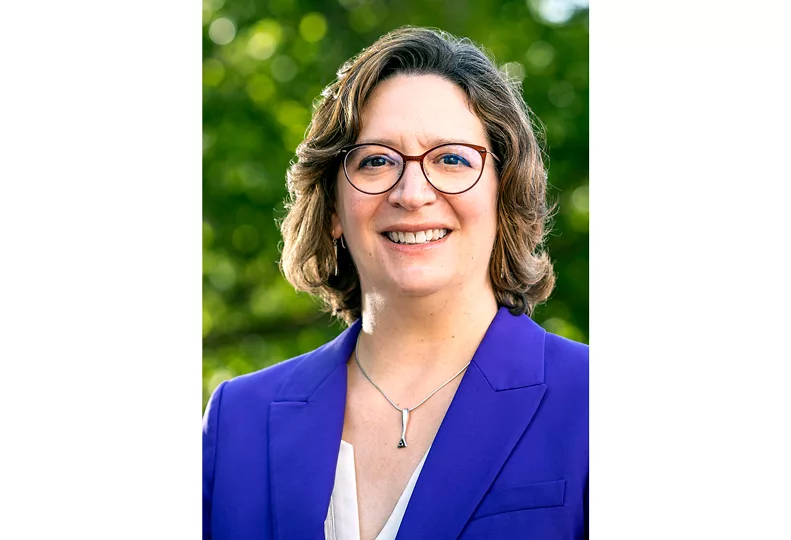
Tricia R. Serio is provost and executive vice president for academic affairs at the University of Washington where she leads faculty, allocates resources, oversees research and global affairs, and promotes student success.
| University of WashingtonIt’s remarkable to think about how far we have come together as a state since the University of Washington first began offering classes as the Territorial University of Washington.
Today, the University of Washington has grown into the state’s largest public research university, a place where teaching and learning, research and discovery, innovation, community partnership, and clinical care all happen side by side. That combination is powerful and absolutely unique to research universities. It’s what enables us not only to meet the challenges of today, but to create knowledge, talent, and solutions that will shape a better future for us all.
At a time when the public is questioning the value of higher education, UW’s contributions in Eastern Washington offer some of the strongest examples of the power of our partnerships — and our commitment to improving the lives of all Washingtonians:
1. Expanding health care access through RIDE, regional medical training
One of the most direct ways UW serves Eastern Washington is by expanding access to health care. During my trip to Spokane in November, I joined community partners to celebrate the ribbon cutting of the newly expanded Regional Initiatives in Dental Education (RIDE) program at the UW-GU Health Partnership Building.
With state investment in modern training space and in ongoing partnership with Eastern Washington University, RIDE will now double its enrollment and prepare more students to serve as oral health professionals across rural and underserved areas.
The results speak for themselves. Since 2012, more than 70% of RIDE graduates have returned to practice in rural or underserved communities — a powerful, sustained impact on the health of Eastern Washington.
As shortages of primary-care physicians and health care providers intensify, the UW School of Medicine and Gonzaga University combined have trained nearly 3,000 medical and health care providers in Spokane through our 10-year health partnership. Rural training experiences are a major factor in retention; more than half of our medical graduates stay in Washington to practice, far above the national average.
2. Affordable, accessible education for Washington students
Across the nation, 80% of the fastest growing jobs in the next decade will require a college degree, and UW provides accessible pathways to an education that prepares our students for the workforce needs of the state. This fall, nearly three-quarters of new undergraduates across UW’s three campuses are Washington residents.
Our undergraduate students come from all over the state, including an average of 500 students from Spokane County each year — a number we are committed to growing. Upon graduation, more than 82% of UW alumni stay in Washington state, contributing directly to their communities.
To strengthen our workforce, UW provides a path for current workers to expand their skills and build their expertise through continuing education courses, certificate programs, and online degree programs.
We recognize concerns students and their families have about the cost of higher education. When financial constraints limit who can pursue a college degree, our entire state is harmed because workforce demand is not met. A Husky education should be debt-free for all Washington undergraduates, and we are making strong progress toward that goal. A cornerstone of our commitment to access is the Husky Promise, which covers tuition and fees for Washington students who qualify for federal financial aid. Since its inception in 2009, more than 700 students from the Greater Spokane area have benefited from this program.
Together, these programs result in an education with one of the lowest student-debt burdens in the nation. More than 70% of UW undergraduates graduate with no known debt, and those who borrow carry an average of $20,000 — below the national average.
3. Strengthening local economies, driving innovation
Public research universities also fuel local and statewide economies, and the University of Washington — and Washington State University, with whom we partner in many ways — is no exception.
For every $1 of state funding, UW generates more than $28 in economic activity — a powerful return on investment for Washington taxpayers. Statewide, UW supports nearly $21 billion in economic activity and 111,950 jobs. Our $1.87 billion in annual research awards — the most of any U.S. public university — translates directly into jobs, innovation, startup businesses, and partnerships that strengthen our communities.
Eastern Washington is an increasingly important part of that impact. UW generates $81.4 million in economic activity across Eastern Washington, including $4.3 million from research-related work. In Spokane alone, our impact totals $18.6 million, with $2.1 million tied to research.
And, the impact of UW isn’t limited to the people who study or work on our campuses. When Washingtonians have opportunities to partner with us or benefit from the innovations we help create, those advantages ripple outward — strengthening families, supporting local businesses, improving health outcomes, and helping communities across the state thrive.
This is the promise of a public research university at its best: when the interests of students, faculty and staff — from the development of cancer vaccines to recovery mechanisms following forest fires — lead to real contributions that strengthen the entire state.
As a public research university, UW strives to improve the lives of all Washingtonians. Every time I travel across the state, I’m reminded that our greatest progress happens when universities and communities work together. From expanding access to health care to opening doors for students and supporting local economies, our impact is strongest when it is built in partnership.
Sustaining this momentum depends on our continued ability to invest in the people and programs that serve Washington. As state and federal budgets tighten, it becomes even more important that we work together to protect the opportunities that matter most to our communities.
That is why I am always grateful for the opportunity to meet with communities — from the Inland Empire to the Tri-Cities to the Puget Sound — and see firsthand the difference we are making together today, and the opportunities that still lie ahead for us together tomorrow. The University of Washington is — and will always be — the University for Washington.
Tricia R. Serio is provost and executive vice president for academic affairs at the University of Washington where she leads faculty, allocates resources, oversees research and global affairs, and promotes student success.




_web.webp?t=1790233399)