Riverfront Park to revamp cultural site
Agreement between city, Spokane Tribe advances proposed redevelopment
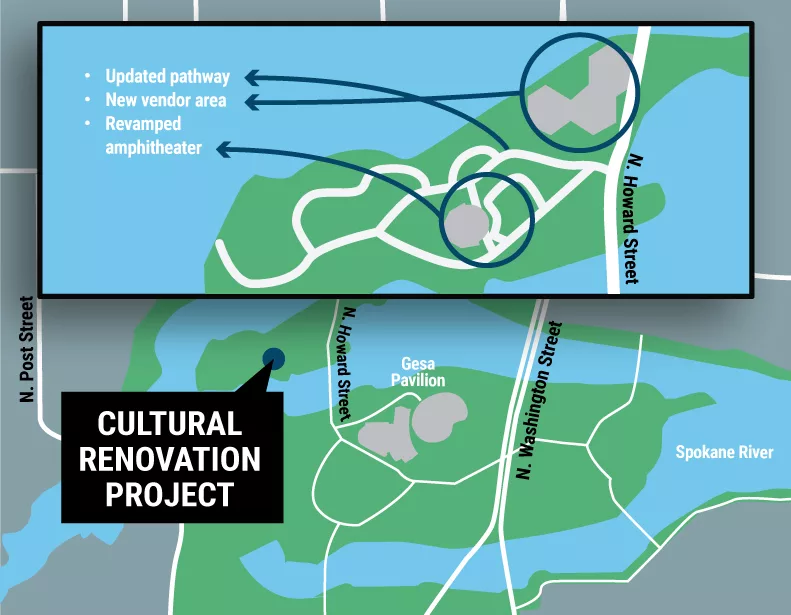
A cultural redevelopment project is planned at Riverfront Park's Snxw Meneɂ (sin-HOO-men-huh) Island, where the Spokane Tribe of Indians is partnering with the city of Spokane for the renovation of event areas, art and sculptures, and other features designed to highlight the sacred connection between the island and the Spokane Tribe.
The cultural renovation project is expected to fix or replace infrastructure — maintenance that has been deferred in the past.
The project is estimated to cost $2 million, according to a predevelopment conference application on file with the city of Spokane. The Spokane Tribe will fund the renovation, and both parties also will apply for grants to support the project from entities such as the Washington State Recreation and Conservation Office.
A construction timeline isn’t known yet, says Garrett Jones, city of Spokane Parks & Recreation director.
Womer & Associates Inc., a Native American-owned architectural and engineering firm based in Spokane is designing the project. A general contractor is not listed on permit information.
Spokane Tribe representatives didn't respond to the Journal’s request for comment.
Snxw Meneɂ Island has remained relatively untouched since much of the infrastructure was constructed during Expo ’74, Spokane's World's Fair, Jones says. Planned developments for the two-acre island include rehabilitating or repurposing features constructed 52 years ago. New signage also is planned to acknowledge historical landmarks at the site.
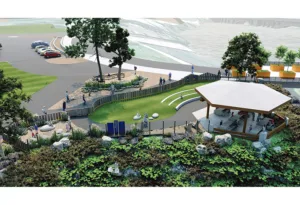
Near the center of the island, the existing Alberta Amphitheater’s stage area, seating, and walkway will be renovated using new concrete and wood materials. The amphitheater also will have new lighting, a sound system, a cover for the stage area, and bench seating in the first row, with standing or sitting room for more than 100 people, site plan information shows.
At the northeast corner of the island, the BC Pavilion, a hexagonal open space bordering two similarly sized and shaped utility buildings, will be repurposed as a vendor and event area. Two structures will be removed and replaced with open space platforms at the site.
Both event spaces will include a mix of new tribal art elements and elements of the original features, plans show. Sculptural artwork also will be added on Howard Street and throughout Snxw Meneɂ island.
Other updates include a renovated main pathway, designed to recreate the Spokane River origin story from the Spokane Tribe. Textured or colored concrete pavement will symbolize a stream, with inset silhouettes evoking salmon migrating upriver.
Berms, boulders, basalt pillars, and claw marks along the path will symbolize the destruction of land and the creation of the Spokane River by a monster in the Spokane Tribe’s origin story about the river. Informational signs will provide a history of the land and the tribe throughout the area.
Plans also call for upgraded lighting and electrical features throughout the island, upgrades to existing fencing, and at least one drinking fountain.
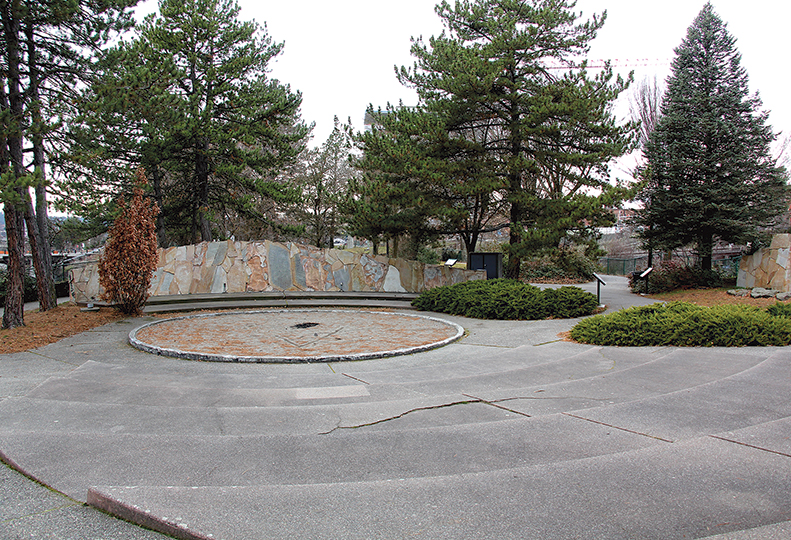 The updated Alberta Amphitheater, located near the center of Snxw Meneɂ Island, will have new lighting, a sound system, a cover for the stage area, and sitting room for more than 100 people upon completion. - Ethan Pack
The current memorandum of agreement for design services runs for an initial period of three years, and will end in July 2027, as per the agreement.
The island’s cultural and historical importance to the Spokane Tribe as a gathering place and a fishing ground for salmon inspired the renaming of the island in 2017 and its rededication in 2019, Jones says. Snxw Meneɂ is a Salish name that translates to "Salmon People," and the Salish language is a language spoken historically by the Spokane Tribe.
The city of Spokane named the island Canada Island as part of Expo ’74. In 2014, the city passed a $64 million bond to redevelop Riverfront Park, Jones says.
“When we adopted the master plan for Riverfront Park, (we wanted to) set aside some land in dedication, and bring back the importance and that presence of the Spokane River to the Spokane Tribe,” Jones says.
Future agreements between the city and the Spokane Tribe will determine how construction is managed, he says.
“The Spokane tribe will be taking the lead on the design (and) working with the parks department to make sure that it meets the Riverfront Park standards and meets those common themes and goals that we're trying to achieve within the park,” Jones adds. “The agreement right now focuses on the design piece of (the renovation), and in that agreement, it reflects that future agreements will need to happen once all of the funding is secure, and construction is moving forward."