

Economy relies on skilled labor...
What is the value of Spokane Colleges?
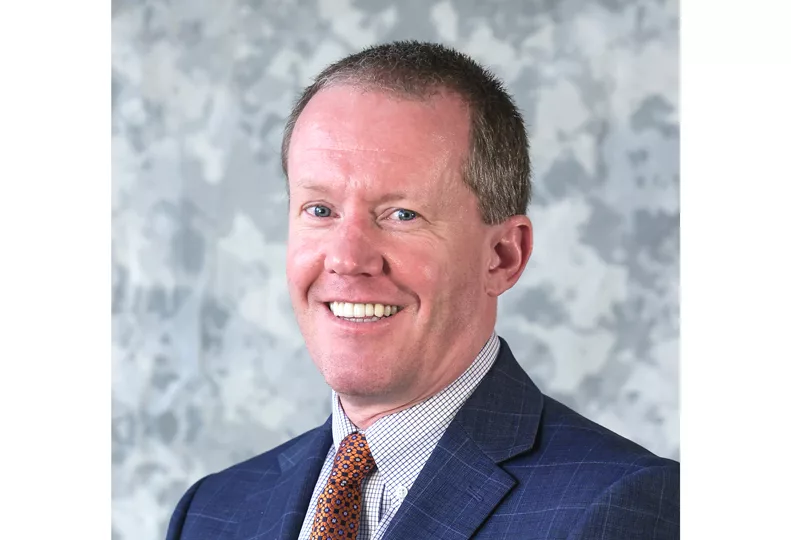
Kevin Brockbank has served as Chancellor of Spokane Colleges since 2023. Previously, he served as president of Spokane Community College and in various other roles in two-year education throughout Montana and Utah. He has called Spokane home since 2015.
| Spokane CollegesIn 2009, the Washington Alliance for a Competitive Economy published an impact analysis based on a thought experiment: What if Boeing left Washington? The report concluded that losing Boeing would be devastating for the state.
Boeing is a clear example of a key organization, deeply interconnected with the global aerospace industry and the Washington economy. A community college system may be a less clear example of such an organization, but I have always suspected Spokane Colleges plays an outsized role in the life and economy of our region.
To test that theory, I repeated the thought experiment, imagining a Spokane without Spokane Community College and Spokane Falls Community College. Here is what I found:
In fiscal year 2022-23, Spokane Colleges supported over 15,500 jobs within our 12,302-square-mile community college district and generated $1.26 billion in added income — that’s about 3.2% of the entire gross regional product of our six-county area. To put that in perspective, Spokane Colleges’ economic contribution is nearly as significant as the accommodation and food services industry in our region.
Our colleges serve more than 12,000 credit students and nearly 8,000 noncredit students, offering over 175 degree and certificate programs tailored to meet the specific needs of local employers. We focus our curricula on real-world needs and create the networks critical to matching qualified graduates with the employers who need them.
These metrics alone demonstrate how Spokane Colleges serves as the backbone of workforce development in Eastern Washington, and has for decades. Without the workforce pipeline anchored by SCC and SFCC, our region’s critical advanced manufacturing and health care industries, among many others, would struggle to staff the skilled technical and support roles they need to thrive.
Beyond the economy, Spokane Colleges transform lives. Many of our students are the first in their families to pursue higher education. For every thousand dollars students invest in their education here, they earn $3,700 in higher future earnings, with an average payback period of just under eight years. This investment in education is a proven pathway to upward mobility and economic security.
Taxpayers also benefit. Over the coming decades, Spokane Colleges will generate $133 million in additional tax revenue and public-sector savings from its activities in fiscal year 2022-23 alone, thanks to the higher lifetime earnings of our students and reduced demand for social services. Society, as a whole, gains improved health outcomes, reduced crime, and stronger communities.
Nearly everywhere you look in Eastern Washington, from salons, board rooms, restaurants, and art galleries to drug treatment centers, operating rooms, and aerospace fabrication shops making components for Boeing itself, Spokane Colleges graduates make an often quiet but collectively profound contribution. Without Spokane Colleges, our region would feel a gulf between the thousands of people seeking better lives and earnings and the thousands of firms seeking exceptionally well-trained employees.
This thought experiment has confirmed my suspicion that Spokane Colleges operates at the confluence of life, industry, and society of our region. Rest assured, we are here to stay, continuing to serve as a critical partner for students, employers, and the community.
As the Washington Legislature approaches the end of its current session in March and faces difficult budgetary decisions, it is my hope that our representatives can see as clearly as I do just how foundational SCC and SFCC are to Eastern Washington’s society, workforce development, and economic future.
Kevin Brockbank has served as Chancellor of Spokane Colleges since 2023. Previously, he served as president of Spokane Community College and in various other roles in two-year education throughout Montana and Utah. He has called Spokane home since 2015.



_web.webp?t=1790233399)
