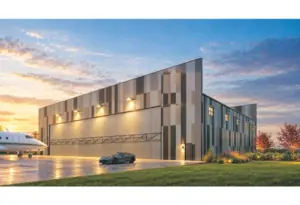
Airport offers more than just a runway, functioning as a vital economic anchor
Spokane International Airport does more than just facilitate air travel; it supports our region's economic and social identity. As passenger traffic continues to set records, we should be reminded to keep top of mind how that vital transportation hub remains a catalyst for our region's economic prosperity.
Spokane International Airport is the second largest commercial service airport in the state of Washington and functions as a gateway to key markets throughout the Inland Northwest and British Columbia with seven major airlines and three cargo carriers in operation. The direct annual economic contribution the airport generates in the Inland Northwest is about $3 billion.
It should be no surprise that the airport recently announced it's busiest year ever, having served more 4.3 million passengers in 2025, a 2% increase from the previous passenger record of 4.2 million passengers set a year earlier. That passenger activity is a boon for our region that translates to increased employment here.
Studies indicate that air service is a causal trigger for broader employment. For every 1,000 departing seats, about five regional jobs are supported, according to a report by the National Academies of Sciences. Spokane International Airport provides employment for more than 3,000 people.
Having accessible international air services in our community also appeals to employers and potential employers, and helps generate service-sector jobs, such as workforce opportunities in the advanced manufacturing sector. Researchers have linked communities with access to these air services with the generation of more employment opportunities than communities without such services.
Support for the airport also supports our region's access to a wider marketplace. Recent airline expansions, such as new seasonal nonstop services by United Airlines to Houston, Alaska Airlines' service to Anchorage, and year-round service to Orange County extend our access to other major economic hubs.
Major capital investment expenditures at the airport this year are budgeted at $127.6 million. While that number is lower than last year, the 2025 capital budget included the expected completion of some significant projects, such as the Phase 4 expansion of the Rail-Truck Transload Center.
Capital improvements at the airport this year include ongoing work on the $150 million-plus Terminal Renovation and Expansion (TREX) Program, which includes the Concourse C East Terminal expansion, featuring new ground boarding infrastructure and passenger boarding bridges. Other significant projects include a new runway intersection and taxiway reconstruction project, fuel facility improvements, a new administration building, other transportation upgrades, and a parking consolidation project.
Data show that for every $100 per capita invested in airport infrastructure, regions see an average of 50 more air arrivals per capita, which stimulates local spending and business engagement, according to a 2025 report by Air Transport Action Group.
The airport represents a responsible model for public infrastructure that is sustainable and self-sufficient. The airport drives growth, jobs, and connections to the region and beyond. As passenger traffic continues to grow, we're reminded of how lucky we are to have Spokane International Airport and how it remains at the center of our region's economic future.

Stay Informed. It’s Free.
Subscribe to our newsletters and get the latest news and insights delivered to your inbox.
We respect your privacy.
Unsubscribe anytime.
Thank you!
You’re subscribed. Keep an eye on your inbox for the latest updates.