Conservation efforts save 300 acres on Mica Peak
Growing conservancy support benefits natural areas in Kootenai County
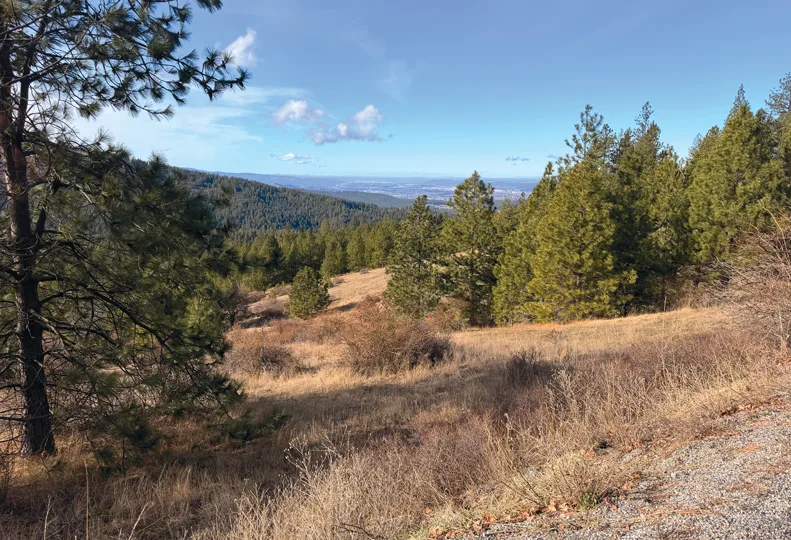
Mica Peak, in North Idaho, is a priority area for Inland Northwest Land Conservancy to protect, due to its wildlife habitats and robust forests.
| Inland Northwest Land ConservancySpokane-based nonprofit Inland Northwest Land Conservancy has secured a conservation easement along the foothills of Mica Peak in North Idaho that add 300 acres of natural area, known as Quail Haven, to the more than 30,000 acres of land the organization currently protects.
A conservation easement is a legal agreement between a property owner and a land trust, such as Inland Northwest Land Conservancy, that retains the property in the landowner’s possession but legally protects the land in perpetuity from development, says Dave Schaub, executive director at Inland Northwest Land Conservancy.
If the property is ever sold to another individual, the easement will remain attached to the land and enforced, he adds. Conservation easements are a cost-effective method to conserve land for the nonprofit, since the conservancy isn’t purchasing the land itself.
“One of the benefits is that it keeps land in private ownership, and it keeps a lot of historic resource-based practices in place,” Schaub says of the conservation easement. “Namely timber harvesting, so the land can remain a working forest, and it’s limited in terms of its future subdivision and development.”
The 300-acre natural area is owned by longtime resident Cindy Mead, who grew up on the property and inherited Quail Haven. As development pressure increased, Mead worked with Inland Northwest Land Conservancy for several years to establish protections for the land.
“At some point, if we want wildlife around, we have to give them a place to be,” Mead says in a press release about the easement. “I grew up walking these hills with my dad. I don’t want to see it broken up or lose the healthy forest and wildlife that make it special. Protecting it forever felt like the right thing to do.”
Federal funding needed to complete the Quail Haven project was unexpectedly cut, but three private individuals in the Spokane area — Mark, Cory, and Eric Odegard — stepped in and donated the funding required, explains Schaub, who declines to disclose the exact amount donated.
The cost for a stewardship endowment for a property similar to Quail Haven can be prohibitive, costing upward of $30,000, which includes drafting easement documents, surveying services, title insurance, recording fees, and appraisal costs, says Michael Crabtree, conservation director for the organization. Expenses also include a legal defense fund held in perpetuity, if the organization is ever required to defend the property in court.
“Funding usually comes from the landowner themselves, and it can also come from donations and donors who are willing to support our work, as well as grants,” Crabtree says.
Inland Northwest Land Conservancy's 2026 operating budget is $1.2 million and supports 11 full-time employees, and hundreds of volunteers, says Schaub. The nonprofit's budget has quadrupled in the last 10 years as the organization has received more private donations, grants, and access to other funding sources, such as a permanently restricted endowment with Spokane-based nonprofit community foundation Innovia Foundation.
The land conservancy also works with state, county, and city agencies in its efforts to conserve public spaces for recreation and public benefit. A majority of the organization’s work is focused on partnering with private owners in the Inland Northwest who choose to permanently protect their land, Schaub explains.
Mica Peak, stretching from Liberty Lake to the western shores of Lake Coeur d’Alene, is one of several priority areas for the conservancy, due to its resilient forests and wildlife habitats, which include elk, moose, and gray wolves, according to the organization’s website.
“We’re really focused on identifying and protecting the lands that matter to all of us here in our region, that benefit us by providing habitat and clean water, clean air, scenic backdrops,” Schaub contends. “We pride ourselves on being an organization that we like to think just about anyone who loves living in this region can support. We’re not so much anti-development as we are pro protection of the places we all love here.”