2026 Icons: Phyllis Campbell
Spokane native's career built on guiding principles of charity, preparedness
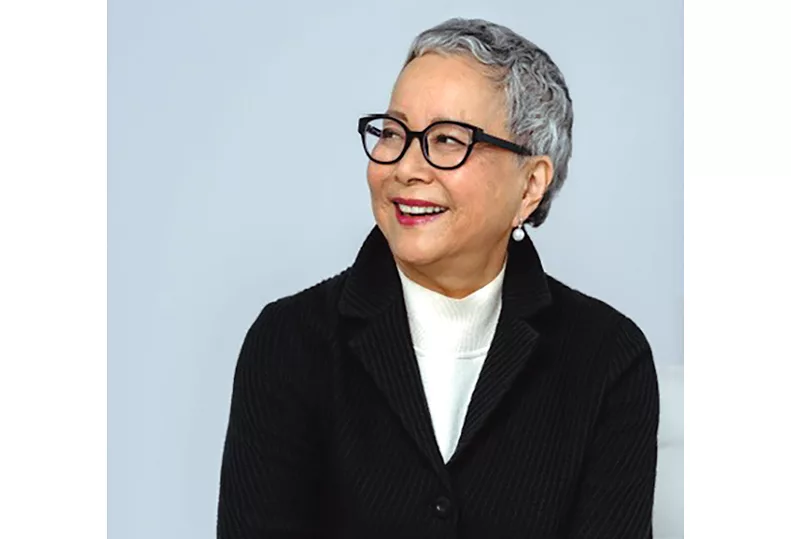
Over the past 50 years, Phyllis Campbell has led careers in banking, philanthropy, and corporate and nonprofit board service.
In the wake of the 2008 financial crisis, JPMorgan Chase & Co. acquired Seattle-based Washington Mutual Inc. following a government seizure and began laying out plans to introduce its brand and services to the Pacific Northwest communities that had been wrecked by the collapse of the once thriving financial institution.
Dave Clack, former chairman and CEO of Old National Bank of Spokane, recalls the enormity of the moment as an impossible task in a tenuous environment. When he learned that his former mentee, Phyllis Campbell, had been chosen to lead the transition as the vice chairman and regional chair of the Pacific Northwest for JPMorgan Chase, he was confident she was the only person who could pull it off.
“When WaMu went down, it was shocking, stunning, unbelievable,” Clack says. “And when JPMorgan Chase took it over, the first question in everyone’s mind is, who are they going to get to run this thing? It’s one of these impossible tasks; it’s like a suicide mission. … When they chose Phyllis Campbell, I thought, that is unbelievable because she is probably the only person in the Northwest that could make this work.”
At the time of the financial downturn, Campbell had nearly 30 years of experience in the banking industry, beginning at Old National Bank and culminating in a role as president and CEO of U.S. Bank of Washington, which had acquired Spokane-based Old National Bank in 1988. Campbell, however, had previously left the banking sector in 2001 to work in philanthropy.
Recognizing the difficulty of the assignment, Campbell says she initially turned down JPMorgan's offer to help lead the transition. According to Campbell, she already had a career in philanthropy that she was passionate about. Ultimately, it was that same passion for serving the community that led her to accept the role when leaders of the New York-based bank asked a second time.
"I didn’t need this JPMorgan job. In fact, I knew it would be difficult because I was going into a place where WaMu was beloved," Campbell says. "The fact is, JPMorgan Chase was not known here, and the big financial institutions were being blamed for the financial crisis. I knew this wasn’t going to be easy, but I said, it’s important enough to do it, not for myself, but for the community."
Campbell, 74, grew up in Spokane in a large, working-class family with three brothers and a younger sister. Her father owned and operated Beacon Cleaners, a dry-cleaning business on the city's North Side. She launched her career in banking in 1973, after graduating from Washington State University with a degree in business administration, where she was one of only a handful of women who graduated that year.
Finding a job as a woman during an economic downturn was stacked with barriers, she recalls. Her persistent nature eventually helped Campbell land a job at Old National Bank after calling the hiring manager for 35 consecutive days.
“I think coming from these humble roots, big family on the North Side of Spokane, not a lot of money, I think we all thought if I could be a branch manager of a bank, that would probably be the biggest, best thing I could ever do,” Campbell says. “We would be very proud if that could happen. So that was probably my biggest ambition.”
At Old National, Campbell completed management training and was later assigned to oversee the Country Homes branch on Division Street. Following her promotion, she married her husband of 53 years, Bill Campbell, who at the time worked as a civil engineer with the Department of Transportation. Bill later became a teacher at Spokane Community College.
Shortly after taking the reins at Country Homes, she was promoted to oversee the bank's Manito branch and another South Hill location. It was at the South Hill branch that she first met Clack, who would become her mentor and lifelong cheerleader.
In 1988, after Old National Bank was acquired by U.S. Bank, Clack personally introduced Campbell to U.S. Bank’s president and CEO Gerry Cameron, informing him of Campbell’s talent and potential.
In 1990, while Campbell was running the Spokane Valley District for U.S. Bank, Cameron flew in from Seattle to ask her to take a role overseeing all the bank’s branches in Washington. The role could only be accomplished from the company's Seattle office, and Campbell was given less than a couple of hours to make the decision to move across the state, which she ultimately did.
During Campbell’s banking career in Spokane, she embraced two philosophies that have guided her through the last half-century. During her time at Old National Bank, Clack would encourage her to adopt the mindset that the more you give, the more you get back, which would serve as an impetus for her community involvement.
The philosophy was built on Campbell’s existing instinct to serve others, which had been shaped early in her life by her grandfather, Tomotsu Sebastian Takisaki.
During World War II, Campbell’s grandfather, a U.S. citizen, was taken from his home in Seattle by the U.S. government to a Japanese internment camp in North Dakota under suspicion of being a spy for the Japanese government. He was imprisoned for about three years, Campbell says.
“He’d always tell stories philosophically about being a good person; the meaning of life on this earth is to be a good person,” Campbell recalls. “Life’s not about you. Be good and do good things for others. He was never bitter, which I found to be so fascinating.”
The second philosophy that has guided her career was the phrase: get ready, be ready, which was introduced to Campbell by Cameron. The motto would be echoed over the next decade of her banking career as she climbed the corporate ladder.
“He’d always say to me, you never know what door’s going to open for you and maybe what door closes behind you,” Campbell says. “But you should always be in a ready state. So get ready, be ready. I’ve always remembered that; I tell that now to other young women and say, you never know where your life and career are going to take you. Sometimes it’s places that you never even dreamed.”
A few years following Campbell's move to western Washington, Cameron would approach her again, this time to take over his role as president and CEO. Later, in 2001, she stepped away from the banking sector and embarked on a second career in philanthropy as the president and CEO of The Seattle Foundation.
She was still serving in that role at the Seattle Foundation when Washington Mutual collapsed and was subsequently acquired by JPMorgan Chase.
Her high level of experience in both industries gave her credibility as a leader who could restore faith and trust that had been lost with the collapse of WaMu, Clack says.
“The combination of those things was perfect for resurrecting WaMu under the JPMorgan Chase mantle,” Clack says. “She was the one person in the Northwest who could get the job done. They hired her, and the rest is history.”
Campbell didn't need to leave Spokane to be an icon; she would have risen anywhere she was given the chance, Clack says.
Her husband, Bill, recalls discussing the Seattle job opportunity and agreeing to make the move, describing their partnership as a balanced foundation in which they supported each other’s goals. Long before that opportunity came along, he adds, his wife had a cancer diagnosis in the early '80s that refocused how the couple approached life and opportunities.
“It gives you a different perspective on life,” he says. “Either you withdraw, or you attack.”
Last year, Campbell underwent chemotherapy and radiation therapy to treat a breast cancer diagnosis. She is currently in remission.
In addition to her banking and philanthropy careers, Campbell has led an extensive third career in board service spanning 35 years in corporate roles, and even longer serving on the boards of nonprofit organizations. Her work has been recognized previously, in 2021, when the National Association of Corporate Directors named Campbell Nonprofit Director of the Year. And again, earlier this year, she received the Lifetime Achievement Award for Director Services from the Puget Sound Business Journal.
Past roles include serving on the board of directors for Nordstrom Inc., the Alaska Air Group, and the Air Transport Services Group. In 2023, she was elected to the board of Remitly Global Inc. and currently serves as the senior strategist and vice chair of BoardReady, a nonprofit organization that advocates for more inclusive, innovative boardrooms by pairing ‘board-ready’ candidates with companies seeking directors.
Campbell earned a master's degree from the University of Washington and is a graduate of the Pacific Coast Banking School and Stanford University’s Executive Management Program. She also holds honorary doctorates from Gonzaga University and Whitworth University. Other awards and honors include induction into the Junior Achievement Business Hall of Fame.


Stay Informed. It’s Free.
Subscribe to our newsletters and get the latest news and insights delivered to your inbox.
We respect your privacy.
Unsubscribe anytime.
Thank you!
You’re subscribed. Keep an eye on your inbox for the latest updates.