Guest Column
Restaurateurs' journey one of grit, resilience
Owners of Italian Kitchen navigate challenges of evolving business climate

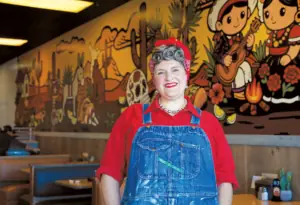
In 2005, Bryce and Lyndsay Kerr purchased the Italian Kitchen, at 113 S. Bernard in downtown Spokane.
| Dylan HarrisAs owners of the Italian Kitchen in Spokane, Bryce and Lyndsay Kerr successfully navigate a very difficult middle ground. Their restaurant is a locally-owned, hospitality-driven, relationship-based business operating in an economy increasingly dominated by convenience apps, chain restaurants, social media influencers, and ever-shortening attention spans.
Their story is not about a restaurant. It is an entrepreneurial tale — overflowing with reflections for consumers, employees, and aspiring business owners.
Over the last several years, the Italian Kitchen has become my go-to when business brings me to Spokane. Like many patrons, I enjoy the well-choreographed dining experience: attentive service, consistent food quality, and welcoming atmosphere.
Until digging into the Kerrs' story, a patron cannot fully appreciate the relentless effort required to sustain that experience day after day for more than two decades.
Bryce and Lyndsay purchased the Italian Kitchen in 2005 after spending years opening and operating restaurants for large companies. At some point, Bryce reached a conclusion familiar to many entrepreneurs: if he was going to devote that much time and energy to building a business, it should benefit his own family rather than some distant owner’s bottom line.
Like many first-time business owners, he was confident that he understood the operational side of the enterprise. What surprised him was everything else.
"The hospitality side was easy," he says. "The business side was the challenge."
And that distinction matters. Many people dream of owning a business because they have a better idea about a product, profession, or craft. But most don’t understand the administrative burdens, financial obligations, regulatory rules, ongoing maintenance, employee-related matters, and constant decision-making that accompany ownership.
In Bryce's case, the challenges did not stop there. Operating from a historic downtown Spokane building means dealing with an endless stream of repairs, maintenance issues, and plumbing problems. For Bryce and many others like him, there is always another issue in waiting. The restaurant may close each night, but ownership never stops.
His description of entrepreneurship was refreshingly honest: "It’s 24 hours, seven days a week. You never leave it, and it never goes away."
That may be one of the most misunderstood aspects of business ownership. Customers enjoy a meal. Employees serve a shift. Entrepreneurs orchestrate every moving part simultaneously.
One comment from our conversation stood out. I asked Bryce when he realized the business would succeed. I expected a story about reaching profitability or achieving a major milestone. Instead, he says the moment occurred the day they purchased the restaurant. Not because success was guaranteed. Rather, because failure was never an option.
That mindset may sound overly simplistic, but it reveals something important about successful entrepreneurs. They don’t access better information, don’t necessarily have more talent, or face fewer risks; they simply approach challenges with a super-human level of determination. Once they decide to take action, successful entrepreneurs commit wholeheartedly, without hesitation.
Even given the sometimes-overwhelming challenges, Bryce does not believe entrepreneurship is declining in America. In fact, he argues the opposite. While many lament the disappearance of family business ownership, Bryce sees unprecedented opportunity. Social media, artificial intelligence, online commerce, and digital platforms have created countless pathways for people to create income streams and launch businesses that did not exist 20 years ago.
His view challenges a common narrative. Circumstances are different from what was possible in the ‘80s or ‘90s, but opportunities are abundant for those willing to commit. That is not to say that entrepreneurship is easy. In fact, Bryce offered one of the more revealing comments of our conversation when discussing his own children. If one of them wanted to take over the restaurant, he says his answer would be an immediate, flat "absolutely not."
Not because the business is unsuccessful. But because he understands the sacrifices required to achieve success.
Restaurant ownership is extraordinarily demanding. The margins are thin. The hours are long. And the stress is constant. Taken at face value, there is a broader lesson hidden inside that comment. Many people are captivated by the visible rewards of business ownership while overlooking the hidden costs.
I touched an emotional nerve when I asked about the COVID-19 pandemic. Like countless hospitality businesses, the Italian Kitchen faced an existential threat almost overnight. Their dining room closed, their traditional service model disappeared, and revenue evaporated.
Bryce and Lyndsay responded by doing what entrepreneurs do best when confronted with uncertainty: they adapted. That evening, they developed a new strategy. They created family pasta pans, embraced social media, expanded takeout operations, and then worked extraordinary hours simply to survive.
For months, it was Bryce, Lyndsay, a handful of kitchen employees, and their children doing whatever was necessary to keep the doors open. In this instance, the image that stayed with me was not one of innovation. It was one of resilience.
While their children attended school on Zoom, Bryce and Lindsay worked 18-hour days. They endured a cold dining room and low lighting to save costs. They created takeout-friendly meals, aggressively worked social media, and coordinated with online delivery services. Bryce still harbors the scars of that era. But he’s eternally grateful for the community's support.
When people discuss entrepreneurial resilience, that is what it looks like — no motivational speeches, no inspirational social media posts, just ordinary people doing extraordinary things repeatedly well until conditions improve.
Bryce is a walking encyclopedia of entrepreneurial wisdom. At a time when nearly every business owner complains about staffing shortages, Bryce offered a perspective worth noting. He hires for character first; experience is secondary. His philosophy is simple: training is easy; finding quality human beings is hard. Technical skills can be taught. Integrity, kindness, reliability, and personal responsibility are far more difficult to develop.
Perhaps the most important lesson from Bryce's story has nothing to do with restaurants at all. It concerns the relationship between communities and local businesses. Throughout our conversation, Bryce repeatedly returned to a single theme: gratitude. He understands that customers have choices. Every meal purchased at a locally-owned business represents a conscious decision to support someone's dream, someone's family, and someone's livelihood. Consumers may view transactions as an economic exchange. Entrepreneurs experience things differently. They invest their heart and soul to deliver a better experience.
Behind every local business, there are people assuming risk, making sacrifices, solving problems, and working long hours. Bryce says, “We work harder, and we simply care more.”
The next time you choose a local restaurant, retailer, service provider, or contractor, remember that. You are doing more than purchasing a product. You are supporting the kind of entrepreneurship that strengthens communities, creates jobs, mentors employees, and provides opportunities for future generations.
In a culture increasingly built around convenience, Bryce and Lyndsay Kerr remind us of something easy to forget: meaningful success still comes from commitment, consistency, hard work, and resilience. Those lessons remain as relevant today as ever.
Kevin Spafford, CFP, is a partner adviser with Allworth Financial in Spokane. He is available at the office: (509) 624-5929; by cell: (530) 966-5560; or by email: [email protected].
Stay Informed. It’s Free.
Subscribe to our newsletters and get the latest news and insights delivered to your inbox.
We respect your privacy.
Unsubscribe anytime.
Thank you!
You’re subscribed. Keep an eye on your inbox for the latest updates.