Stable INW demand meets disappearing supply
Commercial real estate at midyear holds steady

Eric Peterson, CCIM, is president and designated broker of ACTIV8 Real Estate, a commercial brokerage and property management company. Contact him at [email protected] or find market reports at www.activ8re.com/market-reports.
As the books closed on the second quarter of 2026, Spokane's commercial real estate market wasn't booming, and it wasn't breaking. It was holding.
Vacancy has drifted up, rent growth has flattened, and sales activity is steady but selective. Beneath the numbers, though, construction pipelines in every sector have shrunk to multiyear lows, and that collision of steady demand and disappearing supply is the story of the second half of the year.
As someone who works with property owners, developers, and tenants across the Inland Northwest, the averages don't capture everything happening on the ground. Nowhere is that clearer than in the apartment market, based on data from CoStar, Crexi, Spokane County records, broker-reported transactions, and other recent transaction activity as of the close of Q2 2026.
Multifamily: the pipeline collapse
Spokane's apartment market is working through the tail end of its biggest construction wave in decades. Vacancy sits above 8%, also above the long-run average, and asking rents of about $1,395 a month grew less than 1% over the past year. Concessions are doing real work beneath those flat rent numbers: in competitive lease-ups I've seen as much as three months free, and in one case a vacation package offered alongside free rent.
For owners, the takeaway is to underwrite effective rents, not asking rents. The market average also hides a wide spread: rent rolls I've reviewed show some individual properties with 20% to 30% vacancy as they compete with the newest deliveries. Turnover has become expensive as well, with releasing costs and lease buyouts climbing sharply.
The offset is on the supply side. Absorption has kept pace with deliveries, units under construction have fallen to the lowest level since 2021, and several developers are directing their next projects to Idaho rather than Washington, citing construction costs and the regulatory environment.
The Coeur d'Alene market shows what happens when the pipeline shuts off. After vacancy spiked past 16% in 2024 on a burst of new supply, the market absorbed roughly 570 units over the past year against only 47 delivered YTD. Vacancy has fallen, but not to normal levels.
Industrial: absorbing the buildout
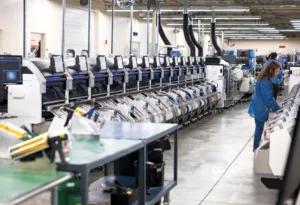
Spokane's 56.8 million-square-foot industrial market spent the last cycle adding modern logistics capacity faster than tenants could fill it. Over the past five years, roughly 5.1 million square feet was delivered against about 3.2 million square feet of net absorption. The result is a vacancy rate of 6.1%, below the 7.5% national figure but well above the sub-3% levels of the last decade. Asking rents average about $9.60 per square foot, up a modest 1.3% year over year.
The forward-looking number matters more: just 402,000 square feet is under construction, a fraction of the 2.2 million-square-foot peak in 2021.
Coeur d'Alene tells a different story: one-fifth Spokane's size, yet industrial rents average about $10.70 per square foot, a premium over Spokane, and absorption stayed positive over the past year while Spokane's went slightly negative. North Idaho's constraint has never been demand; it's inventory.
Retail: the quiet outperformer
Retail may be the most misunderstood sector in the region. Spokane vacancy is just 5.3%, and new deliveries over the past year — about 13,000 square feet marketwide — are the lowest on record. With essentially nothing being built, well-located retail space stays leased, and rents continue to inch upward.
Coeur d'Alene retail is functionally full: vacancy of roughly 1%, the lowest level CoStar has recorded for the market, with only about 16,000 square feet under construction. For owners, that means pricing power few other property types can claim; for tenants, that means limited options.
Office: better here than the headlines
Spokane office vacancy stands elevated by local standards but well below the big West Coast metros. Downtown is the soft spot: the Central Business District — home to more than a quarter of the metro's office inventory — has double-digit vacancy with negative absorption over the past year, and the weakness runs deepest in the largest Class A buildings. Even so, downtown asking rents grew 2%, second-fastest among submarkets, as owners of quality space hold their pricing.
Meanwhile, the Coeur d'Alene market is one of the tightest small office markets in the Northwest, with vacancy down to 4%.
The reality
The pace of sales through the first half of the year tells a story of rotation rather than recovery or retreat. The office market in Spokane logged $56.7 million in sales through June, on pace for its best year since 2023, driven largely by owner-users. Retail is tracking close to its 2025 pace. Industrial and multifamily started the year at a slower pace, but against a high bar: 2025 was the Spokane industrial market's third-strongest sales year on record at nearly $126 million, so the cooler first half reads as normalization, not retreat.
In Coeur d'Alene, industrial and office sales volume through June has already exceeded 2025 full-year totals, driven by a couple of larger transactions.
Buyers remain overwhelmingly private and local; institutions remain selective. Multifamily cap rates deserve a closer look than many headline deals suggest: The occasional 6% multifamily cap rate has typically reflected assumable below-market debt, rather than true market pricing. On conventional terms, reported transaction cap rates have moved steadily upward, from the high-5% range in 2023 to near 7% on this year's closed deals. We are now seeing some multifamily properties trade at cap rates around 8%. Retail and industrial sector cap rates cluster in the mid-6% to mid-7% range, and buyers typically close 8% to 10% below asking.
The financing environment explains the discipline: The Federal Reserve held rates again in June and signaled that meaningful cuts are unlikely before 2027. For commercial borrowers, today's debt costs are the debt costs. At current rates, most acquisitions simply don't pencil on conventional leverage; the deals getting done are backed by substantial down payments, seller financing, or assumable debt already in place.
What to watch in the back half
First, the supply cliff: With construction at cyclical lows in every sector, any pickup in demand — from in-migration, expansion, or falling rates in 2027 — will hit a market with very little new product in the pipeline.
Second, watch the refinancing calendar. Loans written at 2020 and 2021 rates are coming due into a very different market, and how those maturities get resolved will determine how much product finally comes up for sale. Some owners will extend, some will bring fresh equity, and some will become the listings buyers have been waiting for.
If the first half of 2026 proved anything, it's that this market rewards preparation over prediction. The owners who know their numbers, their debt maturities, and where their asset sits in today's landscape will be ready when the pattern breaks. As in any market, the properties that stand apart are the ones with proactive property management and leasing behind them.
Eric Peterson, CCIM, is president and designated broker of ACTIV8 Real Estate, a commercial brokerage and property management company. Contact him at [email protected] or find market reports at www.activ8re.com/market-reports.