
Seniors face greater risks from wildfire smoke
Research shows poor air quality can significantly impact a person's health
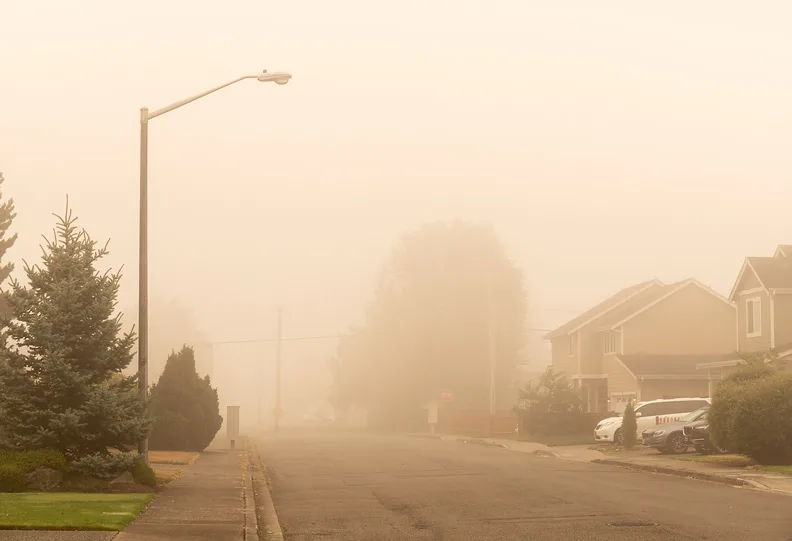
Wildfire smoke, which has become a recurring characteristic of summers in Spokane, can create short- and long-term health issues.
| Adobe StockWildfire smoke has become an expected feature of Spokane summers, and research shows exposure to it can have short- and long-term health effects — especially for more sensitive groups, including seniors.
“Breathing in smoke isn’t good for anyone, and everyone should take steps to reduce their exposure when we’re having unhealthy air quality,” says Lisa Woodard, communications and outreach manager for the Spokane Regional Clean Air Agency.
Wildfire smoke exposure can bring on a variety of symptoms, including headaches, burning eyes, a runny nose, coughing, fatigue, shortness of breath, chest pain, irregular heartbeat, and eyes, nose, and throat irritation, says Woodard. Many categories of people, including children, seniors, those with health conditions, and people who have recently had respiratory infections, are considered more sensitive to wildfire smoke than others.
“Why people 65 and older can be at a greater risk is because they’re more likely to have some health conditions,” says Woodard. “They’re more likely to have unrecognized heart or lung disease. ... There's a lot of factors that come into play as we age. It makes those 65 years and older fall into that health sensitive category.”
According to information compiled on local initiative Smoke Ready Spokane’s website, breathing in wildfire smoke causes both short-term and long-term detriments to cardiovascular health.
Smoke Ready Spokane is a coordinated effort between Spokane Regional Clean Air Agency, Spokane Regional Heath District, and the Gonzaga University Institute for Climate, Water, and the Environment.
“Wildfire smoke contains microscopic particles that are small enough to travel deep into your lungs and enter your bloodstream,” according to Smoke Ready Spokane’s website. “These particles can trigger inflammation throughout your body, placing additional stress on the heart and blood vessels.”
In the short term, inhaling wildfire smoke raises the chance of cardiac arrest by as much as 70%, according to information on the website.
“Studies of emergency room visits show a 42% spike in admitted heart attacks and 22% increase in visits for heart disease within a day of an extreme smoke event,” it states.
Long-term wildfire smoke exposure has also been linked to an increased risk of heart failure and an increased risk of stroke among the senior population.
Woodard says older adults should speak with their health care providers and have a plan for smoke exposure.
“Plan how you will protect yourself against wildfire smoke because it really is individualized to your health condition,” says Woodard.
To reduce smoke exposure, people should limit their time outside during days with higher air quality index levels, she says.
The air quality index, or AQI, was developed to convey air quality, says Woodard. “Good” air quality ranges from 0 to 50. “Moderate” ranges from 51 to 100.
“When you get over 100 for any pollutant that you’re reporting on, over 100 means that it’s over the health-based standard," she says.
101 to 150 is considered “unhealthy for sensitive groups,” and 151 to 200 is considered “unhealthy” for all groups. 201 to 300 is considered “very unhealthy,” and 301 to 500 is considered hazardous air quality. Information on those different levels can be found at Smoke Ready Spokane’s website.
Without factoring in homes or other structures burning, forest fire smoke alone releases hundreds of chemicals, says Woodard.
“It’s something to be taken seriously, I think, and something here that’s not going away,” she says.
The Spokane Regional Clean Air Agency focuses on local, state, and federal clean air regulations. The agency consists of 16 full-time employees and is one of seven local clean air agencies in the state, says Woodard.
Smoke Ready Spokane was formed after the U.S. Environmental Protection Agency awarded $1.1 million in 2024 to the Gonzaga University Institute for Climate, Water, and the Environment. The initiative seeks to lower indoor wildfire smoke exposure within the city of Spokane.
For more information on wildfire smoke, research, how to create a homemade air filter, and other important resources related to wildfire season, visit smokereadyspokane.org.