MultiCare launches refocused philanthropic series
Inland Northwest Foundation shifts approach to a more intimate fundraising initiative
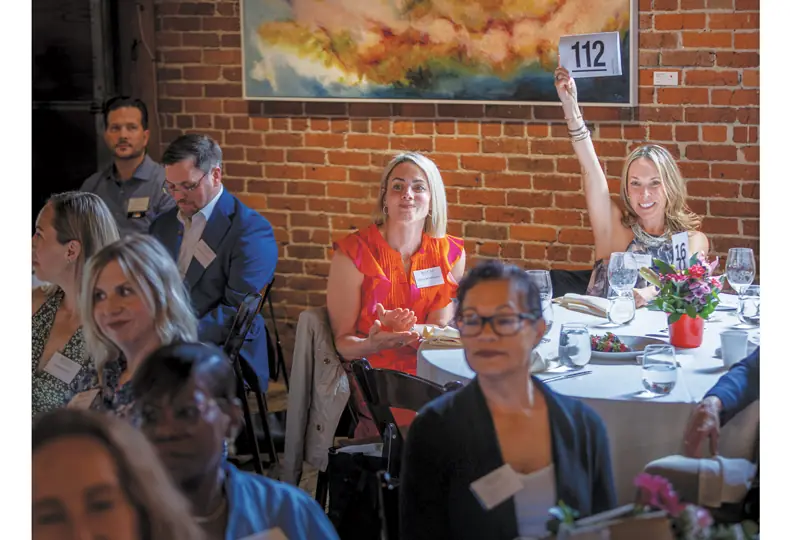
Guests participate in a fundraising auction during the Bloom: Women's Health event held in May.
| Kent Briley PhotographyMultiCare Inland Northwest Foundation is bringing fundraisers out of the ballroom and into more intimate settings through a new series that connects community donors with physicians, patients, and the medical services their contributions help support.
The Closer to Care series debuted this year with three events focused on cardiology, women's health, and oncology. The series replaces the foundation's longstanding Heart Strings fundraising concert with smaller gatherings designed to foster meaningful conversations about healthcare and philanthropy.
The new approach aims to cultivate lasting donor relationships while demonstrating how charitable contributions support medical services and patients throughout the Inland Northwest, says Korin Michielli, executive director of MultiCare Inland Northwest Foundation.
"I think healthcare's complicated, and I think healthcare philanthropy is even more complicated," Michielli says. "This program is clear and transparent."
The foundation previously relied on Heart Strings, an annual fundraising event that paired dinner with musical performances by nationally recognized entertainers. The concert attracted supporters, but the charitable causes featured changed annually, making it difficult to establish sustained relationships with donors interested in specific areas of care, she explains.
By concentrating on three consistent priorities, Closer to Care is helping the foundation identify supporters with particular interests while providing a clearer picture of how donor contributions benefit patients, Michielli says. All funds raised through the events remains in the region and supports the respective areas of care, she notes.
The refocused fundraising strategy launched in March with The Beat: Inside the Next Era of Heart Care. The informational event highlighted advancements in cardiac care through MultiCare's Pulse Heart Institute and allowed attendees to interact with medical professionals, says Michielli.
At the function, an electrophysiologist presented cardiac mapping technology, showing guests the intricate procedures involved in diagnosing and treating heart rhythm disorders. Patients shared personal experiences about the impact of receiving specialized cardiac care at a site close to home. Overall, the event emphasized education and relationship-building rather than soliciting donations, she explains.
"It's not every day that you get to have a beer with a cardiologist or electrophysiologist," Michielli says.
Bringing medical professionals into casual environments helps remove barriers that can make healthcare conversations intimidating, says Kevin Maloney, media relations manager for MultiCare's Inland Northwest region. The approach also gives physicians a chance to connect with community members outside of clinical settings.
"It's nice when you can kind of remove the armor and find out who they really are," Maloney says.
The series continued in May with Bloom: Women's Health, which brought physicians and community members together for candid discussions about perimenopause, menopause, and other health concerns affecting women, Michielli says.
The event featured MultiCare Rockwood Clinic providers and Dr. Mindy Goldman, chief clinical officer at California-based women's healthcare provider Midi Health Inc. Rather than a traditional medical presentation, Bloom was designed similar to a conversation among friends, with participants encouraged to ask questions and share experiences, Michielli says.
MultiCare's Bloom event was at capacity with 150 people in attendance and surpassed its $100,000 fundraising goal, bringing in $105,000 to support women's health initiatives and reaching its 150-person attendance limit. For Michielli, the response demonstrated support to expand women's health services through community collaboration, particularly as the foundation considers where future philanthropic investments could make the greatest impact.
"We really want to work with our donors and the community on what women's care and healthcare is going to become in the region," Michielli says.
A third gathering was held in September at Scale House Market, at 4422 E. Eighth in Spokane Valley. Dubbed Harvest for Hope, the event focused on oncology services and the experiences of cancer patients. The organization's final event of the year was expected to raise $100,000 for cancer care services. While the amount raised was not publicly disclosed, Michielli says the goal was met.
Harvest for Hope paired physicians with patients who shared personal accounts of their treatment. For instance, a former food industry professional whose cancer treatment affected his ability to taste food and the patient's physician participated. The connection between the patient's culinary background and the food-centered atmosphere at the event reinforced the foundation's emphasis on creating meaningful experiences that extend beyond fundraising, Michielli says.
MultiCare Inland Northwest Foundation plans to continue the annual series, although Michielli says the cardiology-focused event may get smaller as organizers refine its format and identify supporters interested in that specialty.
As participation grows, the organization is planning to establish volunteer committees and introduce additional educational events that may not include fundraising requests, Michielli says. Those gatherings are expected to attract new audiences, strengthen relationships with prospective donors, and help the foundation identify supporters for future medical projects requiring philanthropic investment.
Women's health has generated the strongest momentum during the inaugural year, although cardiology and oncology will remain central priorities, Michielli says.
The foundation will maintain the revamped fundraising format for about three years while evaluating attendance, fundraising results, and community interest. Larger events could follow if participation and charitable support continue to grow, she adds.
As the series approaches its second year, organizers are expecting to show returning attendees how their donations have been used and what continued financial support could accomplish.
The foundation's overall goal is to build a community of supporters who understand the available medical services in the region and recognize their individual roles in sustaining and expanding those resources, Michielli says.
"I want people to feel confident and aware of these services and feel like they know exactly where the money's going," she says.
Community members interested in attending future events, contributing to medical initiatives, or joining volunteer committees will find more information at the nonprofit's Closer to Care website.

Stay Informed. It’s Free.
Subscribe to our newsletters and get the latest news and insights delivered to your inbox.
We respect your privacy.
Unsubscribe anytime.
Thank you!
You’re subscribed. Keep an eye on your inbox for the latest updates.