According to the Efficient Market Hypothesis (EMH) pioneered by economist Eugene F. Fama, financial markets fully reflect all available information. In practice, that assumption is being tested today.
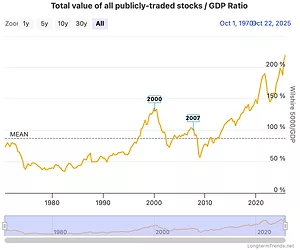
The prolonged U.S. government shutdown has disrupted the release of key economic data such as GDP, inflation, employment, and consumer spending, forcing investors and policymakers to make decisions with blurred economic data. Meanwhile, AI-related equities are soaring, fueling debate over whether markets are efficiently pricing innovation or inadvertently creating an asset bubble.
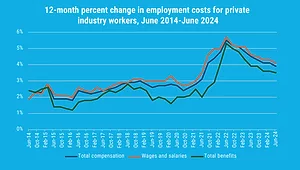
The lingering effects of the Covid-19 pandemic are still shaping the global economy, particularly in the labor market. Despite the worst of the health crisis having passed, one of its enduring legacies is the sharp rise in labor costs.
The U.S. Federal Reserve Bank closely tracks overall inflation, especially core inflation. Core Personal Consumption Expenditures (PCE) is the inflation measure economists prefer to track as it excludes the volatility of energy and food prices. Excluding spikes in energy and food prices allows economists to disaggregate inflation and measure changes in the price of “core” or basic goods and services.
It has been a little over two years since the Covid-19 pandemic afflicted the U.S. According to the Centers for Disease Control and Prevention, as of October 2022, daily cases reached over 97 million and deaths surpassed one million. Despite the