
INW gardening experts share tips, give outlook
Expected colder spring to be beneficial for cool-weather crops
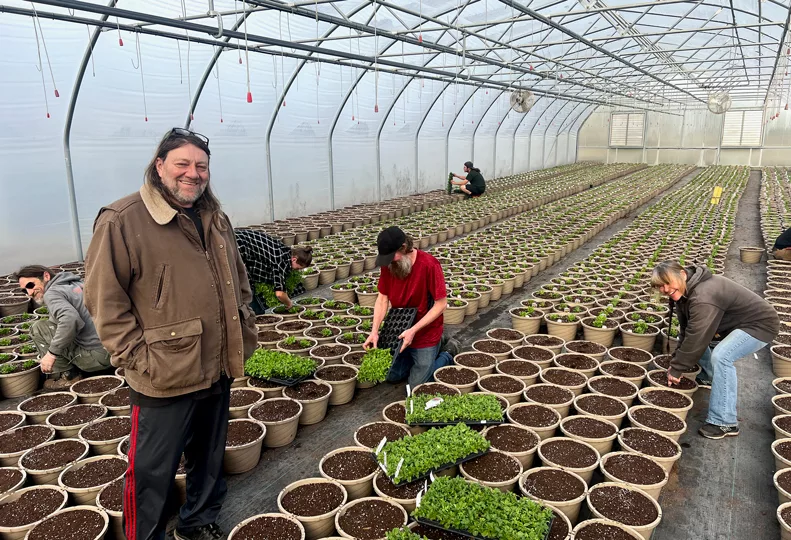
Kief Fitzpatrick, co-owner of Deer Park-based Garden Springs Retail LLC, says the mild winter may be beneficial for plants with questionable hardiness.
| Samantha PeoneAs the sun starts to shine and the ground thaws, many celebrate spring by shopping at plant nurseries, digging through soil, ripping up weeds, and nurturing the new growing season’s fragrant flowers and flavorful veggies.
“It’s a great way to get a little bit of exercise, especially for people who are like me and getting a little bit older,” says Tim Kohlhauff, urban horticulture program coordinator with Washington State University Extension in Spokane County. “We might not have time in our schedule for marathons, but we can get out in the garden.”
Gardening keeps people flexible and moving, while also keeping them in touch with nature, which research has shown increases well-being, says Kohlhauff.
“Just by being out and seeing things that are happening in the garden — or if you don’t have space to garden, going to a park — can help elevate our mood,” he says.
For some, gardening may feel intimidating because of the anticipated physical demands.
“There are so many ways to overcome some of the physical limitations that we have as we get older,” says Kohlhauff.
WSU Extension has an Americans with Disabilities Act-compliant demonstration raised garden bed that someone in a wheelchair would be able to garden at. Similarly, special adaptive tools are available, such as ratcheting pruners better suited for someone who no longer has the grip strength to complete a cut. There are tools to plant seeds from a standing position, to cultivate without much strength, and devices for similar issues, he says.
For those with limited space to garden, vertical gardening may be an option, he says. There are kits people can buy to get started with vertical gardening, or people can make their own.
“Anything that can hold some potting mix and hold some water, you can use to help you grow something, even if it’s a few flowers or something to attract pollinators,” Kohlhauff says.
Additionally, he says, people don't need brand-new lumber or “fancy raised beds” to garden.
Much of the Spokane area’s Plant Hardiness Zone is designated as 6b and 7a, according to the U.S. Department of Agriculture's Plant Hardiness Zone Map. However, Kohlhauff says many gardeners in the area find the zones to be closer aligned with 6a and 6b.
The Plant Hardiness Zone Map is the standard by which gardeners can determine which perennial plants are most likely to thrive at a location, the USDA website states. The map is based on the average annual extreme minimum winter temperature.
Zone 6a ranges from -10 degrees to -5 degrees Fahrenheit, whereas Zone 7a's average annual extreme minimum winter temperature ranges from 0 degrees to 5 degrees Fahrenheit.
This year’s winter has been more mild than most, which means there may be more weeds, Kohlhauff says. Mulch, unraked leaves, or other types of organic matter to lay down can help block out sunlight, which weeds typically need to thrive. Compost, he says, is very beneficial for outdoor gardens, and much of the soil within Spokane County lacks organic matter.
Despite the warmer winter, a colder spring is predicted, says Kohlhauff. If that prediction pans out, then it can provide a longer growing period for cool weather crops, such as broccoli, cauliflower, and radishes. Warm weather crops include tomatoes and squash.
Many plants grow well in the Spokane area, says Kohlhauff, noting that varieties of tomatoes, summer and winter squashes, and melons love warm Spokane summers.
Kief Fitzpatrick, co-owner of Deer Park-based Garden Springs Retail LLC, says the mild winter may be beneficial for plants with questionable hardiness that can sometimes be frozen out. Mild winters can also cause plants to break dormancy too early.
“Then we get a real hard frost, and it can hurt things bad,” says Fitzpatrick.
Fitzpatrick says, however, that he's more concerned about the possibility of early warm weather turning into a hot, droughty year later on, which can make it difficult to keep plants moist.
For potential hard frosts, Fitzpatrick recommends covering plants. He also recommends refraining from overfertilizing too early.
It’s best to delay placing tender plants, such as tomatoes and peppers, outdoors until the snow on Mt. Spokane has melted, Fitzpatrick says, calling that advice an old local mantra.
“I’ve been using Mt. Spokane as an indicator for years,” he says.
Fitzpatrick says every plant sold through his company is tested out locally first. The business specializes in bedding plants and vegetable starts, including several kinds of tomatoes and peppers. Garden Springs also sell tree shrubs, fruit trees, shade trees, a variety of herbs, Mother’s Day baskets, and other related products.
“I trial all this stuff in our garden areas, and if it doesn’t do well, then I generally scrap it,” he says.
Spring flowering trees and shrubs are the backbone of many gardens, says Michael Loundagin, who works in nursery sales at Spokane-based Ritter’s Garden & Gift.
“In the later part of the summer, if there were two things that I could single out, it would be hardy perennial hibiscus and hydrangeas,” says Loundagin.
Hydrangeas are popular because the different types are so versatile. Some grow to be 12 feet tall, while others stop around two feet. Some like shade, others tolerate full sun, and they come in a variety of colors.
“No garden needs to be without the hydrangea,” Loundagin says.
For people who have trouble growing hydrangeas, Loundagin recommends PeeGee hydrangeas, which range from white to an almost strawberry red, and bloom on current season growth, he says.
As for perennial hibiscus, Loundagin says they’re very exotic looking despite being indigenous to eastern North America.
“They’re very hardy by nature, but they’ll have flowers the size of a dinner plate,” he says.
Fitzpatrick says his favorite plants to grow are fruit trees.
“The production of fruit trees takes a little bit more time, but it’s one of my favorite things to enjoy fresh. There’s something about tree-ripened fruit that is just unlike anything you can buy at the grocery store,” Fitzpatrick says.
Kohlhauff also says homegrown produce tastes significantly better than store-bought. Garden produce can be bred for flavor, whereas many commercial tomatoes, for example, are bred to resist bruising in shipping. The latter is nice because people can enjoy tomatoes more often than in the past, but the flavor is incomparable to homegrown tomatoes, he says.
“They almost don’t seem like the same thing, and the same with other plants as well,” he says. “Homegrown strawberries are amazing.”