
Catching up with: Dr. Suzan Marshall, owner of Trauma Forensics
Investigations shift toward work with lawyers; state board appointment begins
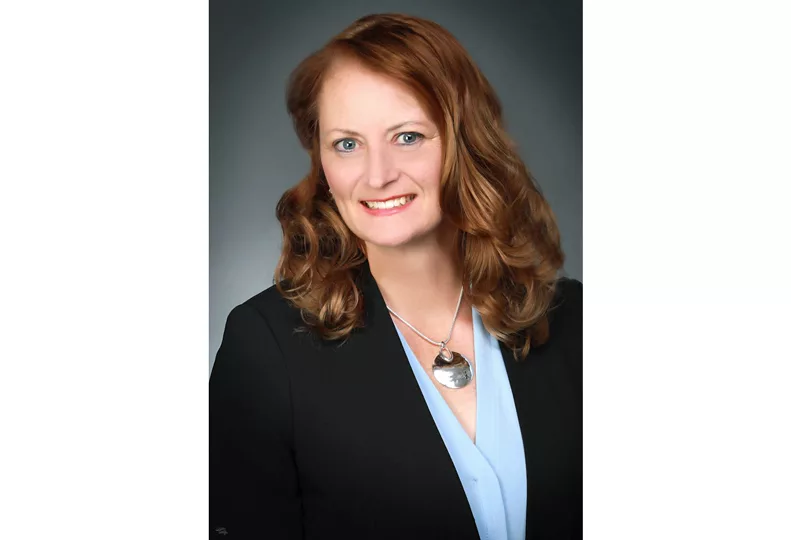
Dr. Suzan Marshall, owner of Trauma Forensics, works on 25 active cases per year.
| Green Gables PhotographyWhen Dr. Suzan Marshall founded Plan B Forensics LLC in 2019, the name reflected the company's early focus on helping families who were seeking a second opinion when official investigations into a person's death fell short, she says.
Marshall's company has now rebranded to Trauma Forensics LLC, a name she says more clearly signals her expertise and is not confused for something else, such as emergency contraceptives. Trauma Forensics is a Spokane-based death investigation company that provides attorneys and other professionals with a comprehensive analysis of what happened to a victim, including images and scientific data to support conclusions.
Marshall is a certified medicolegal death investigator and general surgeon specializing in trauma and emergency surgery who uses her clinical background and her personal experience with traumatic death to help investigate complex cases throughout the U.S.
Attorneys hire Marshall to evaluate the autopsy, medical records, and the medical examiner’s death investigation reports. She also testifies as an expert witness in court, assists with trial preparation, and is listed in a national expert witness database, a designation that helps connect her with attorneys handling complex death investigations nationwide.
Her typical caseload is comprised of about 25 active cases per year. She charges $550 per hour, and aside from traveling across the country as an expert witness, her work is mostly completed from her home office, she says.
Marshall explains that typical death investigations rely heavily on forensic pathologists, who she says often lack clinical experience treating trauma patients. Unlike surgeons or emergency physicians, she notes, pathologists typically don’t follow how injuries develop over time or interact with a patient’s full medical history. She adds that many pathologists are trained primarily to examine the body after death, rather than how trauma presents and evolves in living patients, which can limit their ability to interpret complex injuries in context, including distinguishing between trauma and life-saving procedures performed in a hospital setting.
“Death investigation is body, scene, history. Every single time,” Marshall says. “I can tell you just about every case is missing part of that triangle.”
For Marshall, that comprehensive approach is rooted not only in her medical training but in her own experience with traumatic loss.
As previously reported by the Journal, Marshall went to medical school at age 30 after earning a bachelor’s degree in literature from The American University and a master’s degree in English and comparative literature from Columbia University. She met her husband, Dr. John Marshall, in an organic chemistry class at the Philadelphia College of Osteopathic Medicine. Both joined the Army and served four years as Army surgeons in Seoul, South Korea, where they adopted two children.
In 2009, the Marshalls moved to Washington state. Suzan Marshall worked as a general surgeon at Pullman Regional Hospital before she resigned due to medical issues. Later, in Spokane, she became a teacher and a medical consultant for veterans.
John Marshall was chief of surgery at Mann-Grandstaff VA Medical Center. On Jan. 25, 2016, he went missing after leaving for a run. His body was recovered from the Spokane River near the Monroe Street Bridge the following day. The Spokane County Medical Examiner ruled his death an accidental drowning.
Marshall has long questioned that determination, saying key elements of the investigation didn’t align with her understanding of trauma and death investigation, including the location of where her husband’s body was found relative to the river’s current, the condition of the body, and the lack of injuries she would expect from a fall of that height.
“I’m a death investigator and a trauma surgeon,” she says. “There’s nothing about his body that says he fell 165 feet.”
Around the same time her husband’s case was unfolding, the body of a woman wrapped in plastic with lacerations on her face was found. Cindy Lou Zeppenfeld Bergan had been found by duck hunters in Idaho; her death was ruled a heart attack. As both cases proceeded, Marshall met with the victim's daughter, Heather Ostby, and they connected over their shared concerns about how the deaths of their loved ones were being investigated.
That connection led both women to open Plan B Forensics in April 2019. Ostby eventually departed.
Since the Journal last caught up with Marshall four years ago, she has expanded her work beyond case reviews, taking on roles in policy, writing, and public service.
In June, Gov. Bob Ferguson appointed Marshall to the Washington state Board of Osteopathic Medicine and Surgery. She is one of nine physicians appointed to the board and her responsibilities include reviewing license applications, investigating complaints, participating in disciplinary panels, and contributing to rulemaking and policy decisions in collaboration with the Department of Health.
In addition to Trauma Forensics, Marshall is working on a book that examines three Spokane-area deaths, including her husband’s, Ostby’s mother, and a third death that happened a week prior to her husband's. In the book, she combs through both investigative records and her own perspective as a physician and death investigator to deliver a timeline of events as well as provide an analysis of the history of medicine and law enforcement in the U.S. from colonial times to the present day.
“I took all three cases … because they all happened at the same time in the same place and somehow they’re connected,” Marshall says. “You just have a few degrees of separation.”
Marshall also spends time drafting legislative proposals with the goal of improving death certificate accuracy, which is central to her policy work, as the documents are used to track causes of death, guide public health funding, and inform safety regulations. The Centers for Disease Control and Prevention have established guidelines, she says, and her proposal calls for those guidelines to be followed.
“Everything on the death certificate affects the living,” Marshall asserts.
Marshall has already started drafting legislation aimed at standardizing how death certificates are completed and says that effort builds on previous policy work around public safety issues.