Meet & Greet with Skyler Reep, KSPS PBS president and general manager
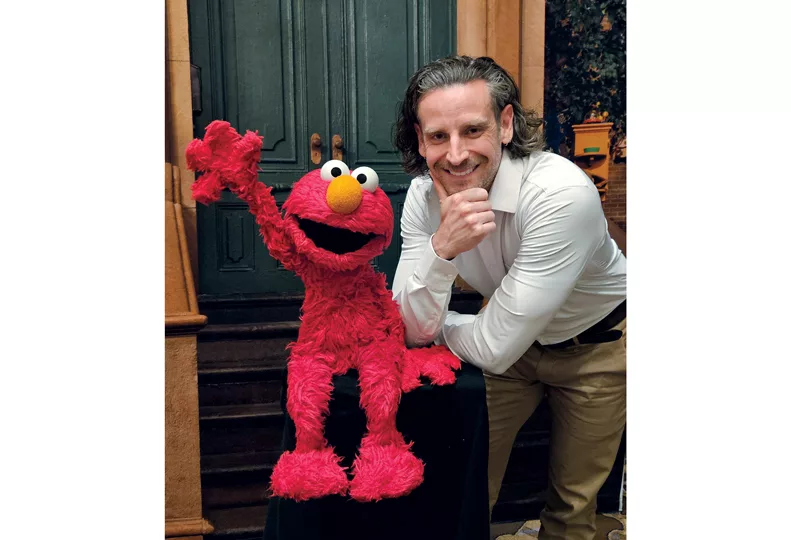
Skyler Reep was named president and general manager of KSPS PBS in February.
| KSPS PBSSkyler Reep has been named president and general manager of KSPS PBS, the public television station announced in February.
Reep, who had been serving as interim general manager since the retirement of Gary Stokes in August 2025, has been with KSPS PBS since 2017, most recently as director of development.
Reep attended Whitworth University and has lived in Spokane for about 25 years. He brings a blend of private-sector marketing experience and nonprofit leadership to the role.
Founded in 1967, KSPS PBS serves more than 2 million households across Eastern Washington, northern Idaho, western Montana, and parts of Alberta and British Columbia. The station provides four broadcast channels, a growing digital presence, and extensive educational resources for families, teachers, and lifelong learners.
Can you tell me a little about your background prior to joining KSPS PBS?
I actually started my career on the business side, initially in revenue management and in marketing. I spent a number of years focused on growth and analytics and building sustainable revenue models.
And then over time, I just became more interested in applying those skills to something that had a broader community impact. Public media really kind of sits at that intersection. It's mission-driven, but it also has to be financially disciplined and sustainable to serve people long term.
That combination of purpose and practicality is really what drew me and ultimately has set me here. I chose mission. I didn't just default into it. Although I work for an organization that is mission-driven, I still think like a business operator.
Gary Stokes is a prominent leader and voice in the Inland Northwest. What has he shared with you, or what have you learned while working alongside him, that will help you in this role?
Gary is an icon in Spokane, right? He was kind and humble and just a great people person. I think that his connections to people in Spokane were authentic.
One of the most important things he brought was his fiscal conservatism to management, which really set us up.
Gary was here for a decade of great change and departs as we embark on a major change after the loss of federal funding. He left us in really good shape. KSPS PBS has a very healthy balance sheet. We have a very healthy income statement. We have endowment. We have rainy day funds.
All of that is due to Gary's thoughtful and cautious philosophy as far as maintaining the financial health of an organization, and that strength has really set us up to weather the last year of disruption and be able to reorganize and redeploy from a position of strength. And I can't thank him enough for that.
How has KSPS PBS been able to deal with those federal funding challenges, and what is your plan moving forward to ensure your station has adequate funding?
The loss of federal funding is historic. I cannot understate how shocking it is to have funding that was guaranteed for nigh on 60 years to be rescinded with no warning, no spend-down time, nothing.
But the fact is, public media has always been mostly funded by individual donors. As harmful as the loss of, for us, 18% of our operating revenue was, it's damaging but not existential for us.
And I am speaking now only as KSPS PBS. There are rural stations and stations in poorer parts of the country that have a smaller donor base to draw from, for whom their funding was 40% to 70% federal. To lose that was really damaging to them in a way that will deeply affect those most marginalized communities, frankly.
Here at KSPS PBS, 18% was enough for us to have to cut some positions. We had to cut some programs. We had to make some really hard decisions, and those were some of the first things I had to do as the interim. I had to lay off six people.
But what's unique about KSPS PBS is how grassroots it is. The majority of our support comes from those individuals that give modest amounts because they genuinely value what we provide, and that honestly creates a kind of accountability. We have to earn that support every year by delivering something that people trust and find useful.
We also work with corporate partners and foundations, and of course, we're always looking for ways to modernize and diversify our sources of revenue in responsible ways. We will never be a commercial station. But at its core, it's a community-supported model, and I will say the community has shown up in a big way.
We do have a new strategic plan. We are doing a lot of resetting around this new leadership. There's a new plan. There's a new funding model. We recognize we can't do the same old thing we've always done, and that's very real to us as well.
Why is public media so important?
I think about our role in very practical terms. There are a few areas where there's really broad agreement across the community.
One is education. Our children's education programming is research-based, and it is designed to help kids arrive at kindergarten ready to learn.
Another thing we do is public safety. We are a part of the emergency communication infrastructure.
When you get a wildfire alert or an emergency alert, even if it comes through your phone, often that is coming off the infrastructure of the tower network that public media maintains across the country. KSPS PBS maintains 30 towers atop mountain tops all over this region, and we climb up there — rain, snow, sleet, hail — and make sure those are running.
And then the third area that's growing for us is workforce development.
We built this amazing tool called Career Explore NW in response to local employers who told us that their biggest challenge wasn't really marketing, it was finding people. So we created a tool that helps students and job seekers see what careers look like and how to get into them here in the Inland Northwest.
That’s just the local stuff we do, in addition to civic health programming and televising debates and televising high school concerts. That's all layered on top of the programming that we get nationally from PBS and American Public Television and that world-class programming that people think of when they think of PBS.
This interview has been edited for length and clarity.


Stay Informed. It’s Free.
Subscribe to our newsletters and get the latest news and insights delivered to your inbox.
We respect your privacy.
Unsubscribe anytime.
Thank you!
You’re subscribed. Keep an eye on your inbox for the latest updates.