Spokane's cinematic ascent: TV, film industry captures sustainable growth
Regional architecture, landscapes help attract creatives to work here
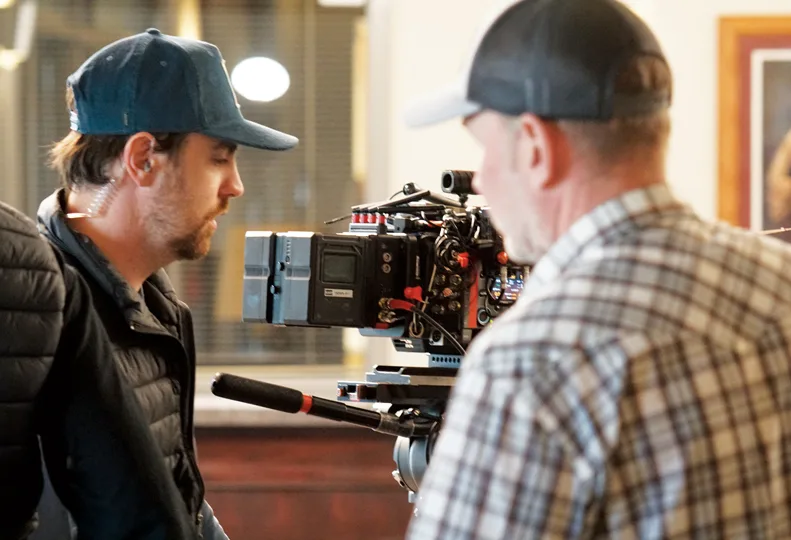
A camera operator sets his shot during ongoing filming of "Room for a Miracle" in Spokane Valley.
| Matt StephensThe Spokane area has served as a filming location for movies and television shows dating back decades. The geography is featured in notable productions such as "Vision Quest" in 1985, "Benny & Joon" in 1993, and "Z Nation," which aired for five seasons from 2014 to 2018.
Industry leaders here say the region is continuing to build on that legacy with a steady pipeline of productions, studio infrastructure, and a revived focus on sustaining the area's workforce.
At the center of recent activity is Studio A, where a steady stream of productions are keeping the studio busy. Based at 11427 W. 21st in Airway Heights, Studio A houses The Northwest Package LLC, a spinoff of Spokane-based North by Northwest Productions Inc., founded in 1990 by producer, director, and screenwriter Rich Cowan, who also served as CEO of the video production company for 22 years.
When the Journal last caught up with Cowan, the industry was still rebuilding from the effects of the COVID-19 pandemic. Producer Casey Cowan, Rich Cowan's son, says productions have remained steady since then.
"It's impossible to say exactly how many features we will see year to year," Casey says. "Because budgets and timelines are all different, but we tend to see three to four films per year."
Budgets can vary considerably, Casey says, estimating the average range The Northwest Package sees is $3 million to $8 million.
The studio lands productions for in-state and out-of-state filmmakers, as many industry professionals are drawn to the incentive programs available in Washington state. Some incentives are available through Washington Filmworks, a nonprofit that allocates funding assistance for film and TV creators.
Through the Motion Picture Competitiveness Program, run by Washington Filmworks, productions can apply for cash rebates of up to 45% on qualified in-state spending. Higher percentage rebates also are available for certain projects, such as for films made in rural areas or those that include a certain percentage of local workers, according to the nonprofit's website.
Requirements vary depending on whether the project is a film, episodic series, or commercial, but feature films require a minimum capital infusion of $500,000 required to ensure significant economic impact is derived from the project. Episodic projects require a $300,000 investment, while commercials require $150,000 to be eligible for any rebates. An annual cap is set at $15 million for the program, limiting the number of projects that get approved, according to the Washington Filmworks website.
Cowan says incentives directly boost the economy and help area workers maintain steady employment in a gig-based industry.
Unlike tax credit systems that are used to incentivize the film industry in some other states, Washington's program provides direct cash rebates, he says. Those can be especially helpful for independent filmmakers that may not have large tax liabilities. In Oregon, for instance, a combination of rebates and incentives that can exceed 25% of production costs are available, and in Idaho, there are no incentive programs available.
More recently, Studio A has been associated with such projects as "Train Dreams," "213 Bones," and "Room for a Miracle," the latter of which is currently in production with $1 million budget, Casey says.
The production, "Room for a Miracle" was created by Elliott Wallach, president of Edify Films Inc., of Veradale. Edify Films also distributes merchandise and home media for the family-friendly series "When Calls the Heart," which has been airing on the Hallmark Channel since 2014.
Wallach describes his current film as a character-driven comedy centered on a man trying to navigate life's challenges.
"I make comedy because laughter is the most honest human emotion," Wallach says. "I like to make films because film is the most powerful art form as I see it. No other form of entertainment can leave such a lasting impression on someone's life in just a couple of hours."
Wallach's business model allows him to create the shows and films he wants while also retaining the distribution rights, he explains.
Distribution can often be the toughest part of TV and movie production, notes Jennifer Gatts, who has worked in the industry since 2009. She adds that streaming has significantly impacted traditional distribution channels. Gatts has held multiple roles, including as a second assistant director for "Z Nation," and in the production department of "Train Dreams," which was released in November on Netflix.
Despite distribution challenges, some regional productions have been able to gain traction, such as the horror movie "213 Bones." The Horror Collective, a genre label of media company Studio Dome, of Los Angeles, California, is a prominent independent film distribution label and production brand dedicated to fostering a community for horror filmmakers. The collective bought the global distribution rights for the film and is planning a theatrical release in the U.S., according to its website.
The feature, which was filmed in Spokane and Cheney, not only supported Inland Northwest workers, but with the distribution deal, many of the actors are now afforded residual long-term pay as well.
Actor Rick Rivera, who had roles in both "Train Dreams" and "Z Nation," says he has found more work in the Spokane area compared to opportunities in New York or California. His day job as an acting coach and a life coach supports his main passion of working in the film industry, he says.
Beyond production in the Inland Northwest, other industry organizations are working to build a sustainable pipeline of talent.
In 2023, Daniel Schaefer helped launch Spokane-based We F.E.W., an acronym for Filmmakers of Eastern Washington. His work to establish the group as an accredited nonprofit is expected to help creatives, film students, and workers in the area find outlets for their creative needs.
"I started this more as a way for creatives to meet other creatives," Schaefer says. "We started having mixers and our member numbers skyrocketed in just a couple years. We started with 12 people at our first mixer, and now we have 2,600 following the group's page."
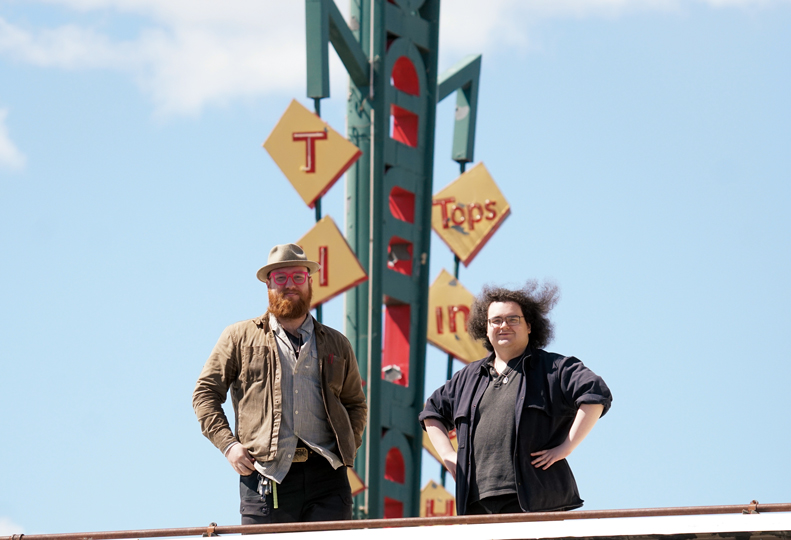 Daniel Schaefer, left, started the We F.E.W. filmmakers support system in 2023. Ryan Bronson, right, serves as the group's postproduction manager. -Matt Stephens
Currently, the group leases space above the Garland Theater, that Schaefer says is open for creative use. Students can use the space to work on independent projects or learn about specific pieces of equipment or software. The $20,000 annual rate is worth it due to his passion for supporting the industry, he adds.
Schaefer's father, Karl Schaefer, was the executive producer and show runner for "Z Nation," a zombie horror series that spanned five seasons on the Syfy network. The show used the landscapes and architecture of Spokane to create a series that would appear to start in New York and end in California.
Schaefer, Gatts, and other film professionals including Jimmy Matlosz all agree that the architecture and landscapes in the region are appealing to decision-makers in the entertainment industry.
Matlosz, a filmmaker for 37 years, says the Spokane market is also less expensive in many ways. For example, renting and finding studio space in Eastern Washington costs less than in California.
Matlosz is currently focused on "Burden of the Wolf," a coming-of-age thriller. He says he expects there will be no issues finding proper filming locations in the area.
Ryan Bronson, postproduction supervisor at We F.E.W, says he hopes to share the knowledge he gained in the Spokane Falls Community College filmmaking program.
"I just really want to help with healthy growth in our local film market," Bronson says. "I am here to offer mentorship to newcomers in a fun and supportive environment, and hopefully help people feel confident in their creative direction."
Schaefer contends that the future of Spokane's film industry looks sharp. With an established presence and a growing talent pool, the industry here is positioning itself for future growth in an increasingly competitive market, he says.
Edited 5/7/26 to clarify "When Calls the Heart," is a family-friendly series.