
Chinook boosts beef with dry-aging program
Technique adds richness, flavor to steaks served at Couer d'Alene Casino restaurant
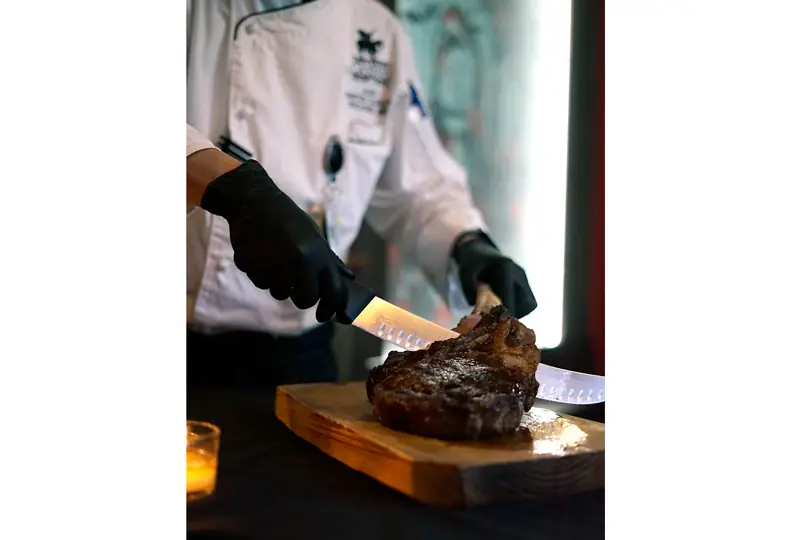
Couer d'Alene Casino Resort Hotel's executive chef Alex Santos-Cucalon slices a 51-ounce dry-aged tomahawk steak.
| Matt StephensA new dry-aged beef program at the Chinook Steak, Seafood & Pasta restaurant in the Couer d'Alene Casino Resort Hotel is driving both flavor innovation and increased sales, says executive chef Alex Santos-Cucalon.
The program already is showing promise, Santos-Cucalon says, as the restaurant, at 37914 S. Nukwalqw, in Worley, Idaho, is selling 400% more tomahawk steaks with the dry-aging process in place. Chinook previously sold 15 tomahawk steaks per month.
The cost is a little higher than the price of an average steak, he says, because it takes more time and craftsmanship to properly age and prepare each steak.
"On average, the price of fresh ribeye steaks is $20 to $25 a pound," says Santos-Cucalon. "A dry-aged ribeye steak would range $26 to $32 a pound, an increase of 30%."
The dry-aged beef program is allowing the restaurant to deliver a more concentrated and complex flavor profile often described as rich and nutty, he says.
"We're creating a controlled environment where the meat can develop deeper flavor," he says.
The restaurant ages its beef for between three weeks and eight weeks depending on the desired concentration, Santos-Cucalon explains. The process occurs in specialized refrigeration units that cost between $10,000 and $15,000 and keep the air between 32 F and 34 F, with humidity averaging 70%.
During that process, natural enzymes break down muscle tissue in the beef, enhancing tenderness and taste. Santos-Cucalon says two biological components, adenosine triphosphate and glycogen, play a significant role in developing the meat's signature umami profile.
Currently, Chinook offers multiple aging tiers, including beef aged for 20, 35, and 57 days.
One key component during preparation is to remove the pellicle, which is a hardened surface layer that develops as surface moisture is lost, says Santos-Cucalon.
"Once the pellicle is removed, the best method to cook a dry-aged steak is a house medium," Santos-Cucalon says. "If you go too rare, the fat doesn't take on much of the flavor, but go too well-done, and you lose all the moisture."
On April 30, guests sampled different tiers of aged beef, including a 51-ounce tomahawk steak that had been aged for 35 days, which appeared to be an unanimous crowd favorite. Santos-Cucalon says the sales numbers for those steaks validate their sentiments.
Santos-Cucalon says he prefers the dry-aging process to the more common wet-aging that is seen in many grocery stores. That process is meant to move product faster and in higher quantities, but he says some of the quality is lost. Wet-aged beef is processed and placed in packaging that Santos-Cucalon explains creates an anaerobic environment that can lower the pH of the beef, creating sour flavors due to lactic acid.
"With dry-aging, we're able to maintain a higher pH level and avoid any fermentation," he says. "Instead, the breakdown happens in a controlled way that creates a richer, more refined flavor."
Santos-Cucalon says the growth of the program reflects a "broader trend of diners seeking elevated culinary experiences, particularly centered on craftsmanship and technique that can't be replicated at home."
Chinook is considering future expansion of the program, he says, because as the sales increase, the restaurant needs to be able to meet increasing demand.
"With strong momentum behind the program, we are actively exploring opportunities aimed at scaling both capacity and innovation," says Santos-Cucalon. "Although specifics remain confidential, the forthcoming developments are expected to further distinguish our commitment to quality and craftsmanship. Just like our steaks, it will only get better with time."

Stay Informed. It’s Free.
Subscribe to our newsletters and get the latest news and insights delivered to your inbox.
We respect your privacy.
Unsubscribe anytime.
Thank you!
You’re subscribed. Keep an eye on your inbox for the latest updates.