AI frenzy fuels rise in venture capital activity
Companies not centered around surging technology may face funding hurdles
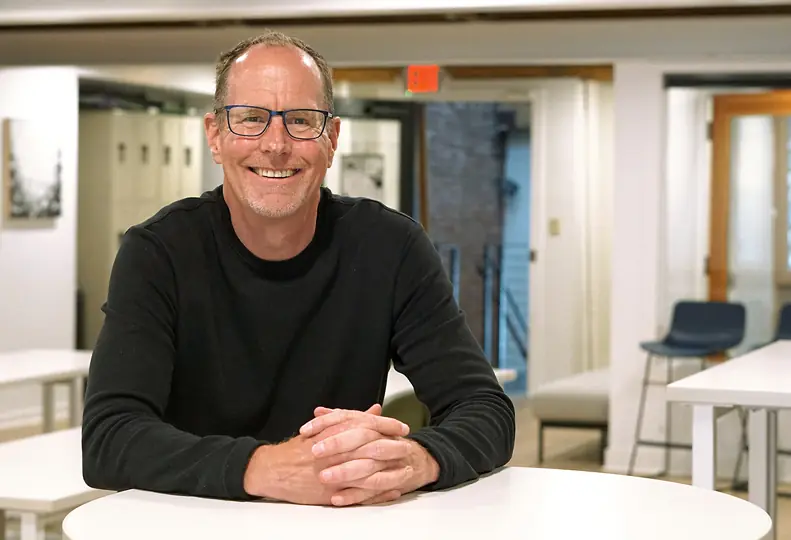
Tom Simpson, CEO of Ignite Northwest, says artificial intelligence is changing the investment landscape.
| Matt StephensA surge in artificial intelligence investment is reshaping the venture capital landscape nationally, driving record valuations and deal sizes while creating new challenges for startups that aren't centered on AI technology, according to some market experts.
Venture investment activity reached unprecedented levels during the first quarter of 2026, participants at the 2026 State of the Markets panel discussion held May 28 at Barrister Winery in Spokane explained.
Tom Simpson, CEO of Spokane-based business accelerator Ignite Northwest and president of the Spokane Angel Alliance, says the panel was comprised of Bill McAleer, of Seattle-based Voyager Capital; Aaron Franzheim, of CLA Meridian Capital, also of Seattle; Natalie Steck, of Santa Clara, California-based Silicon Valley Bank; and Terrance Stevenson, of the Washington Technology Industry Association, based in Issaquah, Washington.
The panel discussion, moderated by Simpson, addressed national venture investing, lending, and exits. Much of the venture investment activity nationwide has been concentrated in a handful of exceptionally large transactions involving major AI companies, says Simpson. The concentration of capital has pushed valuations to historic highs.
"The AI effect is driving much of what we're seeing in the venture market today," Simpson explains, adding that investors are aggressively competing for opportunities tied directly to artificial intelligence development and infrastructure.
The rapid increase in valuations is sparking debate about whether the market is entering another speculative bubble, such as the 2000 bursting of the dot-com bubble, Simpson explains.
The market is currently split between those who fear a speculative bubble — including prominent figures such as Jamie Dimon, CEO of JPMorgan Chase & Co. and Warren Buffett, longtime leader of Berkshire Hathaway Inc. — and those who believe the "AI effect" on infrastructure and development justifies today's historic values.
Despite concerns, venture-backed exits showed signs of improvement during the first quarter. A venture backed exit occurs when the founders and investors of a startup sell some or all of their ownership interest, allowing the investors to realize a financial return.
Exit activity reached a record $347 billion in total value for the quarter, he says, citing data from the panel discussion. However, the figure was heavily concentrated with transactions related to Starbase, Texas-based Space Exploration Technologies Corp., which does business as SpaceX, accounting for approximately 72% of total exit value, explains Simpson.
Private equity firms are playing a selective role in the market, and Simpson says higher interest rates are increasing financing costs for acquisitions, leading many firms to focus on top-performing companies, while passing on others seeking liquidity events.
Both are venture-backed and private equity investments are private market investments, but they operate at opposite ends of a company's lifecycle. Venture capital primarily funds early-stage startups with high growth potential, while private equity acquires or restructures mature, established businesses, according to Investopedia.
"There is still a significant backlog of companies looking for exits," Simpson says. "The top quartile of businesses are finding opportunities, but many others are still waiting."
The public offering market is also showing signs of recovery. Venture-backed companies completed multiple public offerings during the first quarter. Some industry experts expect a sizable pipeline of companies to remain poised to enter public markets if conditions remain favorable, he says.
The 2026 State of the Markets panel discussion also addressed the ways in which public policy influences business growth and investment activity here. Experts expressed concerns regarding Washington state's tax and regulatory environment and the potential effect of those policies on business retention and investment attraction, says Simpson.
Additionally, the discussion highlighted ongoing debates surrounding the state's capital gains tax and broader business climate.
Beyond regulatory concerns, for startup founders outside the AI sector, Simpson expresses concern that the current investment environment may be creating unintended obstacles, pointing to companies and startups that incorporate AI as a productivity tool but are not fundamentally AI companies.
A few Inland Northwest startups — which Simpson declines to name — may get swept under the investment radar, he notes. Those businesses could struggle to attract investor attention as venture firms increasingly focus on large AI-related opportunities.
"AI is an incredible technology and it's clearly here to stay," Simpson says. "But there are many outstanding companies that simply use AI as a tool. The concern is whether those companies get overlooked because they're not part of the AI narrative."
Startups pursuing smaller capital injections between $500,000 and $2 million are finding themselves at the center of the current funding struggle, as venture firms are increasingly prioritizing larger AI-driven deals. While Simpson is anticipating an eventual return to market stability, he warns that businesses outside the AI sector may encounter significant fundraising headwinds in the immediate future.
He compares the current acceleration of AI development to the early days of the internet, describing the technology as still being in its infancy. Given the pace of innovation, Simpson says he is foregoing efforts to make detailed predictions about AI's long-term impact. Instead, he's expecting the technology to continue evolving rapidly, creating opportunities and disruptions that remain difficult to forecast.
"Society is advancing AI at an accelerated rate," he says. "There are going to be a lot of unintended consequences — some very positive and some not so positive. The reality is, we will have to address those as we see them."

Stay Informed. It’s Free.
Subscribe to our newsletters and get the latest news and insights delivered to your inbox.
We respect your privacy.
Unsubscribe anytime.
Thank you!
You’re subscribed. Keep an eye on your inbox for the latest updates.