Catching up with: Juliet Sinisterra, University District
Workforce development, maker hubs among considerations for planned campus-style concept
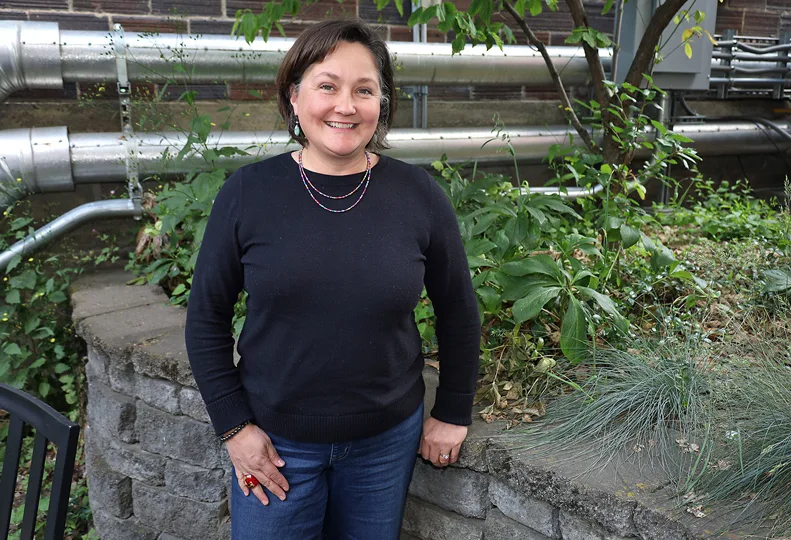
University District stakeholders and leaders are laying the groundwork for the next phase of development, says Juliet Sinisterra.
| Karina EliasUniversity District leaders have spent the last several years laying the groundwork for the next phase of development to transform the Spokane district into a regional hub for innovation, workforce development, and entrepreneurship.
Among the projects taking shape is the U Incubation Village, a proposed campus-style concept that brings together maker spaces, workforce training programs, entrepreneurial services, creative industries, and production hubs, says Juliet Sinisterra, CEO of the University District Development Association and the University District Public Development Authority.
The concept, Sinisterra says, is designed to strengthen job creation and economic development while creating stronger connections between the University District and surrounding neighborhoods, particularly the South Perry District and East Central neighborhoods.
“It’s not just a building, it’s an ecosystem of uses,” Sinisterra says. “We’re starting to look at how Spokane can create more pathways to opportunity, … and it starts to build onto systems that are already in place.”
The University District covers a sprawling 770 acres located east and northeast of downtown Spokane. Sinisterra envisions the U Incubation Village taking root in the district’s southeast quadrant including a network of maker hubs — interconnected spaces designed to support production, workforce development, and small-business growth, she says.
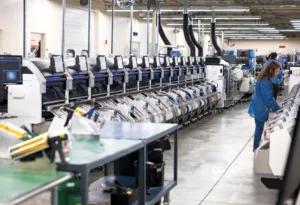
About three years ago, the city of Spokane approached Sinisterra with an idea about expanding maker spaces — collaborative workspaces stocked with tools and materials in which people can come in to create, invent, and learn.
Sinisterra says she began by convening a group of 12 people regularly to discuss what was needed. The concept of a maker village kept resurfacing, she says, and was further validated through public outreach conducted as part of the district’s comprehensive design framework, Next Generation Conceptual Plan 2065.
The project received funding from the Washington state Community Economic Revitalization Board to support a two-year feasibility and market analysis study, she says. The study wraps up at the end of 2026 and will detail the economics and feasibility of the project, its potential construction and development costs, and what types of jobs can be created from it, she says.
There are four industry hubs being studied: circular construction and green infrastructure; repair and remanufacturing; arts, culture, and Indigenous creative industries; and food systems and urban agriculture. The studies so far are drawing positive results, she says. Repair and remanufacturing could become a significant growth industry, particularly within medical and electronic repair services. Additionally, creative industries could draw in tourism and support place-making, she says.
Through the summer, the University District will hold a series of stakeholder and community conversations to validate market demand, inform implementation, and guide the future of the maker hubs and U Incubation Village, she says.
While the University District's leaders and stakeholders continue to evaluate the feasibility of the U Incubation Village, they’re also advancing another ambitious concept aimed at long-term sustainability. The district recently secured a $343,000 grant from the Washington State Department of Commerce to explore district thermal energy infrastructure, an idea that also grew out of the organization’s Next Generation Conceptual Plan.
The district thermal energy analysis grant will evaluate energy generated by Gonzaga University and WSU Spokane, and will be used to study opportunities to redirect energy into productive uses. The project has the potential to move the district into a net-zero energy zone while generating recurring revenue for reinvestment into district projects, Sinisterra says.
“Really, we need to invest $200 million to $300 million into the district to really start to get it going,” she says. “Right now, we’re trying to understand the scope of costs and where we could leverage different monies.”
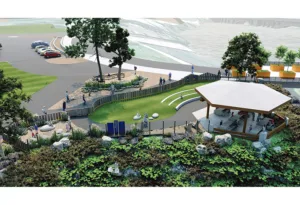
Another project, currently in limbo, is the 400 Block Project. Envisioned at the 400 block of East Sprague near the Gateway Bridge’s South Landing, the project calls for a 92,900-square-foot mixed-use building for three tenants: Spokane Sports, Whitworth University, and the University District itself. It also includes a recreation and wellness center featuring a 60-foot climbing gym. Sinisterra says some elements of that project will likely still move forward and plans have received support from property owners who see it as a potentially catalytic development.
While many of the district’s initiatives remain in the planning stages, Sinisterra says the studies and partnerships now underway are intended to position the University District for larger investments in the years ahead.
“I would love us to start a big infrastructure package within the next five years,” Sinisterra says. “If we could get a couple of these district amenities moving forward, then all of a sudden people want to be here. They want to live here.”