
Fair housing organization faces budget gap
Uncertainty remains regarding future federal funds requests
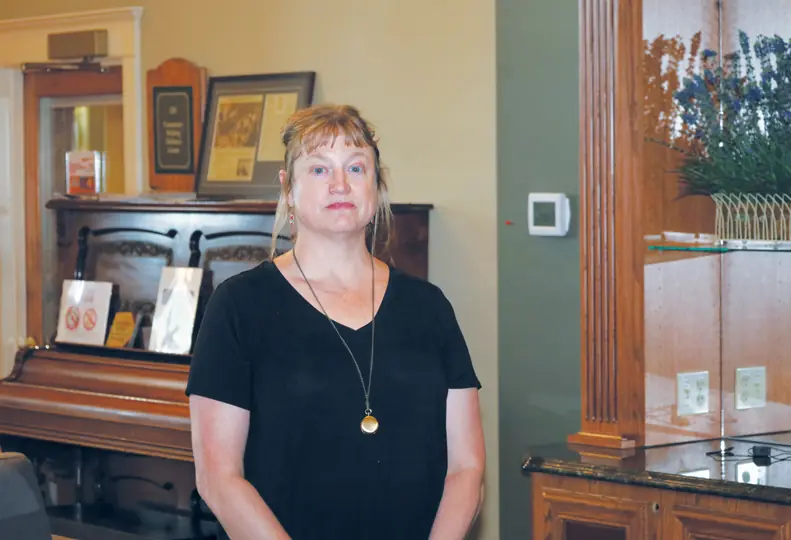
Marley Hochendoner, executive director of the Northwest Fair Housing Alliance, says her organization is facing a key federal funding delay.
| Ethan PackNorthwest Fair Housing Alliance is facing a $420,500 funding gap this year as the U.S. Department of Housing and Urban Development is delaying the funding of a key grant the nonprofit relies on, says Marley Hochendoner, executive director of the Spokane-based nonprofit.
The nonprofit receives over 80% of its annual funding from a three-year, $420,500 per-year Fair Housing Initiatives Program grant that HUD awarded in 2024 after a competitive process, Hochendoner explains. The grant process requires that the alliance and HUD renegotiate the funding each year in June, before the nonprofit can receive the next year’s funding. However, since the expiration of the second-year funds in June, HUD has delayed negotiating a contract for a third year of funding.
Other fair housing nonprofits nationally have reported similar HUD grant funding gaps, she says.
“HUD has an obligation to affirmatively further fair housing in its statutes, and Congress created this program of fair housing grants to fund partners like us around the country that are embedded in these communities that can assist people on the ground to help HUD further its mission,” she says. “It really has been our main source of funding.”
Northwest Fair Housing Alliance was founded in 1994. The group advocates for fair housing and provides educational services in 17 counties across central and Eastern Washington. Services include providing assistance with counseling, advocacy, and consulting services regarding housing transitions and programs. The organization manages an estimated 2,000 requests for assistance annually, she says.
The organization also helps individuals with disabilities request reasonable accommodations in rules, policies, practices, or services at apartment complexes that allow the individual an equal opportunity to use and enjoy the space, she adds.
Assistant Secretary for Fair Housing and Equal Opportunity at HUD, Craig Trainor, says in an email to the Journal that past grant recipients aren’t guaranteed to receive future funding under new notice of funding opportunities HUD publishes, which HUD uses to notify housing organizations of upcoming competitive funding grant opportunities.
Additionally, at least 50% of a grantee’s annual operating budget must come from sources other than a Fair Housing Initiatives Program grant, according to federal law, he adds.
HUD didn’t immediately respond to the Journal’s follow-up question — whether the federal law could affect an organization that was already awarded a multiyear grant, as Northwest Fair Housing Alliance's grant is, or if the law only is impacting organizations seeking new grants HUD offers through future notices of funding opportunities.
Since joining the organization as executive director in 2004, Hochendoner says she hasn’t experienced federal funding delays until this year. Multiyear HUD grants have comprised most of the alliance's funding since it began, she adds.
“It could be tomorrow that HUD gives us the third-year grant award agreement, or it could be six months from now,” she says. “I don't know, and it’s very challenging.”
To preserve the nonprofit's existing budget as much as possible, Hochendoner has reduced the hours of two of her six staff members by half since the funding delay began in June, she says. The staffers are still receiving health insurance benefits thought the Washington state SharedWork program, but Hochendoner says she would need to make further staff cuts by the end of their fiscal year, in October, if HUD doesn’t release the funds.
The SharedWork program allows employers to retain employees at reduced hours, while employees collect unemployment benefits to make up for lost wages for up to one year, she says.
Currently, only individuals within the city of Spokane can receive Northwest Fair Housing Alliance assistance due to reduced staffing hours, Hochendoner adds. That excludes the rest of Spokane County and the other counties in central and Eastern Washington the nonprofit typically serves.
“Beyond the organization or the people that make up the organization, the purpose of us being here is to provide fair housing services for people in the community, and that's really curtailed right now,” she says.
The funding gap has caused the alliance to retool its fundraising efforts to reduce its reliance on federal funding, Hochendoner says. The city of Spokane had awarded the organization two contracts for housing stability services and homeless prevention in November 2025 — one for $167,000 over two years, and the other for $132,000 over 20 months, she says.
The alliance also is preparing to turn to community fundraising to help bridge the funding gap, but those efforts are still under development, she explains.
Another Spokane-based housing nonprofit, Community Frameworks, also has faced federal funding uncertainty recently, says CEO Deb Elzinga.
Community Frameworks, which offers homebuyer education and counseling, housing developmental services, affordable rental homes, and more, receives federal funding through NeighborWorks America, a congressionally-chartered, public, nonprofit organization that distributes congressional funds to regional affordable housing organizations.
Over the past two to three years, it has been unclear if NeighborWorks America would be federally funded, and to what degree, she says. Community Frameworks began receiving funds from the federal organization on a month-to-month basis, rather than a traditional yearly amount, Elzinga explains.
“It seems like it's more of a tenuous environment than it has been in years past, and it’s not as predictable,” contends Elzinga. “There’s a different set of priorities at the federal level than in years past.”
The month-to-month funding schedule ended and Community Frameworks received the entire $270,000 funding amount at the beginning of the year, as in years past, Elzinga says. She says she hopes the predictable funding schedule will continue so the organization can budget more effectively and continue offering housing services.
At Northwest Fair Housing Alliance, Hochendoner says the organization will continue supporting individuals with fair housing assistance as long as funding is available.
Housing providers and employers here are requesting fair housing trainings at the same rate as previous years. Those training fees are another source of funding and can help the organization meet administrative costs, she adds.
Hochendoner plans to diversify the organization's funding sources as much as possible going forward, she says.
“I'm encouraged that we are still being sought out as a resource for our expertise on fair housing,” says Hochendoner. “There's potential to still continue to engage with various housing providers on that level.”

Stay Informed. It’s Free.
Subscribe to our newsletters and get the latest news and insights delivered to your inbox.
We respect your privacy.
Unsubscribe anytime.
Thank you!
You’re subscribed. Keep an eye on your inbox for the latest updates.