Hazardous material teams sweep fire zones
EPA, regional companies provide removal work at no cost to property owners
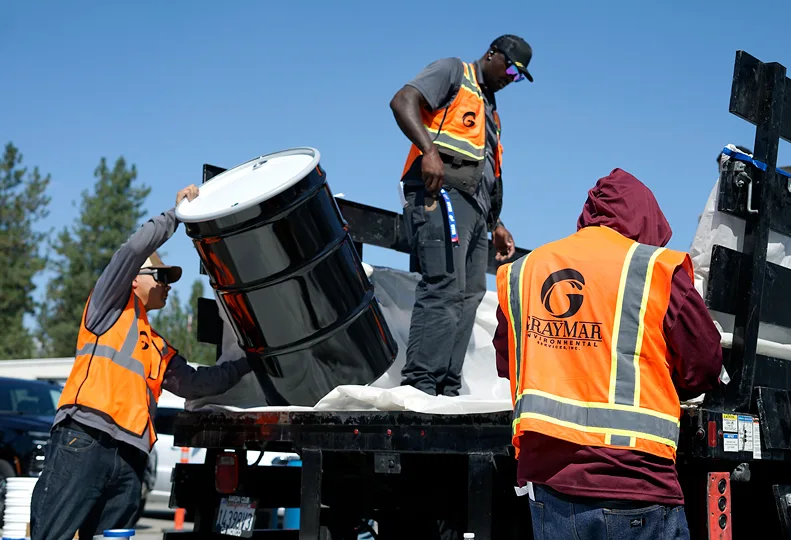
Workers from GrayMar Environmental Services demonstrate how to safely prepare and load a truck with hazardous household materials.
| Matt StephensThe U.S. Environmental Protection Agency and local crews are continuing to work through properties destroyed by the Spokane Complex Fires, removing potentially dangerous household chemicals, lithium-ion batteries, and other hazardous materials before further cleanup can move forward.
The hazardous materials cleanup was federally authorized and is being done at no cost to property owners, says Brooks Stanfield, EPA incident commander and environmental contractor with the Mead office of GrayMar Environmental Services LLC, which is headquartered in Cherry Hill, New Jersey.
Crews began the removal process Aug. 18 after the Federal Emergency Management Agency tasked the EPA with clearing household hazardous materials from affected residential properties at the request of the Washington State Department of Ecology, Stanfield says.
The EPA has been given 60 days from the start of operations to complete the hazardous material removal, although the agency scaled up its workforce response with the goal of finishing sooner, Stanfield says. Once crews reach full capacity and training, they could clear about 30 to 40 properties per day, and the EPA is optimistic about meeting that deadline, he says.
“This is really the first step in the path to recovery,” he says. "Once we get moving then other testing and restoration companies can come in."
After that, restoration and environmental services companies have to come in and test for asbestos, according to reports from the Spokane Regional Clean Air Agency.
Homeowners and contractors must be thorough with their asbestos compliance, says Lisa Woodard, communications and outreach manager for the Spokane Regional Clean Air Agency.
"All of this ash and debris will need to be tested for asbestos by a company that is certified and accredited under the federal Asbestos Hazard Emergency Response Act," Woodard says. "Each property has to be cleared of asbestos before homeowners can take the next steps to begin rebuilding."
Workers are moving parcel by parcel through burned areas to identify pesticides, herbicides, pool chemicals, cleaners, degreasers, compressed gas cylinders, batteries, and other household hazardous materials, while monitoring for various particulates and gamma radiation, Stanfield says.
“Our goal is to at least get those worst of the worst parts out of there as quickly as possible,” Stanfield says.
Materials are secured and transported to a staging area across from the Spokane County North Transfer Station in Colbert, where waste is consolidated and sent to appropriate treatment or disposal facilities, he says.