Of trepidation and cautious optimism
Elevated inflation, higher interest rates, war, and trade wars make forecasts difficult
A year ago, the expectation was that the economy would continue to grow, price pressures would moderate with the fading of tariff price boosts, and the Fed would lower its target rate. This was a scenario that never became reality.
We approach the end of 2026 with elevated price pressures and a Fed that raised its target rate and expects to do more. We are immersed in a three-to six-week war that is heading for its ninth month. Long-term interest rates have reached multi-decade highs, delighting savers and depressing young homebuyers. And on-again-off-again tariffs and trade conflicts continue their capricious path through the economy.
Formulating an outlook in this environment reminds me of a T-shirt with the quotation from General George Pickett at Gettysburg in July of 1863: “You want me to do what?”
Inflation has been above the Fed’s target for more than five years. The post pandemic slowdown in inflation has been interrupted by a series of supply shocks. The launching of the war against Iran and the subsequent reduction in the energy supply to world markets send oil, natural gas, fertilizer, aluminum, and other commodity prices soaring.
The Russia/Ukraine conflict reduced the market supply of diesel and wheat (35% of world exports from Russia and Ukraine). The AI investment boom as well as the One Big Beautiful Bill Act (OBBBA) investment incentives have buoyed demand for chips, construction supplies, and power generation equipment. The ever-changing tariff theater in the nation has juiced import prices. The global defense buildup adds to the mix. The Iran conflict will end, but no one knows when or how. This is a pre-requisite to lower energy, fertilizer, and shipping prices.
The moderation of the self-inflicted price pressures from tariffs will hopefully happen soon, but there are no guarantees. This combination could help put us back on the path towards the Fed’s target in 2027.
The price shocks have been inflicted on an economy that has been growing for more than six years with an unemployment rate currently hovering in the low fours with initial unemployment claims at historically low levels. The new Chaiman of the Fed, Kevin Warsh, has indicated in meeting statements and public presentations that “The Committee will deliver price stability.” The problem is to get the rate of inflation back on the path towards the 2% target without inducing a recession very much like the Fed sought to do earlier in 2022 in search of the soft landing. This time, we are starting from a lower rate of inflation and continued price shocks. September saw a 25-basis point increase in the Funds rate target.
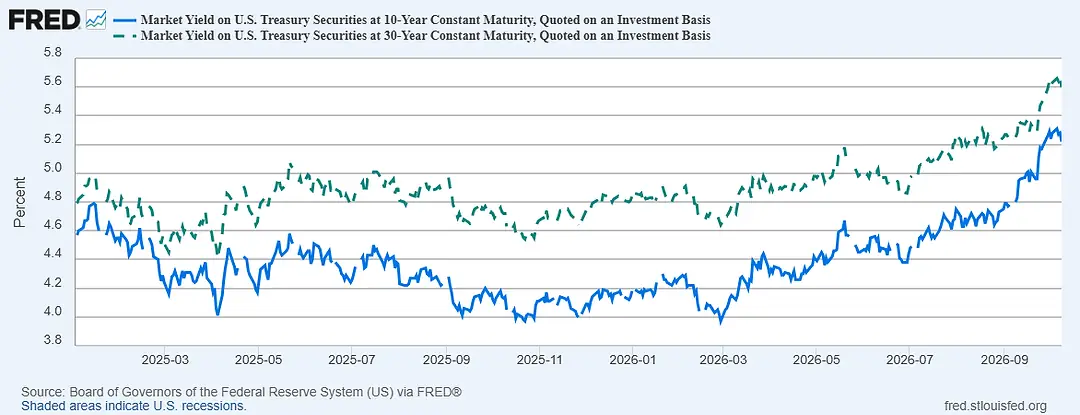
The nation and the world have seen a jump in long term interest rates in the second half of 2026 as shown in the chart of the 10-year and the 30-year bonds. Rates have reached levels not seen in recent decades. The 10-year is crucial for mortgage rates, which have recently risen through the 7 percent level. Continuing deficits of about $2 trillion (The Federal Government borrowed 37 cents of every dollar spent in Fiscal 2026.), inflation fears, the investment boom, attacks on the Fed, and a less attractive investment climate for foreign holders of U.S. debt are all elements of this rate jump. The deficit path is not sustainable, but there is minimal interest in dealing with it by either major party at this point. (We need a crisis or leadership.)
The economy continues to grow, fueled by consumption, business investment from AI and OBBBA investment incentives. Consumer wealth has continued to soar with strength in financial markets. Net worth of households and non-profits rose by $ 12.8 trillion in Q2 but is threatened by rising rates and any softening in the tech spending wave. The labor market continues to show gains while being buffeted by an exodus of boomers (retirement) and immigrants from deportation and immigration restrictions.
If the war ends and the tariff shocks pass, the process of moving closer to the Fed’s goal of 2% inflation will continue with limited need for further actions by the Fed. (Big Assumptions!) Longer term rates will remain high. The U.S. economy will continue its two plus percent growth towards year eight of the upturn. The productivity boosting promise of the recent technology remains and the long-awaited debt apocalypse is a resurfaced threat.
Like the Energizer Bunny, the economy marches on despite numerous shocks. The year 2026 gave us a new war, the continuation of old ones and an AI boom. What surprises await us in 2027 that will alter the prospects?
Dr. John W. Mitchell, who currently is principal of M&H Economic Consultants, previously served as chief economist for U.S. Bancorp, and also served as an economics professor at Boise State University.
Stay Informed. It’s Free.
Subscribe to our newsletters and get the latest news and insights delivered to your inbox.
We respect your privacy.
Unsubscribe anytime.
Thank you!
You’re subscribed. Keep an eye on your inbox for the latest updates.