Selkirk Pharma founder files new lawsuit amid company's uncertain future
Legal bout continues as Spokane startup's HQ appears vacant

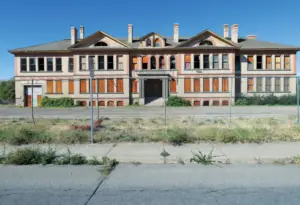
Selkirk Pharma's headquarters, located at 9110 W. Granite, appeared to be empty on three separate occasions during traditional weekday business hours in June.
| Dylan HarrisA legal dispute between Selkirk Pharma Inc.'s former CEO and its board members is escalating, and the future of the once-promising pharmaceutical manufacturing startup appears to be uncertain.
Patrick Haffey, the founder and former CEO of the Spokane-based company, has filed a shareholder derivative lawsuit on behalf of the company against Thomas Tobin, Rod Raabe, and Marshall Crew, all of whom were members of Selkirk Pharma’s board of directors.
The new lawsuit alleges that the defendants breached their fiduciary duty when they interrupted Haffey’s efforts to raise capital for Selkirk Pharma by firing him and preventing him from communicating with investors. Haffey also alleges in the suit that Selkirk Pharma has sustained about $200 million in damages because of the breaches of fiduciary duty by the defendants.
Haffey and attorney Kevin Roberts, of Spokane law firm Roberts Freebourn PLLC, haven’t responded to the Journal’s requests for comment for this story.
The most recent lawsuit comes at a time when it's unclear the degree to which Selkirk Pharma is still doing business.
The Journal's attempts to seek comments from Selkirk Pharma CEO Colleen Dixon and seven other possible representatives of the company were unsuccessful.
Two attempts to reach attorney Andrew Schultheis, of Seattle-based law firm Davis Wright Tremaine LLP, were also unsuccessful. Schultheis was copied to the shareholder derivative demand letter that preceded Haffey's latest lawsuit.
The only response to the Journal's various requests for comment came from David Weeks, CEO of Coeur d'Alene-based conglomerate Lakeside Cos.
“Like many in the region, we participated in early funding rounds,” says Weeks in a statement provided to the Journal. “Lakeside Cos. considered additional investment, but for several reasons, including concerns about Selkirk Pharma’s operations, management, and financial situation, decided not to further invest.”
Selkirk Pharma is still an active business registered with the Washington state Secretary of State as of July 1. However, the company is listed as "permanently closed" in Google search results, as of that same date.
On three separate occasions in June, Selkirk Pharma’s headquarters, located on a 27-acre campus at 9110 W. Granite in west Spokane, didn’t have any cars in its parking lot during traditional weekday business hours.
A review of LinkedIn profiles showed at least 35 Selkirk Pharma employees, including a few at the vice president level, are “open to work” or that they stopped working at Selkirk Pharma earlier this year. The majority of those employees’ tenures came to an end in April and May, their profiles show.
The Journal reported in September that the company had 73 employees.
New filing
The latest lawsuit follows and further details the allegations outlined in a December 2024 shareholder derivative demand letter to Selkirk Pharma on behalf of Haffey that urged the company’s board at the time to investigate the actions of Tobin, Raabe, and Crew, as well as to pursue damages the company suffered as the result of the former board members’ alleged actions.
As previously reported by the Journal, the demand letter stated that Haffey intended to file a shareholder derivative lawsuit if the board didn’t perform the requested investigation and pursuit of damages.
Haffey took that next step, and the shareholder derivative lawsuit, which was originally filed May 20 and then amended May 27, is the latest legal action taken by Haffey, who in January filed a lawsuit in Spokane County’s Superior Court alleging wrongful termination and breach of contract by Selkirk Pharma.
In a legal response to the January complaint, the company denied Haffey’s allegations of wrongdoing. The company also denied that Haffey has suffered damages or is owed any compensation. The earlier lawsuit was halted May 8 with an order for stay of proceedings, as the parties had agreed to mediation.
In the latest lawsuit, Haffey alleges that Tobin, Raabe, and Crew further breached their duty when they stopped working on new potential deals, other than a deal allegedly proposed by John Hemmingson, founder and now chairman of the aforementioned Lakeside Cos.
On May 6, 2024, Tobin, Raabe, and Crew allegedly represented that they were completing a deal with Hemmingson and that the capital would come with voting preferences, or a controlling interest.
Haffey's lawsuit alleges it was represented that Hemmingson would only invest if Haffey was removed as CEO, so the three former board members asked Haffey to resign. He didn’t, however, and was terminated on that day in May.
Haffey alleges in the latest suit that defendants took actions for an improper purpose of removing him from his position so that they would have control of the company, its operations, its financial decisions, and its future.
Haffey is seeking judgment against Tobin, Raabe, and Crew for the amount of damages sustained by Selkirk Pharma as a result of the defendants’ alleged breaches of duty.
He is also directing Selkirk Pharma to take all necessary actions to reform and improve its corporate governance and internal procedures to comply with applicable laws and protect the corporation and its shareholders from a repeat of the events he alleges in the lawsuit.
A status conference for the shareholder derivative case is scheduled for Aug. 22.
Company history
Selkirk Pharma was founded in 2018, and the first of three envisioned injectable drug manufacturing plants, a 147,000-square-foot facility with a construction value of $38 million, was completed at Selkirk Pharma's west Spokane campus in 2022.
The company raised $24.1 million in seed funding from undisclosed investors in September 2023, according to PitchBook data. Selkirk Pharma earlier had raised more than $22 million in financing and investment between 2018 and late 2020, according to PitchBook.
Last September, CEO Dixon told the Journal that Selkirk Pharma had secured its first client, was working on securing others, and was focused on small-scale commercial manufacturing targeting higher-end products. At that time, she said the company was expecting to produce about 4 million pharmaceutical units per year.
As previously reported in the Journal, however, Haffey's lawyer, Roberts, claims that since terminating Haffey, Selkirk Pharma has had little, if any, sales or production.


Stay Informed. It’s Free.
Subscribe to our newsletters and get the latest news and insights delivered to your inbox.
We respect your privacy.
Unsubscribe anytime.
Thank you!
You’re subscribed. Keep an eye on your inbox for the latest updates.