Hillyard Senior Center evolves to meet seniors' needs
Director aims to bridge tradition, reinvention in northeast Spokane
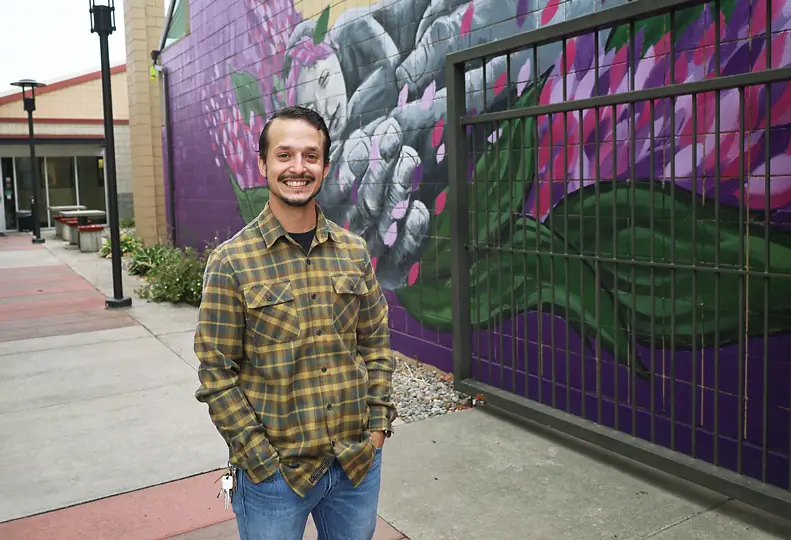
The Hillyard Senior Center, led by Executive Director Tony Cane, is reshaping its image to meet the needs of a new generation of seniors.
| Karina EliasOn a rainy Monday morning in September, nearly 50 seniors showed up at the Hillyard Senior Center ready to board buses for a "Fall Mystery Trip" featuring a scenic drive, lunch, and an ice cream stop. Tony Cane, the center's executive director, says the destination and additional details of the trip were intentionally kept sparse. The group would likely travel over 100 miles north and return by 6 p.m.
“Seniors love that, if they know there is food involved and there’s some kind of scenic drive,” says Cane. “They love the mystery; they love the surprise.”
Not all seniors got a seat on the bus, Cane says, so he offered to give Phyllis Bray, a longtime member, a mystery adventure for two, complete with a scenic drive and an essential ice cream stop. Keeping longtime members happy is an essential part of his job, says Cane.
Cane took over the Hillyard Senior Center two years ago, succeeding his predecessor, Jerry Unruh, who had been in the role for over two decades. At 31 years old, Cane represents a new generation of leadership that is focused on reviving and rebranding the center’s pulse and image.
“We want to change the stigma that senior centers are only meant for 80-, 90-year-old gals playing bingo,” Cane says. “There’s going to be a big influx of boomers, younger-generation seniors that are looking for a home, looking for a place to recreate, maybe a bit of social needs met. We want to be that place.”
Established in 1973, the Hillyard Senior Center — nestled inside the Northeast Community Center at 4001 N. Cook — has been a gathering place for Spokane’s seniors, offering meals, recreational activities, classes, and a place to belong. But in recent years, the landscape around it has shifted dramatically, explains Cane. The pandemic hollowed out participation at classes and events, and fundraisers have been slow to return.
At the same time, a wave of baby boomers continues to age into retirement, bringing new expectations about fitness, travel, and community. Cane’s job, he says, is to bridge two worlds by keeping longtime members engaged while reshaping the center to meet the needs of the next generation.
The center has about 500 members and serves between 30 and 50 seniors daily, he says. The numbers ebb and flow depending on each day’s activities. An annual membership fee of $25 for individuals and $35 for couples is due each January. In June, the rate is prorated to $18.
Throughout the week, the Hillyard Senior Center hums with a steady rhythm, says Cane. A coffee pot is usually on, and a few early birds gather for tai chi in the assembly room. Lunch is served every day, various clubs and classes are run by enthusiastic members, Hillyard Neighborhood Council representative Laura Johnson leads a free walking group, and on Fridays, members gather for the center’s Wii Bowling League, Cane says. Wii bowling does not involve actual bowling balls. Instead, participants simulate rolling a bowling ball down a lane using a remote control that is wirelessly linked to a Wii video game console and TV.
Trips offered by the center focus on affordable and regional adventures within a 500-mile radius, Cane says. In August, the center hosted a three-day overnight trip to Glacier National Park, in Montana.
The center brings in a wide range of participants, he notes, from low-income to higher-income seniors, and includes those living independently or in nearby retirement communities.
“The ones that are coming from retirement homes are the ones that are hanging here all day,” Cane says. “Our slogan is where friends meet friends.”
The center is funded through an $80,000 annual grant from Spokane Parks & Recreation, and through sponsorships, partnerships, other grants, and fundraisers, he says. Since the pandemic, the center’s annual Craft Bazaar event, which will be held in November this year, has transitioned from a donation-based event to a vendor model, Cane says. Between 12 and 18 vendors typically participate, selling homemade crafts such as wooden boxes, quilts, knits, and baked goods to raise money for the center.
Across the industry, many senior centers are getting a rebrand, starting with their names, says Cane. “Senior Center” is outdated and comes with a level of stigma, he says, prompting some organizations across the industry to rebrand to names that include active terms such as recreation, active, thrive, and live. The term senior is often dropped from the title as well to appeal to a much larger demographic.
While the Hillyard Senior Center hasn’t formally changed its name to reflect the broader trend, Cane has subtly changed the names of certain activities and noticed an increase in participation. For example, the center's craft class is now referred to as Craft Club. “Club” conveys a sense of socialization and connection, he says, so he began marketing the new offering through this new lens.
The center also introduced a new class focused on knots and stitches that drew more seniors in as well, he says. Most importantly, instead of having a regular staff leading the classes, the clubs and offerings are led by passionate members who infuse the groups with a convivial and friendly energy. Cane has also gathered opinions from visiting seniors about what they want to experience at the center, leading to weekly games of cribbage and more ideas for overnight trips.
Keeping the center’s programs running is up to Cane and his staff of five. Before stepping in to lead the senior center, Cane was responsible for marketing and communications for the Northeast Community Center — a role he held for over nine years. A Spokane native, Cane initially aspired to become a police officer but shifted his career goals from criminal justice to nonprofit work after the birth of his son 10 years ago. As someone who grew up in low-income neighborhoods in the region, he’s found meaningful work at the community center, he says.
While the senior center is changing, Cane says he is enthusiastic and hopeful about the broader changes happening in the neighborhood and the potential to bring more members to the center. He points to Hillyard’s recent designation as the region’s first certified creative district and to other groups, including nonprofits and neighborhood councils, that are working to rebrand the district, creating a sense of momentum in northeast Spokane.
“I think we are seeing a big light coming to Hillyard, and it's only a matter of time until we are booming over here,” Cane says. “Hillyard is really rebranding, rebounding, and coming to it. I think there’s still a lot more work to do, but it’s good work.”


Stay Informed. It’s Free.
Subscribe to our newsletters and get the latest news and insights delivered to your inbox.
We respect your privacy.
Unsubscribe anytime.
Thank you!
You’re subscribed. Keep an eye on your inbox for the latest updates.