2026 Business Leader of the Year: Heather Rosentrater helps power the community
Avista CEO works to balance costs, clean energy, reliability

Heather Rosentrater is president and CEO of Spokane-based Avista Corp.
| Avista Corp.As president and CEO of Avista Corp., Heather Rosentrater leads and executes the company’s overall strategy and performance, ensuring the delivery of safe, reliable, and affordable energy to its customers.
The Spokane native works closely with Avista's board of directors and leadership team to set the company's long-term direction, support its employees and culture, and maintain strong financial and operational discipline.
Rosentrater began her professional career as an engineering technician at Avista Labs in 1996, while she was still an undergraduate at Gonzaga University, where she earned a Bachelor of Science in electrical engineering. She became the first female president of Avista Corp. in October 2023, and one year later, she assumed the highest-ranking position as the first female CEO in the 135-year-old power company's history.
What has kept you with Avista since you joined in 1996?
What has kept me at Avista is the deep connection between our work and the success of the communities we serve. Over time, I’ve come to understand that healthy communities make a healthy utility and healthy utilities support healthy communities.
As a lifelong community member — with many friends and family members who live in the community and are Avista customers — that connection to the community in what I do every day continues to motivate me every day. Avista’s focus on customers and community, our values-based culture, and the opportunity to work alongside people who care deeply about the work we do have also kept me engaged for nearly three decades.
I’m energized by the fact that this work is never static and there is always something new to learn as our industry evolves. Today, that sense of purpose is even stronger as we work to navigate one of the most important and complex societal challenges of our time: transitioning to cleaner energy while maintaining reliability and affordability for the customers who depend on us.
How has Avista contributed to economic development in the Spokane region in the last 12 months?
We live and work in the communities we serve and we make long-term decisions about investment in economic development with our region’s future in mind.
Over the past year, Avista has continued investing in industries that drive Spokane’s economy, including life sciences, manufacturing, and the region’s growing startup and innovation ecosystem. Continually delivering reliable, resilient, and increasingly clean energy is foundational to these sectors. Avista’s capital investments into infrastructure help ensure businesses, research institutions, and entrepreneurs have the dependable power needed to grow and innovate.
In the last year, Avista has continued our long-standing support of small businesses in our region through grants and community investments. Our aim is to contribute to the efforts of many to develop an environment that is conducive to fostering innovation and local entrepreneurship.
Avista also prioritizes workforce development by supporting partnerships with local schools and organizations focused on STEM education and career awareness, strengthening the region’s talent pipeline. Through these efforts and more, our goal is to help create the conditions for long-term, sustainable economic growth across the region.
What has been the company's biggest challenge, and how did you navigate it?
Our biggest challenge has been balancing the interrelated, sometimes competing, and sometimes opposing pressures of rising costs, growing demand, clean energy expectations, regulatory complexity, and affordability concerns all while continuing to deliver safe and reliable service.
We navigated this by staying grounded in disciplined planning and long-term thinking. That included making significant infrastructure investments to strengthen reliability, advancing our clean energy goals in a pragmatic way, and working toward constructive regulatory outcomes that support both customers and the financial health of the company.
Equally important was how we approached the challenge internally: staying flexible, listening carefully, and making informed decisions that reflect both our strategy and our values, even when there was no perfect solution.
Beyond revenue, what are some major successes Avista has experienced?
I’m especially proud of the progress we’ve made in strengthening reliability and advancing our clean energy transition. Over the past year, we’ve taken meaningful steps to improve system resilience and public safety, including expanding vegetation management and wildfire mitigation efforts to reduce risk and protect critical infrastructure.
We have also made important progress in long-term energy planning by selecting new energy generation, storage, and demand response resources. These projects position us to meet growing customer demand, strengthen reliability, and advance our clean energy goals without compromising affordability.
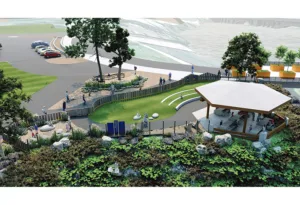
We also continued our history of innovation and collaboration as we worked with the city of Spokane and the Martin Luther King Jr. Family Outreach Center to build the first neighborhood community resiliency hub in Spokane’s East Central District. This project is a community microgrid that uses solar panels, batteries, and a natural gas back-up generator to reduce energy burdens, promote innovative energy systems, and strengthen community safety and preparedness during power outages and extreme weather events.
What are some of the ways Avista has worked to improve grid resilience, climate change impacts, and cybersecurity in the last year?
From a grid resilience and climate perspective, much of our work has focused on wildfire mitigation and system hardening. We have expanded vegetation management across our service territory, installed additional weather stations and AI-enabled wildfire detection cameras, and continued projects that underground lines and deploy covered conductor in high-risk areas.
Cybersecurity remains a critical priority as the grid becomes more digital and interconnected. We participate in industrywide security exercises, and we are always focused on strengthening internal controls to protect our critical infrastructure and our customers’ data.
What goals for Avista do you have that can be executed within a year?
Our near-term focus centers on affordability and growth.
On affordability, we’ve taken a hard look at the many programs already in place and are focused on identifying what more we can do through operational discipline, efficiency, and thoughtful investment to better support customers, especially those most impacted by rising costs.
On growth, we’re focused on supporting broader community and economic development in ways that are aligned with our infrastructure, resource planning, and clean energy strategy. When our communities grow in a healthy and sustainable way, both customers and Avista benefit.
What long-term goals do you hope to achieve during your tenure as president and CEO?
My long-term goals center on strategy and culture. Strategically, I want Avista to continue strengthening reliability, advancing clean energy in a practical and affordable way, and maintaining strong financial discipline so we are well positioned for the future.
Culturally, my goal is to reinforce a “one team” mindset by reducing silos, building trust, and fostering a shared sense of ownership in the success of the entire organization while appreciating, recognizing, and celebrating one another’s contributions.
When our strategy and culture are aligned, we create the conditions for sustained success for our employees, customers, and communities.
Survey responses may have been edited for length and clarity.



_web.webp?t=1790233399)