2026 Rising Stars: Peter Mahoney
Wellness services director seeks to improve region's health through movement
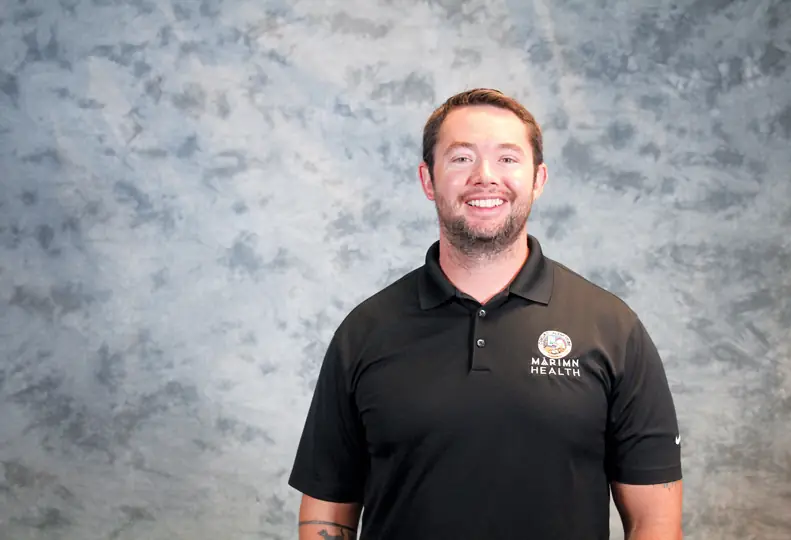
Peter Mahoney, a member of the Coeur d'Alene Tribe, is the wellness services director for Plummer, Idaho-based Marimn Health, where his department manages two facilities: the Marimn Health Wellness Center and the Marimn Health Coeur Center.
Mahoney grew up in Plummer, where Marimn Health Wellness Center operates a facility offering group fitness classes and multiple fitness areas. In Worley, Idaho, the Marimn Health Coeur Center houses the organization’s adult and family recreation program, youth sports program, swim park, sports facilities, and the Boys & Girls Club of the Coeur d'Alene Tribe.
Mahoney, 36, joined the Coeur d’Alene Tribe-owned healthcare organization in 2010. During his 16-year tenure, he has served in multiple roles including in the Diabetes Prevention Program, the Wellness Center's fitness department, and as the Boys & Girls Club manager. Most recently, he served as the culture resources protection program manager conducting culture-based outreach and education activities on the Coeur d’Alene Tribe’s reservation, at schools and surrounding cities.
After earning his associate’s degree in exercise science and recreation management from Haskell Indian Nations University, in Lawrence, Kansas, Mahoney returned to the Inland Northwest where he received a bachelor’s degree in general studies from the University of Idaho.
What drew you to the health and wellness industry? One thing I try to focus on in my different positions has been trying to improve people’s quality of life. I’ve always been drawn to that in many roles. When I was growing up, I had a lot of good experiences in our Wellness Center, so I think it drew me back to this place.
Improving people’s quality of life, for me, means improving it through motion. Getting people up and moving is one of the best things we can do to fight chronic illnesses.
What failures or setbacks have you had in your path, and what have you learned from them? I wouldn’t call them failures, but early on the work I did was primarily attached to grants. I would bounce around from program to program without a clear focus.
I was doing work around increasing access to foods and physical activities, but those programs only last for two to three years at a time. It was good to finally find some full-time roles where I was able to make a bigger impact.
Who have been your mentors? I’ve had a few mentors. My main mentor is probably Caj Matheson. He’s the natural resources director for the Coeur d’Alene Tribe and also sits on our tribal council. One of the things he taught me is the power of going out and recruiting people. When you see someone who is successful, or they’re a superstar at whatever they’re doing, it can never hurt to see what you can do to get those people on your team.
Then, LoVina Louie, natural resources, education, and outreach manager for the Coeur d’Alene Tribe, is another mentor. Her ability to sit back and let people shine, let people take their ideas and run with them and see what happens, is something I admire.
How have you contributed to the betterment of the Spokane-Coeur d’Alene community outside of your primary job? Since 2016, I have regularly presented on the oral traditions and history of the Coeur d’Alene Tribe to a large number of schools and organizations. This is an effort to increase the understanding and awareness of the Coeur d’Alene Tribe, decrease any existing animosity, increase local knowledge of issues pertaining to our natural resources, and to bring people together.
What are your future career goals? I don’t know if I have any future set-in-stone goals right now. I’d like to continue to find ways to improve my community’s quality of life, whether that’s through increasing the types of programs we offer or increasing people’s ability to access our programs.
I could see myself going back to school and getting my MBA. I think that it would help improve sustainability within all the programs. Right now, all the programs I oversee are paid for by profits from our clinic. So, anything that could help these programs stand alone would really help increase their viability in the future.
How do you plan to affect change in your community? By continuing to promote preventative care and then finding the barriers for people to attend our preventative care programs and knocking these barriers down. An example of that is increasing transportation access to and from our Boys & Girls Club so we can increase youth attendance.
What advice would you give to others who want to pursue the same career path as you? The biggest advice I would give to people would be to show up and do what you say you’re going to do. If you can do those two things, it opens an unbelievable number of doors for you.