Workspace designs are starting to feel like home
Flexible, comfortable, costly furniture rises in popularity as workers return to office
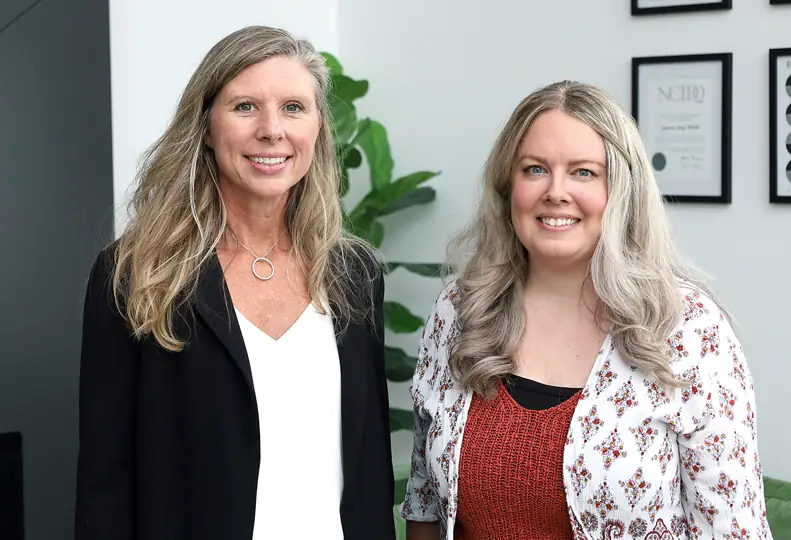
DS Studio designers Angie Cashen, left, and Lauren Welsh say more companies are choosing expensive, yet comfortable furniture to entice remote workers back to the office.
| Ethan PackPostpandemic office design trends are shifting from designing for utility to designing for human comfort, some Spokane-based interior designers say.
Since many remote workers proved they could be effective in comfortable home environments, employers seeking to occupy their offices are tasked with improving workspaces to make it worth the time for employees to commute. To address this, many businesses are focused on three main trends.
Layouts designed for well-being
To entice remote workers back to the office, employers are increasingly moving away from traditional utilitarian workspaces, such as cubicles, to more flexible work areas that include couches with computer stands, sit-to-stand desks, and smaller workspaces to better match an employee’s needs, says Angie Cashen, principal at Spokane-based design company Design Source Inc., which does business as DS Studio.
“(Twenty) years ago, office design was kind of generic — ‘Here’s your cubicle, here’s your office desk, and here’s your lounge chairs for the waiting area,’” Cashen says. “Now, we’re all rethinking and asking more questions, and design is more specific.”
Employers have become more conscious of how efficiently their office space is used in the last five years, she says. Workstations featuring large desks and filing cabinets often take up more space than employees use, and Cashen has seen an uptick of open floor plan designs and collaborative spaces that weren’t present in these spaces before the pandemic.
“You're seeing more unique ways how furniture is laid out, and it's tied to how the people do work instead of one generic, one-size-fits-all system,” Cashen says.
Natali Alexander, owner of Spokane-based interior design company Design Works, agrees, and says more office owners are making aesthetic-based choices when choosing furnishings. Design Works is the trade name for Natali Alexander Design LLC.
“Office spaces used to be very stark and very functional, and aesthetic was not at all considered,” Alexander says. “There’s been a shift towards more thoughtful interpretations of what these spaces are, especially when people are spending a lot of time there."
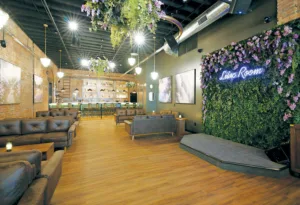
The presence of biophilic design, an architectural and interior design approach that adds natural elements to built spaces, such as through planter walls, natural materials, and soft furniture, is growing, she says. Companies are increasingly spending more to introduce biophilic elements into workspaces, which can improve mental health and well-being, she adds.
“People just do better when they have a connection to more natural materials, natural fabrics, textures, wood, planter walls, and even how they experience the outside from the inside,” says Alexander. “Since COVID, when people were stuck inside, being in proximity to better lighting and plants inside has become more of a conversation.”
Feels like home
Additionally, employees who have been working from home have found they could still be effective in a more comfortable environment, says Lauren Welsh, associate designer at DS Studio.
Commercial furniture manufacturers are responding by creating furniture that focuses on comfort while standing up to daily wear and tear, Welsh adds. Since employees began returning to offices here after the pandemic, more business owners are outfitting their offices to create a home-like environment in an effort to make the work areas more comfortable and effective for workers.
“A lot of companies are getting employees to come back to the office,” says Welsh. “Post-COVID, they want to create spaces that people actually enjoy being in, so having spaces that are more comfortable, fun, and inviting is key. People want to almost feel like they’re at home.”
To help achieve this for clients, Cashen says she recommends the addition of tall tables and chairs near walkways to make communicating in these community areas easier and more natural. Small laptop tables with built-in chargers in lounge areas have been growing more popular, as employees choose to work in comfortable, open areas that facilitate collaboration, she adds.
“As younger generations come up, we’re going to continue to see a push towards more flexible spaces with furniture and flow, in general,” Welsh adds. “People are starting to realize, ‘I don’t need my own private office, and I don’t need full-height walls around my desk.’”
Balancing privacy, isolation
Creating smaller, private collaborative workspaces and areas to support more focused work is another trend in office design, says Gwen Guenzel, principal of Spokane-based commercial furniture dealership Contract Design Associates Inc., in an email to the Journal.
"One trend I think is particularly interesting is the renewed focus on privacy," Guenzel says. "Open offices are still very much part of the workplace, but manufacturers such as Herman Miller and Knoll are responding with more ways to create boundaries and provide visual and acoustic privacy without completely closing people off from one another."
At DS Studio, many clients are willing to pay more for select pieces of furniture, such as client-facing couches, desks, tables, ergonomic chairs, and sit-to-stand desks for employees, Cashen contends.
“If it’s for your public, you’re going to need them to feel comfortable and safe,” Cashen explains. “That’s where you should spend your money."
However, the cost to purchase new commercial furniture is rising, she says. A complete sit-to-stand workstation for a corporate setting may cost around $4,000, and the cost of a premium ergonomic chair could reach $2,000. As a result, some DS Studio clients are choosing to make a plan to purchase furniture and other pieces over time to reduce up-front costs.
But, without investments to create a comfortable, well-designed workspace for staff to return to, employees may find the transition back to the office difficult, she says.
“That’s where furniture and office design come into play — to bring employees back to the office and maybe make it feel like they’re at a coffee shop (instead of work),” Cashen adds.