Production climbs at Habitat for Humanity-Spokane
Three projects underway will add 37 units to housing inventory
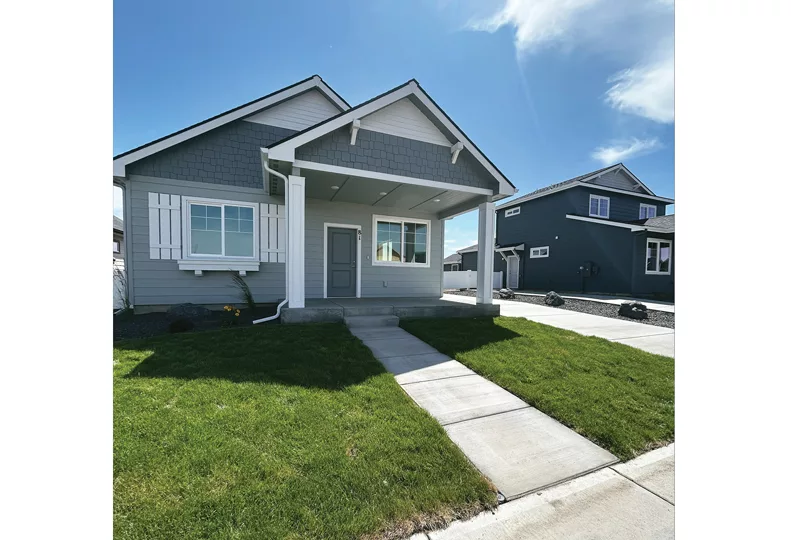
Twenty-six units are underway in the third phase of construction at the Highland Village residential development, in Airway Heights.
| Habitat for Humanity-SpokaneHabitat for Humanity-Spokane is in a "growth mindset," says CEO Michelle Girardot, with three projects underway that will add 37 living units worth a combined value of $9.1 million in Spokane County.
Going forward, Girardot says, the organization plans to increase its annual unit production.
For fiscal year 2025, which ended June 30, Habitat for Humanity-Spokane completed the sale of 26 owner-occupied residential units, which precede a projected 38 to-be-completed units in the 2026 fiscal year, which began July 1. The nonprofit homebuilder is working toward a goal to build a minimum of 50 units per year in the future, Girardot says.
One key project is a $1.2 million development of four residential units at 3028 E. South Riverton, in Spokane, where Habitat for Humanity-Spokane has already renovated and sold an existing home at the site, known as the Riverton project. Planned lot sizes will range between 2,200 square feet and 3,800 square feet, site plan information on file with the city of Spokane shows.
Construction at the Riverton property is expected to begin by fall. Spokane-based Storhaug Engineering Inc. is the primary design partner for the Riverton project, she explains.
"We split the lots and now we're in the design phase," says Girardot. "We won't break ground on those units until we know what they're going to look like. It's largely in predevelopment."
An advantage in waiting to break ground is that Habitat for Humanity-Spokane can pivot to take advantage of legislative decisions that impact residential development, such as zoning changes and condominium reform, she notes.
"You don't want to move too quickly if it will allow for the home to be constructed more affordably," says Girardot.
A second Habitat for Humanity-Spokane project is underway on Collins Lane in Spokane Valley, where a pilot project of seven homes—including a mix of three duplexes and one single-family unit—are expected to be occupied by November.
The Collins Lane development is valued at $1.97 million, says Girardot, adding that Habitat for Humanity-Spokane purchased the land for the project with federal Community Development Block Grant and American Rescue Plan Act funding.
A third project is moving into its third phase of construction at Highland Village, in Airway Heights.
Phase three development at Highland Village is valued at $5.9 million and involves the construction of 26 residential units that are expected to be completed by the end of summer. As previously reported in the Journal, Habitat for Humanity-Spokane has already developed 30 units at Highland Village, with 14 single-family homes in phase one, and 16 single-family units added in the second phase.
In total, about 150 homes are planned at a 20-acre site located southwest of the Spokane County Overnight RV Park property on west Sprague Avenue, in Airway Heights. The central address for the development is 13225 W. First, less than a mile north of U.S. Highway 2.
The single-family homes at Highland Village are being built in partnership with Liberty Lake-based Greenstone Corp. In addition to Habitat for Humanity-Spokane's involvement, the housing project is a cooperative effort between the city of Airway Heights, Spokane County, Greater Spokane Incorporated, and Community Frameworks, a Spokane-based nonprofit that's developing apartments at the site.
Up next, the organization is preparing a future residential development site in Spokane Valley, says Girardot.
"We were awarded (two parcels) of land from the city of Spokane Valley, right next to Lowe's on Sprague Avenue, and we're in the process right now of having that land transferred to us. That will result in what we estimate being about 25 units," she says, adding that preliminary plans for the site call for the construction of 24 triplex units and a single-family home.
Habitat for Humanity-Spokane is eager to reenter the condo market as a way to help reach the organization's goal of building 50 units per year, but condo development in the area is largely ignored by developers in Eastern Washington due to costly insurance and affordability challenges, Girardot says. The possibility of future condo projects developed by Habitat will depend on the passage of legislative reforms that are needed to improve housing affordability for families, she says.
"The nice thing is when we can sit on land and kind of utilize it as a pilot to test out some of these new laws or regulations," says Girardot. "If the condominium reform was going to be a slam dunk, then we'd want to make sure that our design would be able to fit some of those incentives."
The current unit production Habitat for Humanity-Spokane primarily builds includes single-family homes, duplexes, townhomes, and triplex units, she says.
"There's been more access to funding, more flexibility and changes in zoning, and all of those incentivize our work," she says. "We are definitely in a growth mindset."