Catching up with: Ami Manning, executive director of Spokane Land Bank
Organization completes its first transfer of property, eyes statewide framework
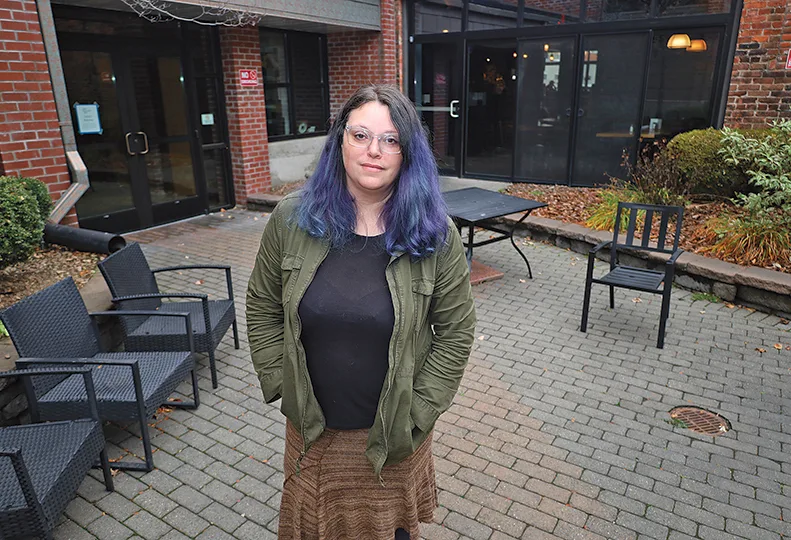
Spokane Land Bank has completed its first property transfer to an affordable housing developer in the East Central neighborhood, says Ami Manning, executive director.
| Karina EliasSpokane Regional Land Holding Properties LLC has sold its first property to an affordable housing developer and has a growing pipeline of projects, showing the organization’s model is beginning to take hold, says executive director Ami Manning.
The property, located in Spokane’s East Central neighborhood at 1905 E. Pacific, was purchased by Spokane Regional Land Holding Properties, doing business as Spokane Land Bank, from Spear Ministries for $35,000, Manning says. The 50-year-old religious nonprofit decided to shutter and wanted its building and land to continue serving the community.
“(Spear Ministries) didn’t want their building and property to just go to the highest bidder,” Manning says. “They really wanted to be able to leave a legacy and have that continue their mission in a way.”
Established in 2022, Spokane Land Bank operates by acquiring properties and holding them until they can be transferred to mission-aligned housing organizations or developers. The Spear Ministries property is the tale of four organizations working together for a common goal, Manning says. Because the nonprofit was shuttering, the $35,000 sale proceeds were donated to Spokane-based nonprofit Mission Community Outreach Center. Spokane Land Bank sold the property to Spokane-based housing organization, Take Up the Cause, in late October for $65,000.
Take up the Cause is a nonprofit headed by Chauncey Jones. The organization is working with marginalized communities in the East Central neighborhood to create generational wealth through affordable housing, Manning says. Take up the Cause plans to build three homes for ownership and an eight-unit multifamily rental project on the quarter-acre property, she adds.
The last time the Journal caught up with Manning, she was settling into her new role after taking the helm from Spokane Land Bank's founding executive director Ben Stuckart. Manning had also partnered with Liminal Land Consultants, an organization that works with churches with declining memberships that are looking to shut down their operations. The organization works with churches to determine if their properties can have a higher community purpose than selling them on the open market.
“It’s exciting to come back a year later and say, 'That project we talked about — it’s happening now,'" says Manning.
While projects like the one in the East Central neighborhood show how the land bank can move individual properties into affordable housing, Manning says the organization is simultaneously working on a broader initiative that could reshape how Washington state handles vacant, surplus, and underused land and properties.
Spokane Land Bank has helped craft legislation that would establish a statewide framework for land banks, allowing cities and counties to hold and prepare underused parcels for housing without the burden of property taxes while they are being prepared for development.
Manning is scheduled to present Spokane’s experience to the full Washington State Legislature on Dec. 4, ahead of a 60-day session that begins in January.
Under current state law, Manning explains how nonprofits and housing groups that acquire land must continue paying property taxes until construction begins — a cost that can make affordable housing projects financially unfeasible. A statewide land bank statute, Manning says, would remove that barrier and give organizations more time to assemble funding, complete environmental reviews, and line up development partners.
The legislation also aims to standardize how underused, surplus, or environmentally complicated parcels can be transferred into community uses, drawing from models used elsewhere, in states such as Michigan and Georgia, she says. Spokane’s land bank is part of a coalition that includes Rep. Natasha Hill, Gov. Bob Ferguson's office, Seattle-based Housing Development Consortium, and the Black Home Initiative of Seattle, among others who are pushing to advance the bill during the upcoming short session.
“The housing crisis is an all-hands-on-deck situation,” Manning says about presenting in front of the Legislature. “The land bank can be a tool to help us get affordable housing.”
Affordable housing developers and organizations are used to working with these types of dilapidated vacant properties, Manning notes, pointing to the organization's $500,000 grant from the U.S. Environmental Protection Agency. Those funds are being used for the assessment and cleanup of brownfield sites — land that is underused or abandoned because of contamination from industrial use in the Northeast, West Central, and East Central neighborhoods in Spokane.
Since receiving the grant in 2023, Manning says the organization has completed 11 phase I assessments. As a result, at least eight of those affordable housing projects are now moving forward. The EPA grant still has about half the funds left, she notes.
With the government closure in addition to the general instability of the economy and government, Spokane Land Bank is no longer leasing office space, Manning says. As the organization’s sole employee, she works remotely from home and various spaces and cafes across the city. Even with the uncertainty, there is good news for the organization, Manning says.
Manning is working with a developer interested in giving away a sizeable piece of land, and the organization is in the process of merging with Spokane Community Land Trust, a trade name for Housing For All, and officially obtaining a 501(c)(3) status. Spokane Community Land Trust was established in 2013 but never gained traction. While it hasn’t been active in a while, it still maintains a board of directors and has maintained its nonprofit status all these years, she says.