North Idaho poised for jobs, population uptick in the new year
Housing affordability issues may challenge economic growth in the region
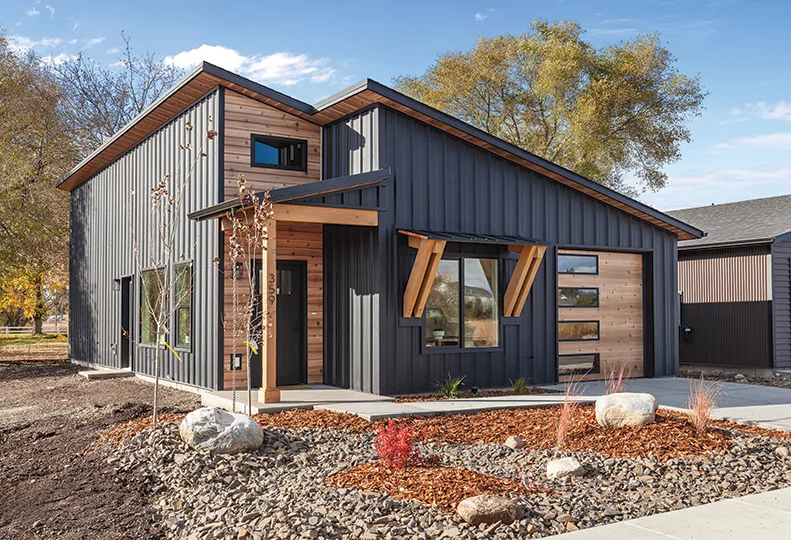
Cottage-style home developments, such as The Arc, a 38-unit residential neighborhood in the city of Post Falls, will help boost the supply of affordable housing options for first-time buyers.
| Stam StructuresEconomic growth is projected in North Idaho in 2026 due to a diversified economy and rapid job expansion, however the availability of attainable housing in the region is expected to pose challenges, some economic development officials say.
“North Idaho is well positioned (and) we're going to probably continue to be doing well,” says Josh Wise, economic development specialist with the Panhandle Area Council. “The economy's a lot more diversified than it has been in the past, so even if there were potential (downturns), we could be weathering things better.”
The North Idaho region, which is comprised of Benewah, Bonner, Boundary, Kootenai, and Shoshone counties, is expected to have a population of 288,008 at the beginning of the new year, up from 280,921 in 2024, according to a regional report by Coeur d’Alene Area Economic Development Corp. that uses data from Lightcast, a labor market data company.
Additionally, jobs are expected to increase by about 3,000 from 2024 to the end of 2025, according to the report, and a similar increase is projected in 2026. Economic growth in North Idaho has been steady this year, and 2026 will likely bring more of the same, Wise says. Salaries also are rising, he adds, noting that in 2025, Kootenai County’s average salary increased to over $55,000. Out-of-state visitors who then choose to move to the area are expected to fill the higher number of available jobs, he adds.
“Our job growth has outpaced the national average, and it's projected to continue to outpace the national average (in 2026),” Wise says. “We're having a lot of jobs and we're having a lot of people coming and moving to this community.”
Health care and social assistance, retail trade, and manufacturing comprise three of the highest grossing regional industries, according to the economic development report.
The health care sector, in particular, is expected to have significant growth in the new year, Wise adds. The 30-acre Prairie Medical Campus in Post Falls under development through a partnership between Kootenai Health and MultiCare Health System, for instance, will create additional health care jobs in North Idaho.
Regional housing prices likely will continue increasing in 2026 as more people move to the area, says Wally Jacobson, executive director of the Panhandle Area Council and interim director of the Coeur d’Alene Area Economic Development Corp.
“We do have a number of retirees moving into North Idaho, but at the same time, we also have a younger demographic moving in for the recreational opportunities,” Jacobson says. “North Idaho is pushing the limits again.”
In November, the median listing price for a home in Coeur d’Alene was about $620,000, says Stefan Smith, a real estate agent with Windermere/Coeur d’Alene Realty Inc. In Kootenai County, the median home price in November was $549,000, up 4.3% from November 2024.
Limited single-family housing inventory has an average growth rate of 3% to 4%, Smith says. Kootenai County needs to build about 4,000 homes annually to keep up with demand.
“There are developments happening all over in Coeur d’Alene, Post Falls, Hayden, and Rathdrum that could bring a lot of homes to the market to help with our inventory because it’s really low,” says Smith.
Significant pressure on the federal government to further lower the federal funds rate may drive 30-year fixed interest rates down as well, Smith says. If that happens, monthly mortgage payments for first-time homebuyers could become more affordable and draw homeowners who have mortgage interest rates under 6% to the market to sell their properties.
“That would drive a little more inventory to the market and give more options for buyers,” he says. “Couple that with lower interest rates, that will help first-time homebuyers as well as current homeowners who are looking to downsize or get into something bigger.”
Bob Seale, community development director for the city of Post Falls, says the city is working to improve housing affordability through smaller permitted lot sizes and cottage-style home developments. These single-family, detached residential units typically cost homebuyers less than larger homes.
In 2025, residential permit approvals increased 1.6% in Post Falls, with about 300 single- and multi-family units permitted as of Nov. 1, says Seale.
“It is on the lower end of growth over the past many years, but seeing the stuff that’s breaking ground and still under construction and anticipating next year — we’re relatively positive about the direction it’s going,” Seale says.
Post Falls-based Stam Structures opened a 38-unit cottage-style residential neighborhood, dubbed The Arc, in October and Coeur d’Alene-based Blackwell Homes & Development LLC is developing an 85-unit cottage-style home development, dubbed Harvest Meadows, which was approved by the Post Falls Planning Commission in September.
“We're trying to provide smaller lot sizes to help cut down on the land cost, so that they can better distribute the cost of infrastructure across more homes,” Seale says. “(A developer) can provide 20 homes in the area that you would typically provide 10 homes as a way to better spread that out, to reduce the cost of the housing.”

Stay Informed. It’s Free.
Subscribe to our newsletters and get the latest news and insights delivered to your inbox.
We respect your privacy.
Unsubscribe anytime.
Thank you!
You’re subscribed. Keep an eye on your inbox for the latest updates.