Spiceology Inc. expands space, brand partnerships
Rapid growth follows profitability milestone
_web.webp?t=1770885254&width=791)
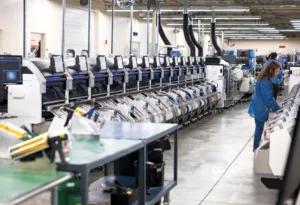
Spiceology CEO Darby McLean says newly purchased equipment has helped the company increase production capacity for its spice sachets by five times.
| Virginia ThomasSpiceology Inc. CEO Darby McLean says the company’s main challenge these days is predicting and carefully controlling growth. McLean declines to reveal the Spokane-based company's 2025 sales revenue figure, but she says revenue grew 27% year-over-year.
“The normal, healthy amount of growth for consumer packaged goods companies is in the 5% area,” McLean says. “It's easier to predict things like how much room you’ll need, how much product you should buy and build into packages, how many people you’ll need to hire. When you're putting up numbers like 27% growth in a year, it's much more difficult to answer those questions.”
Both commercial and consumer sales of about 300 different products have grown rapidly in recent years, McLean says, and Spiceology hit a major milestone in 2024 when the company became profitable.
“We don't have debt, and we're a profitable business — that's a really big change from previous years,” McLean says. “Because of Six Sigma and because of equipment and automation purchases, we're able to hold operating costs flat while growing revenue. That's how we're becoming profitable. Now the focus is to gain efficiency and scale, and to improve profitability.”
Spiceology has operated since 2021 at a 45,000-square-foot space at 2770 E. Ferry at Playfair Commerce Park in Spokane. In early January, Spiceology expanded into an additional 16,000 square feet of space in the building, which formerly was occupied by Amazon.
Spiceology also leases space at River Park Square for a test kitchen, as well as some office space downtown at Fuel Coworking.
In addition to expanding its physical space, Spiceology has increased its capacity for manufacturing sachets, small and medium-sized bagged portions of spice blends. Spiceology began offering sachets a few years ago; in 2025, McLean says, demand for the product “exploded.”
“In fact, when we looked at our production schedule for sachets, through 2026 we saw that we … were booking out at 200% of what we could make,” McLean says. “We have just purchased a brand-new high-capacity sachet machine, and it increases our capacity by almost five times what we were doing before.”
Commercial partnerships have played a key role in Spiceology’s recent growth, McLean says. In mid-2025, Spiceology entered a partnership with Hulu for the revival of animated comedy King of the Hill with a limited-edition beer-infused barbecue rub.
Spiceology has also partnered on limited-time offer recipes with companies including MOD Pizza and Shake Shack.
McLean says Spiceology, which operates with 85 total employees, will see more growth in food service products in 2026.
“We'll be able to announce some fun partnerships with large national multiunit chain restaurants that you're already familiar with,” McLean says. “We have some larger chains who are coming on board. … P.F. Chang's is one, Papa Murphy's is another.”
Spiceology is also working to scale its access to food service operators through regional distribution companies such as Charlie’s Produce.
“We've been able to build a national network of distributors without necessarily going straight to the broadliners like Sysco or US Foods,” McLean says. “We work with them, too … but we've had this really great storytelling opportunity where we can say to an operator, 'Why are you buying your spices from the same place that you buy your toilet paper?'"
A broadliner is a type of large-scale distributor that provides a wide variety of products including food, beverages, equipment, and supplies, according to e-commerce platform BlueCart.
In looking toward the future, McLean notes that rapid growth like the kind Spiceology has experienced in recent years can attract attention from large national corporations looking to acquire smaller companies.
“Is there a world where Spiceology merges with something bigger? Sure,” McLean says.
The Spokane-born spice company, however, has no plans to uproot.
“As I talk to people out in the world about our brand and as I look at other companies of similar size that are doing cool things, I don't see any reason to think that Spiceology wouldn't stay right here in Spokane,” McLean says.
Spiceology was created in 2013 by Spokane chef Pete Taylor and food blogger Heather Scholten. McLean joined the spice and rub company six years ago, and took the helm in mid-2022. Earlier that year, the company raised $7 million in a funding round led by Jackson Square Ventures.