Passing the torch: from operator to adviser
Some retired execs seek second careers as consultants to ensure knowledge shifts to new leaders
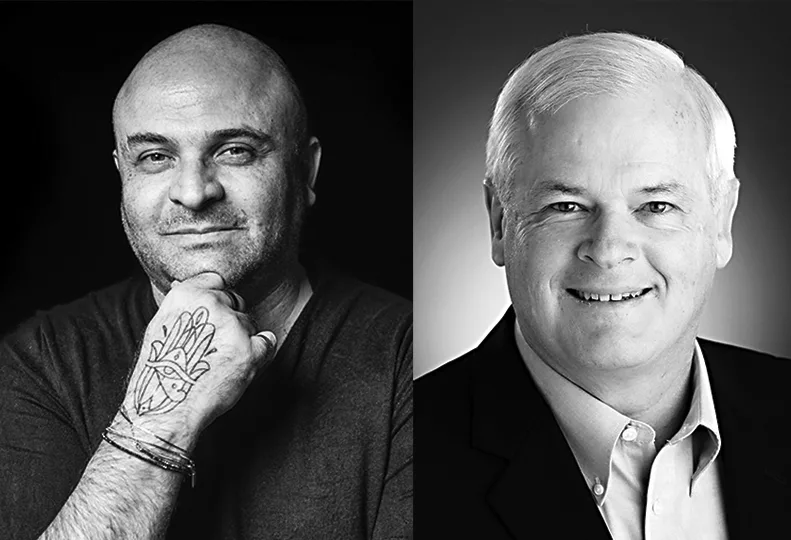
Alex Barrouk is the founding director of Spokane-based Aim & Build Consulting & Development/Listen Louder. He can be reached at [email protected]; 310.980.0989.
Daniel Mahoney is retired semiconductor industry CEO who has worked for the last ten years as a business school adjunct professor and consultant to regional business leadership teams. He works with ABCD Consulting on a number of his projects.
Many accomplished executives in the Pacific Northwest retire with decades of operational knowledge, strategic wins, and hard-earned lessons from failures. They understand markets, teams, and how to lead through complexity. But knowing how to run a company is not the same as knowing how to consult.
The gap between being an executive and becoming an effective consultant is structural, not experiential. It's not about what you know; it's about how you deploy that knowledge in service of someone else's organization. The executives who struggle in postcareer consulting are often those with the deepest expertise, because they default to giving answers when the client needs a process, or they turn a technical question into a discovery process when the client just needs expert guidance.
The most effective postcareer consultants are those who understand the difference between sharing what they know and how they help clients solve problems. That distinction determines whether decades of experience become a valuable consulting product or remain untranslated potential.
Content versus process
Business leaders who seek out consultants for guidance are typically focused on the unique demands of running their business. They must deliver products or services in a competitive manner, adapt rapidly to changes in their markets, and maintain the team capable of performing this work. Many leaders find it challenging to oversee the tactical challenges while maintaining a strategic perspective that is informed by best business practices.
Consultants help by bringing expertise most relevant to their clients at any given time. Consultants who have extensive experience in operating businesses, including those who retired from full-time operational leadership roles, can provide more than theoretical perspectives to their clients.
For instance, consultants can add the practical dimension of lessons learned based on their own successes and failures in their former roles. They can help tailor theoretical solutions to the reality of a client’s situation and help minimize, or avoid altogether, the learning curve associated with implementing new approaches.
Experience allows consultants to offer greater assurance to their clients regarding what is likely to work or not in a particular circumstance.
Objectivity is an advantage
Even leaders who allocate time to view the business from a bird's-eye view will find their perspective being shaped by the cultural biases and political dynamics of their organization, which is the reality for most organizations.
Former leaders who now serve as consultants bring objectivity and the ability to focus on issues independently of internal forces. This gives the client alternative ways to interpret challenges and apply solutions.
Moreover, consultants with an extensive leadership background typically can quickly discern both the content of a client’s internal interactions and the process by which these interactions are taking place, helping to identify cases where team cohesion and buy-in may not fully support valid decisions made by a team.
Consultants with long operational experience are often passionate about the client achieving breakthrough success because it's a reflection of the hard-earned lessons learned throughout their careers.
These breakthroughs often bring a sense of fulfillment and satisfaction to postcareer consultants, which complement the financial and social rewards of their consulting work and serve as a career capstone.
Packaging the expertise
Many executives enter consulting with deep knowledge but no structure for how to deploy it. They know what to say, but they don't yet know how to engage. The result is often a mismatch: the consultant offers advice the client isn't ready to implement, or the engagement lacks clear deliverables and accountability.
Effective consulting requires translating lived experience into repeatable frameworks, diagnostic tools, and phased engagements. Postcareer consultants should treat their knowledge as infrastructure, not as an anecdote.
Successful postcareer consultants build consulting products; assessment tools that diagnose organizational readiness, implementation roadmaps that sequence decisions, and review structures that allow clients to recalibrate when conditions change. Developing these frameworks allows clients to act on the consultant's expertise even after the engagement ends.
However, this is where many experienced executives struggle, as they're used to making decisions and directing teams, when consulting requires stepping back to guide the process through which clients will make their own decisions. That transition requires discipline and, often, outside guidance to structure what consultants know into what clients can use.
Know the problem you're solving
Not all business problems are the same. Some issues require expert answers, while others require the client to discover their own solution with guidance. Understanding the difference is what separates effective consultants from those who give good advice that doesn't get implemented.
Technical challenges have known solutions. If a client needs to restructure a supply chain, improve financial controls, or implement a new technology platform, an experienced consultant can provide a roadmap based on past work. The expertise is transferable, and the consultant's role is to deliver content.
Adaptive challenges require a different approach involving changing behavior, shifting culture, or navigating competing values within an organization.
The mistake many postcareer consultants make is treating every engagement as a technical problem. They arrive with solutions before understanding whether the client's organization can actually implement them. Experience teaches when to give answers and when to ask better questions; when to lead and when to facilitate the emergence of clients’ own insight.
Discernment is what makes seasoned consultants valuable. Postcareer consulting works when executives treat their knowledge as a product that requires design, not just deployment. Consultants who succeed in the business landscape have learned to package decades of experience into frameworks clients can use.
Postcareer consulting requires humility to recognize that what worked in your former organization may not transfer directly to a clients’ organization. Consulting requires structure to build engagement models, diagnostic tools, and accountability systems that make your expertise actionable. Discipline also is needed to know when to lead with answers and when to facilitate discovery.
The shift from operator to adviser isn't automatic, but for executives willing to do the work of translating what they know into how they consult, the result is a practice that delivers value to clients while offering intellectual challenges, professional growth, and a similar sense of contribution that made their first career meaningful.
Alex Barrouk is the founding director of Spokane-based Aim & Build Consulting & Development/Listen Louder. He can be reached at [email protected]; 310.980.0989.
Daniel Mahoney is retired semiconductor industry CEO who has worked for the last ten years as a business school adjunct professor and consultant to regional business leadership teams. He works with ABCD Consulting on a number of his projects.