Many INW companies dodged impacts of food recalls
Contaminated lettuce from Mexico not distributed here
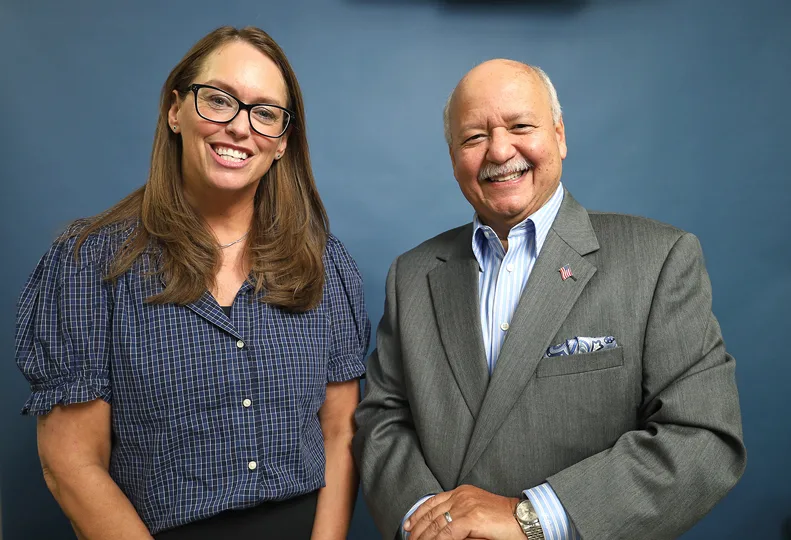
Spokane Regional Health District health officials Jessica Martin and Dr. Francisco Velazquez say the region has mostly avoided direct impacts from national food recalls impacting the Midwest and East Coast this summer.
| Karina EliasSome Spokane-area health officials and food distributors are saying the region has largely avoided direct impacts of the national foodborne illness outbreaks and recalls impacting Americans this summer.
The cyclospora-contaminated lettuce at the center of an outbreak was not distributed in Washington state, says Dr. Francisco Velazquez, health officer for the Spokane Regional Health District. Washington does have some cyclospora cases, but those generally involved international travel or travel to states experiencing the outbreak, he adds.
“If you look up the map distribution … it wasn’t distributed on this side of the country, which is one of the reasons you don’t see it,” Velazquez says.
Kelly Soth, food safety manager for Spokane-based URM Stores Inc., says there has been a decrease in prewashed salad sales, even though the affected lettuce hasn't reached this area. Soth attributes declined sales to customers being cautious.
“It’s probably a little bit fear from customers and lack of knowledge and not understanding that the product was not in our area,” Soth says.
URM, the parent company of Rosauer's Supermarkets, Huckleberry's Natural Market, and Super 1 Foods, didn't experience much of an impact, says URM Communications Manager Mark Meredith. In the first week after the contaminated lettuce was reported, bagged salad sales dropped about 30%. The following week, sales were down 15%, and by the third week, sales had stabilized, Meredith says.
URM also has a supplier governance program that evaluates food suppliers before products enter the company's distribution system, Soth says. Suppliers undergo an annual verification process, primarily through third-party audits. At the same time, URM’s food safety management system includes more than 30 standard operating procedures covering how products are received, stored, and shipped, he says.
"We expect all our suppliers to be experts in their field," Soth says.
Some Spokane-area restaurants also have not reported any impact on dining out due to fears about the outbreak, says Jessica Martin, food safety program manager at SRHD. Martin oversees the program and its 10 restaurant inspectors.
“(Restaurants) do sanitation that is a lot higher than you would see at your home or anywhere else,” Martin says. “They’re always trying to kill norovirus, because if you can kill norovirus, you’re probably going to kill the rest, because norovirus is so hearty.”
When there are major food recalls in the region, SRHD officials often will head to stores to help remove affected items from shelves, as happened during a national recall of Jif Peanut Butter in 2022, Martin explains. When a food item is recalled, the manufacturer or supplier issues a notification including a lot number that helps locate the items. Recalled products can be returned to the original manufacturer to be destroyed, she says.
Velazquez advises the public to not avoid fresh produce, restaurants, or grocery stores, and says the U.S. food supply is safe. Normal precautions, such as washing hands, produce, utensils, and cutting boards can reduce the risk of foodborne illness, he says.
“The most important thing is for people to be aware and not alarmed,” he says.