
Passing the torch: Who will own the business next?
Creative succession strategies can keep area businesses alive
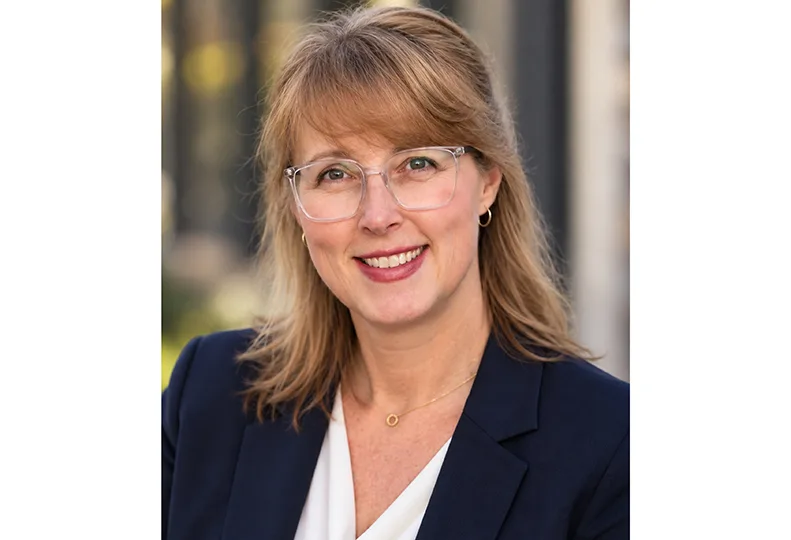
Kris Fuehr is the founder of Liberty Lake-base Paulson Exchange, a business transition firm serving business owners and buyers in Washington and Idaho. She works with small and midsize businesses on valuation, succession planning, and ownership transitions.
| Paulson ExchangeAcross our region, businesses are changing hands. While 350,000 U.S. baby boomers attempt to sell their businesses annually, the Inland Northwest alone holds a pool of 49,000 baby boomer-owned businesses facing transition. However, local and national success rates hover between 20% and 30%. When viable businesses simply close, long-time community legacies can disappear with them.
Many business owners assume their children will take over the family enterprise, but the next generation often has different plans. They may have established careers elsewhere, live in another state, or have different interests, leaving owners with an important question: What happens next to the company I built?
Local businesses provide jobs, fill commercial and industrial properties, support suppliers, pay taxes, and help establish the character of our community. When a healthy business closes because an owner cannot identify a successor, more than the owner loses.
Fortunately, closing the doors or selling to a large out-of-area company are not the only choices. Spokane-based Reliance Specialty Building Products LLC is one recent example of an alternative route. Reliance, a longtime specialty wood products distributor and manufacturer of timbers, beams, boards, paneling, and other wood products, has operated in the region for decades.
In August, Kelly Rasmussen took over as the new owner at Reliance, retaining the existing team and preserving the knowledge, customer relationships, and jobs built over many years. Working with the former owner as a consultant during the transition, Rasmussen has focused on improving processes, reaching new customers, and exploring opportunities for growth.
Rasmussen, a Spokane native who returned to the area in 2023, became interested in small business ownership while completing her MBA at Gonzaga University.
“Small businesses keep our communities strong,” says Rasmussen. “We build relationships with suppliers and customers and go beyond simply shipping product. We intend to carry that legacy forward.”
One of her first community initiatives involves developing a program to provide usable leftover wood to area junior high and high school woodshop and construction programs — turning excess inventory into materials that help students develop hands-on skills and explore careers in the trades.
Acquiring Reliance was financed by the seller, along with a Small Business Administration loan from Washington Trust Bank. It's one example of what succession can look like, but there is no single formula. An owner may sell to a company seeking expansion or diversification, or to an individual entrepreneur looking for an established business or employees. Bellingham, Washington-based nonprofit WACEO-Inland, a branch of the Washington Center for Employee Ownership, is an organization that helps owners explore employee-ownership models.
Financing can be more flexible than many owners and prospective buyers realize. SBA loans are common, but conventional financing, Community Development Financial Institution financing, buyer equity, and seller financing can sometimes be combined to create a structure that works for both parties.
Local and regional banks can also be valuable resources. Some options in our area include Washington Trust Bank, State Bank Northwest, RiverBank, Bankcda, and Heritage Bank, among others. Different lenders have different appetites for acquisition loans, so buyers benefit from talking with more than one.
Seller financing can bridge the gap when a capable buyer cannot complete the purchase through traditional lending alone. Payments can be structured around the cash flow of the business, sometimes with the possibility of refinancing later.
New SBA rules take effect Oct. 1 and offer solutions whereby the seller helps make the transition possible while the buyer establishes a track record, followed by the potential for refinancing. Financing, however, is only part of a successful handoff.
Business transitions usually take time, as many sellers want to stick around to guide new owners through the transition and point out untapped growth opportunities that they previously lacked the energy to carry out, providing the buyer with a clear roadmap for expansion.
That overlap can be valuable. A seller can transfer customer and vendor relationships, institutional knowledge, and lessons learned over decades. Meanwhile, a new owner may bring renewed energy to opportunities that the previous owner simply no longer had the time or desire to pursue.
Some interested buyers never pursue the opportunity to purchase a business because they think it’s too expensive. But buyers have an array of lenders and community resources beyond traditional banks.
For instance, Paulson Exchange facilitated the Reliance Specialty Building Products transition and has worked with other owners and buyers throughout the region on business transitions. The Liberty Lake-based business brokerage and advisory company provides preliminary valuations and expense audits at no charge to qualified small and midsize businesses considering their succession options. Business Impact NW and Craft3 both are nonprofit CDFIs serving the region. Northwest Business Development Association works with SBA 504 financing when real estate or major fixed assets are involved. The Washington Small Business Development Center offers advising that can help buyers work through acquisitions, valuations, financing, and deal structure.
Succession planning should begin with understanding what the business is worth. For many entrepreneurs, their company is one of the largest assets on their personal balance sheet. Yet they may know the value of their home, investment accounts, and retirement plans — almost to the dollar — while having only a vague idea of the value of their business.
A realistic valuation helps an owner determine whether retirement goals are achievable, whether changes should be made before going to market, and what kinds of buyers and financing structures are realistic. Ideally, that conversation happens several years before an owner needs to sell rather than after a health issue or other life event forces the decision.
The larger message is one every business owner should consider long before retirement: Your successor does not necessarily have to share your last name. With enough planning, the next generation of ownership may already be working in your company, operating another business down the street, or searching for the opportunity to take what you built and carry it forward.
Kris Fuehr is the founder of Liberty Lake-base Paulson Exchange, a business transition firm serving business owners and buyers in Washington and Idaho. She works with small and midsize businesses on valuation, succession planning, and ownership transitions.